
MYWAY Metal Rivets – Wide Range, Great Value. Your China Fastener Manufacturer.
11+ Years Expertise | Professional Fastener Manufacturer | Standard & Custom Parts | DIN, ISO, ANSI Certified | Strong R&D | Ample Stock | Cost-Effective |
Professional Team | Serving 40+ Countries | Reliable Logistics
Rivets
Solid Rivets
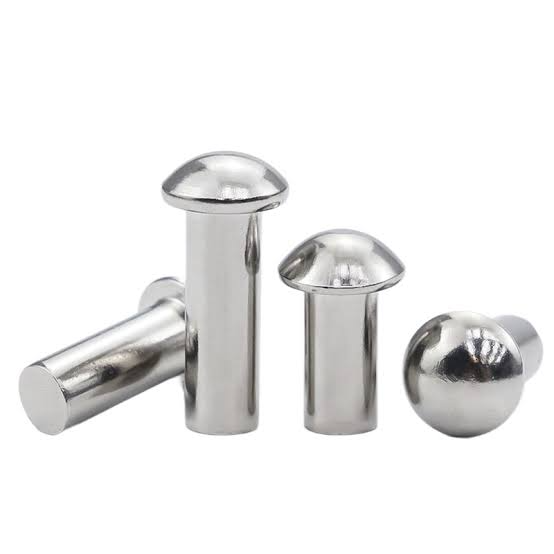
Round Head Solid Rivets
DIN660
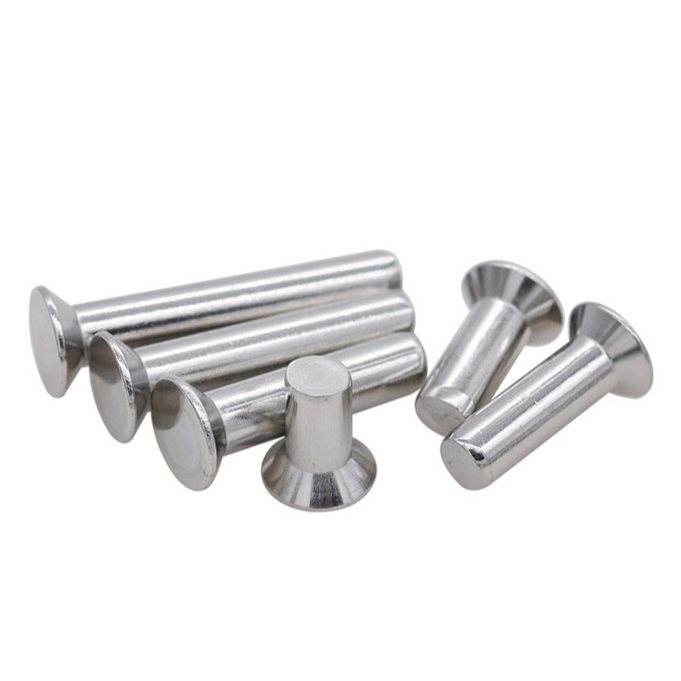
Countersunk Head Solid Rivets
DIN302/661
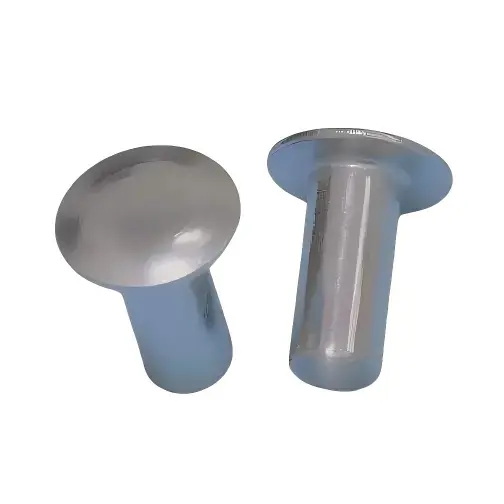
Truss Head Solid Rivets
DIN662
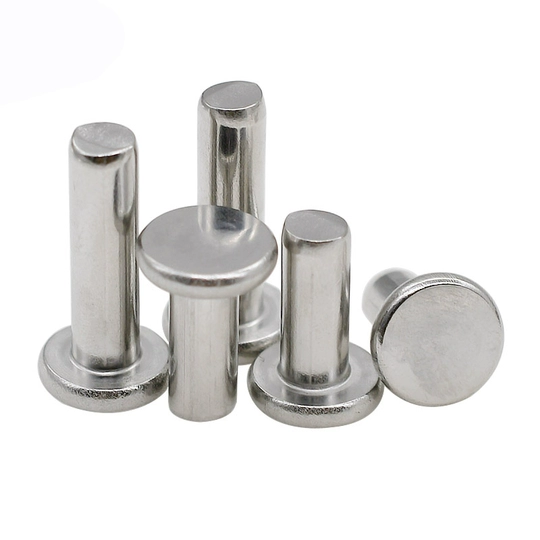
Flat Head Solid Rivets
DIN7338
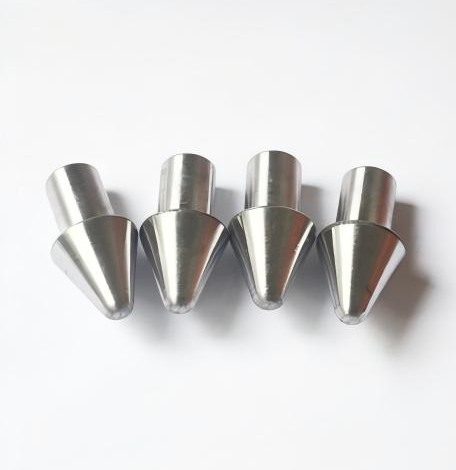
Conical Head Solid Rivets
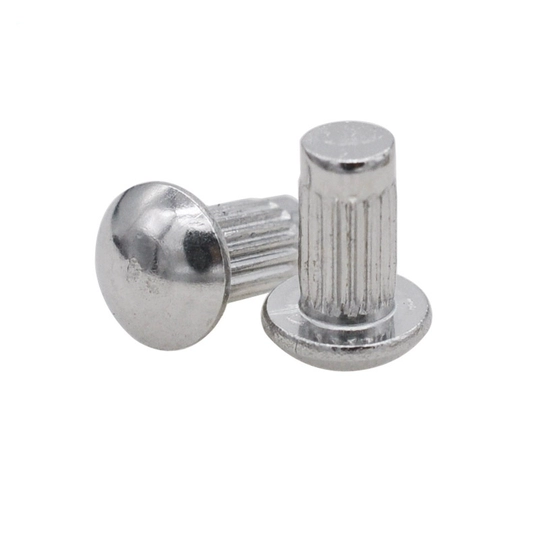
Sign Rivets
Semi-Tubular & Hollow Rivets
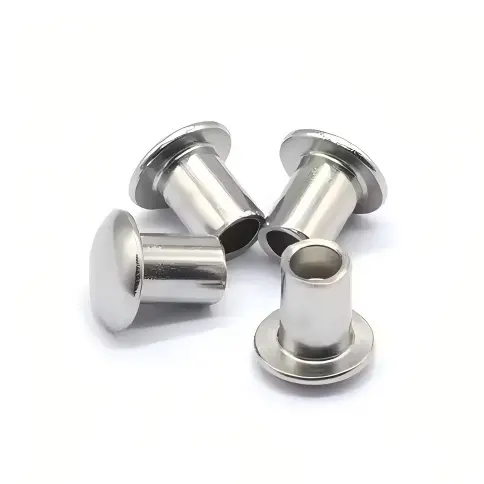
Round Head Semi-Tubular Rivets
DIN 6791
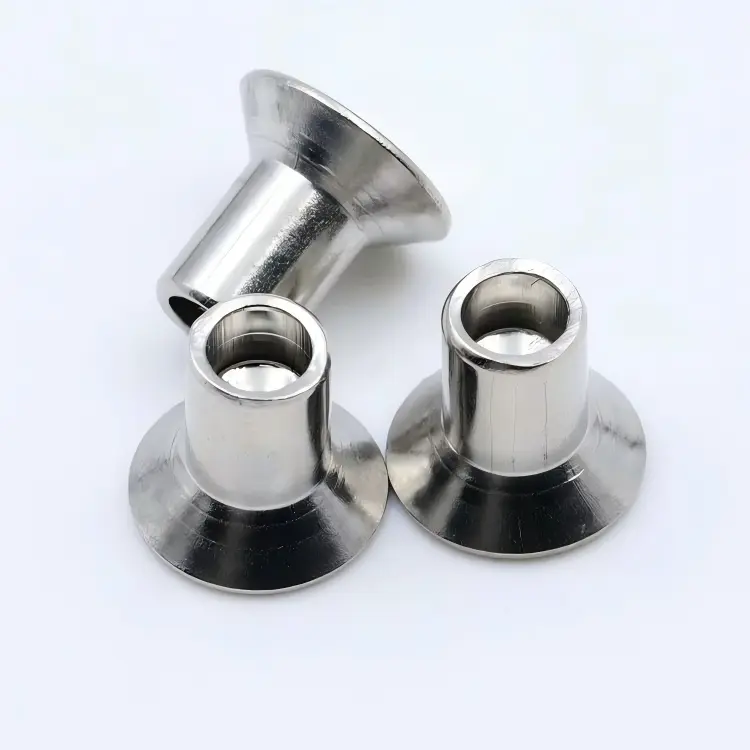
Countersunk Head Semi-Tubular Rivets
DIN 6792
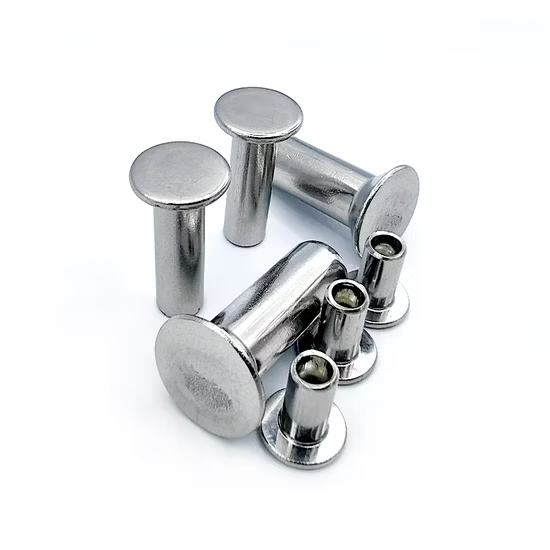
Flat Round Head Semi-Tubular Rivets
DIN 7338 (B)
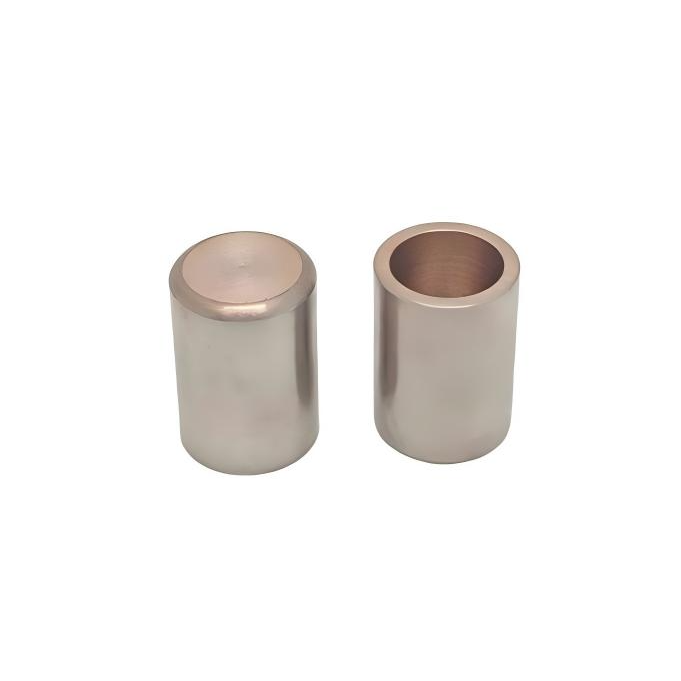
Headless Rivets
DIN 7341
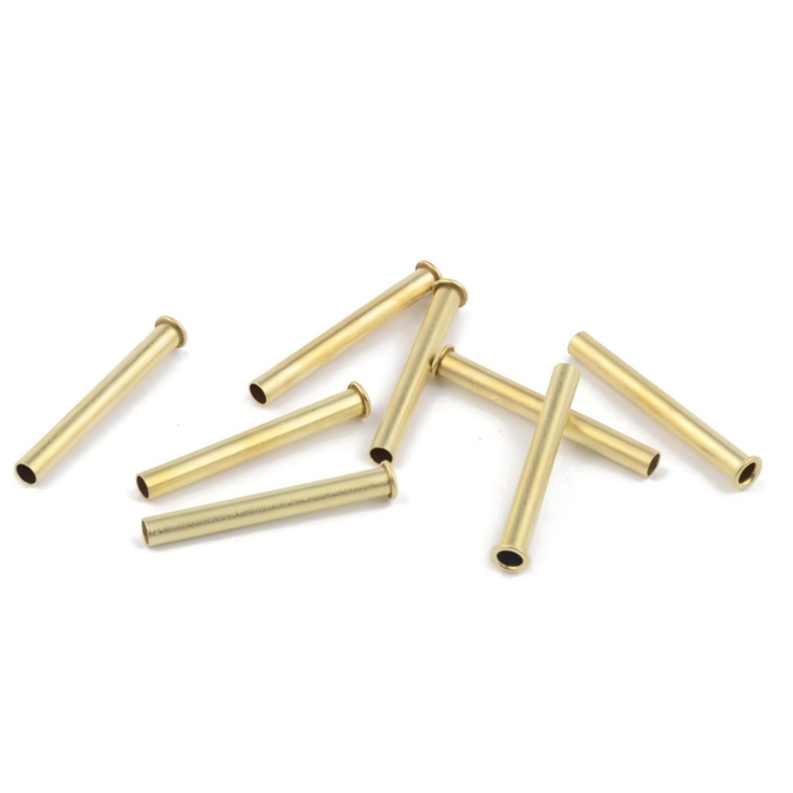
Full Hollow Rivets
DIN 7338 (C) | DIN 7339/7340
Blind Rivets
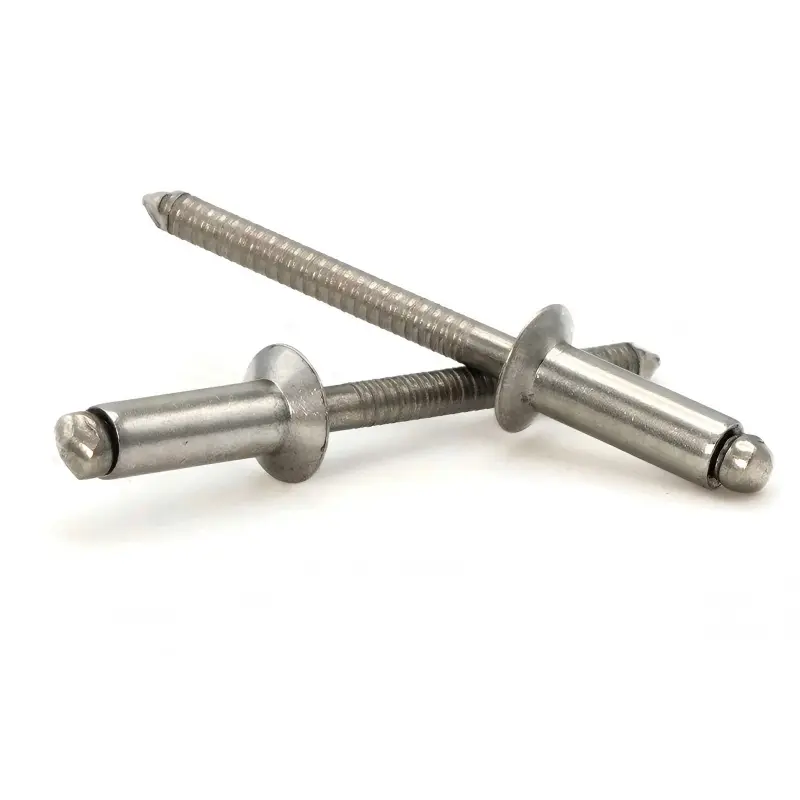
Open Type Round Head Blind Rivets
DIN EN ISO 16582
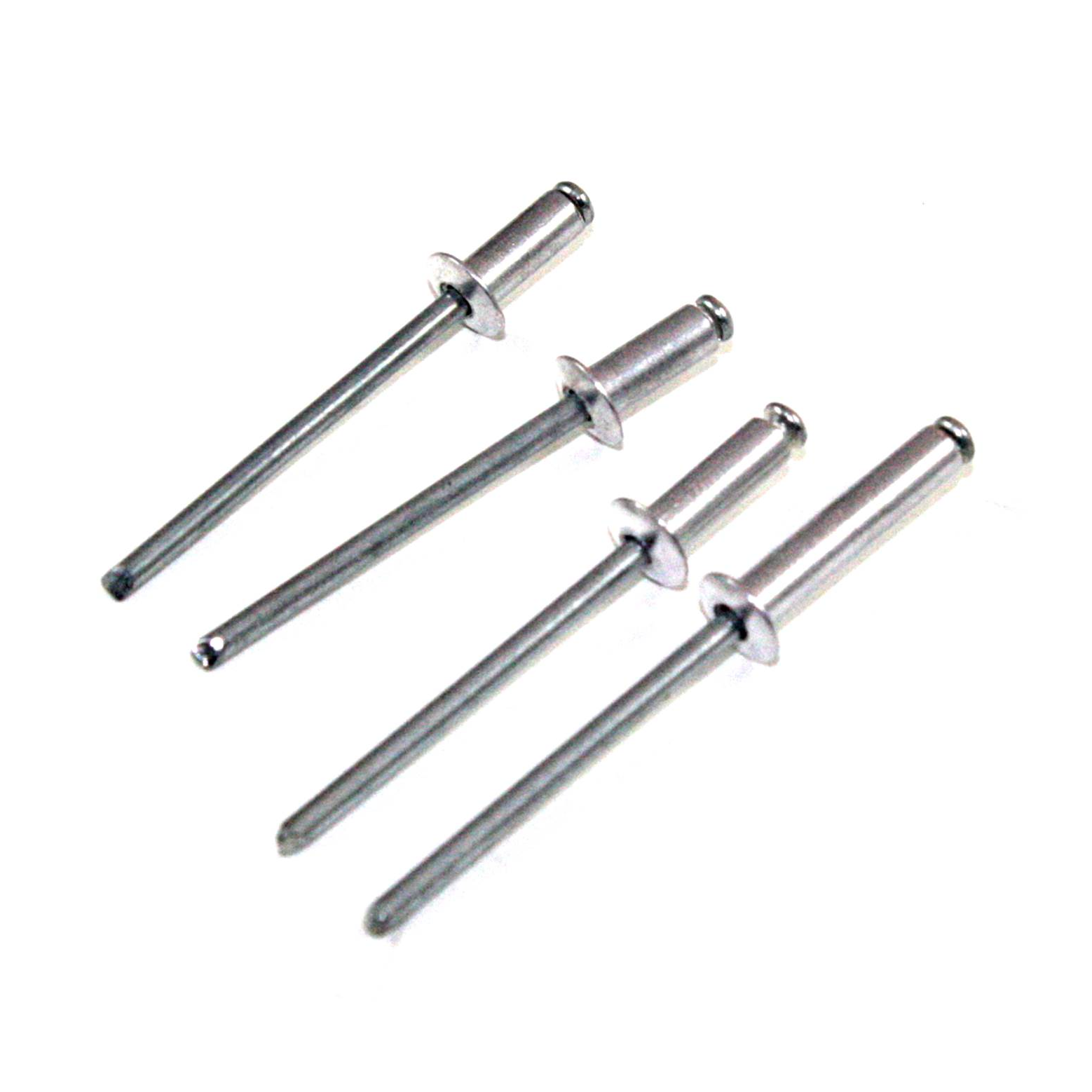
Open Type Countersunk Head Blind Rivets
DIN 7337 (B) | DIN EN ISO 16583
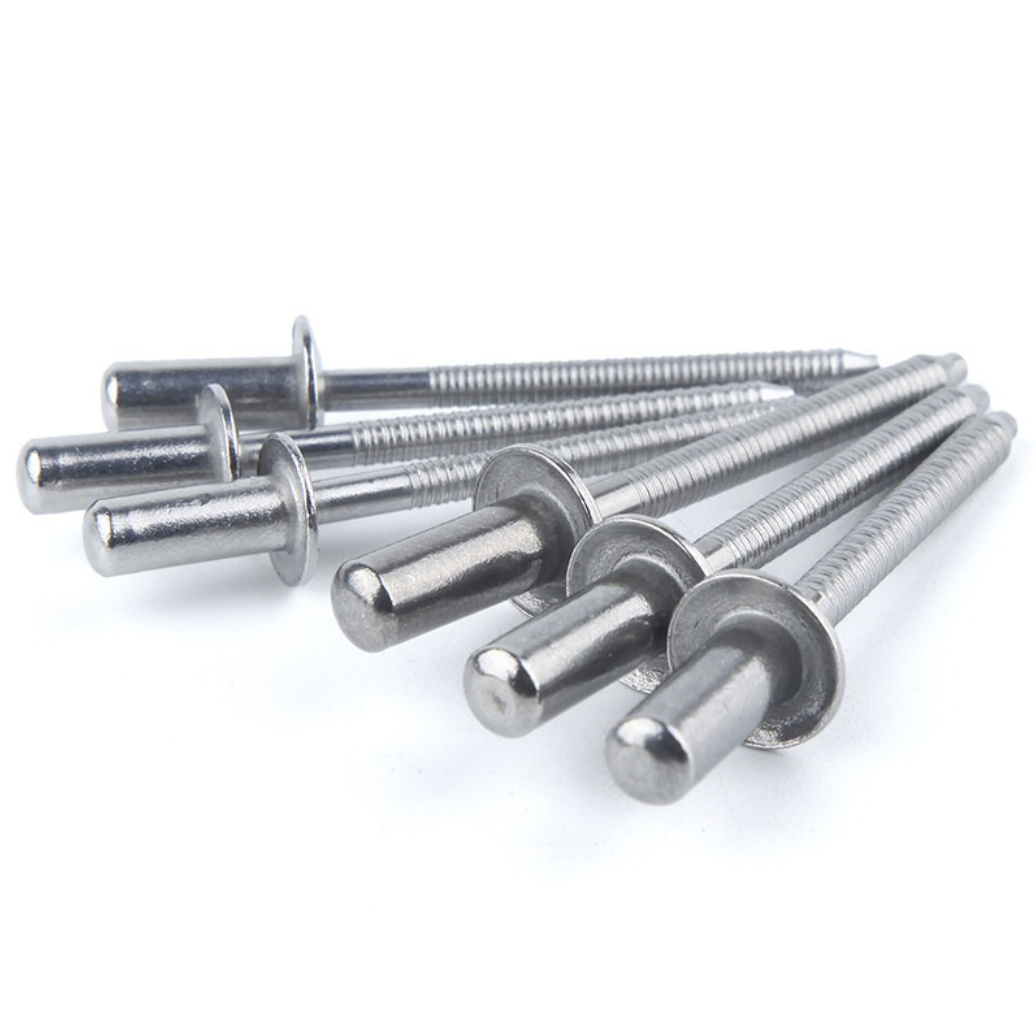
Closed Round Head Blind Rivets
DIN EN ISO 15975
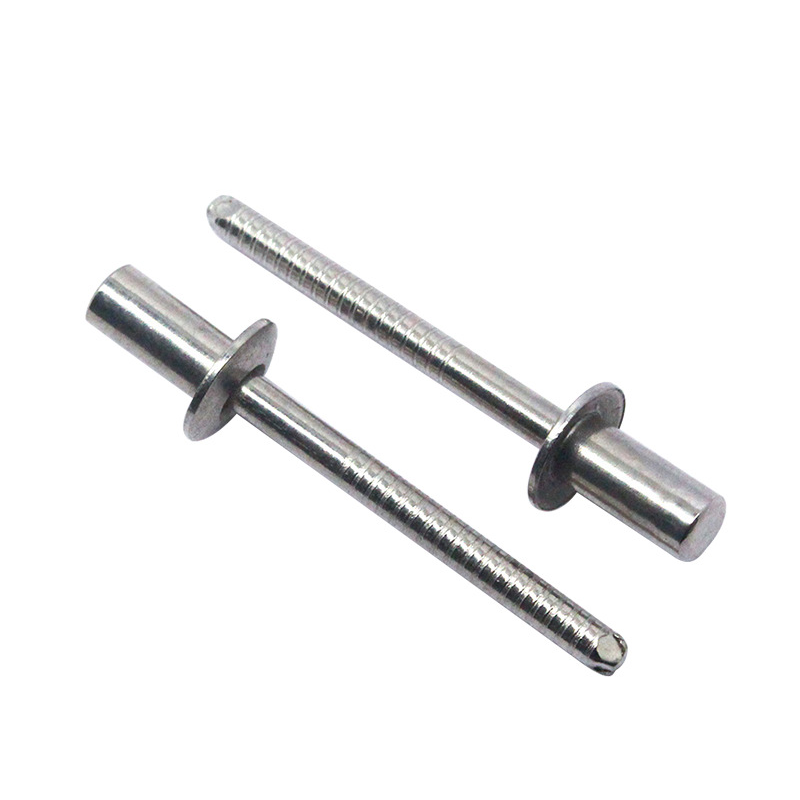
Closed Countersunk Head Blind Rivets
DIN EN ISO 15974
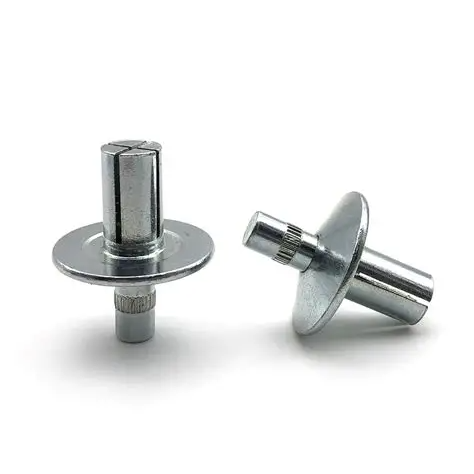
Core Rivets
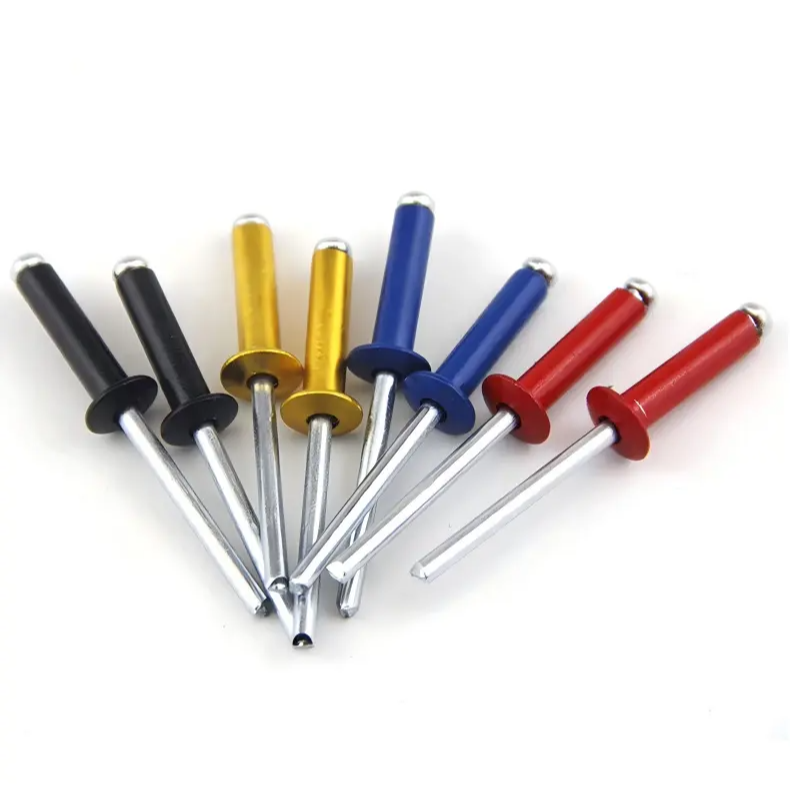
Shear Resistant Blind Rivets
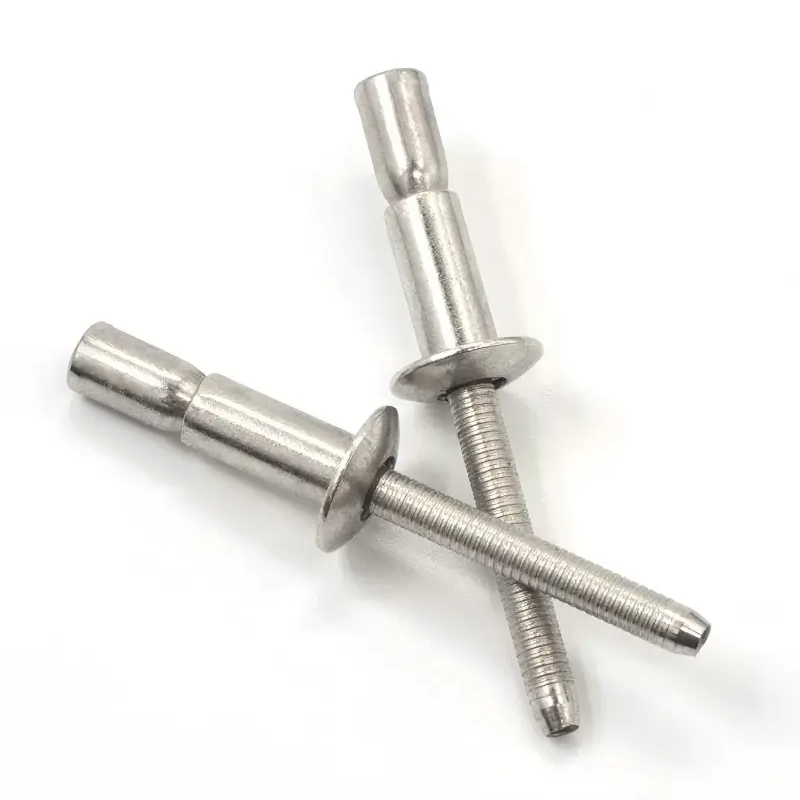
Cup Type Blind Rivets
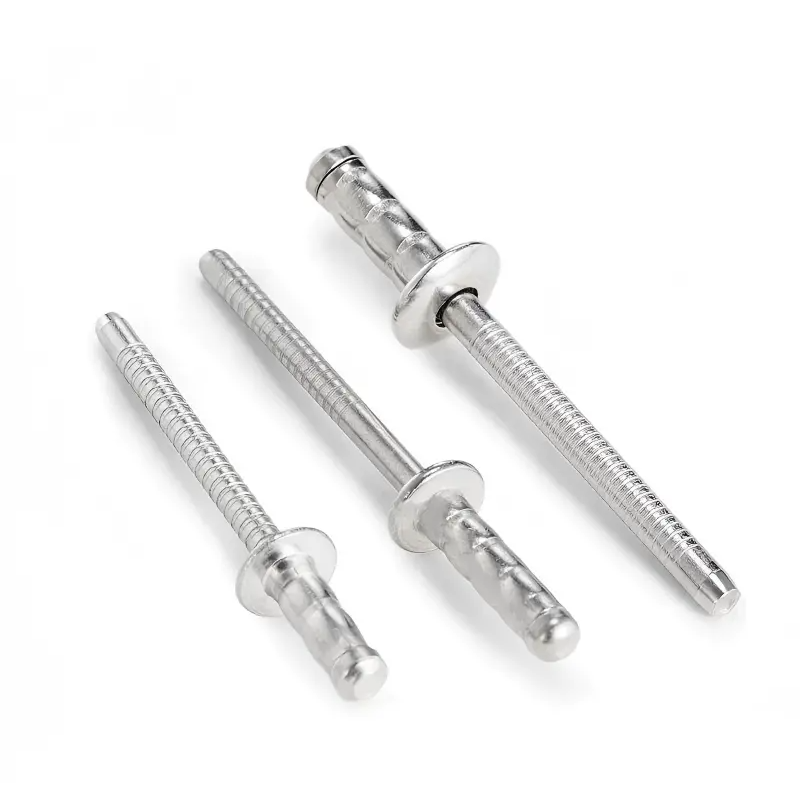
Drum Type Blind Rivets
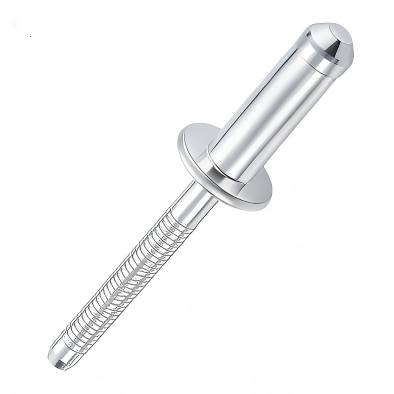
Hippocampus Rivets
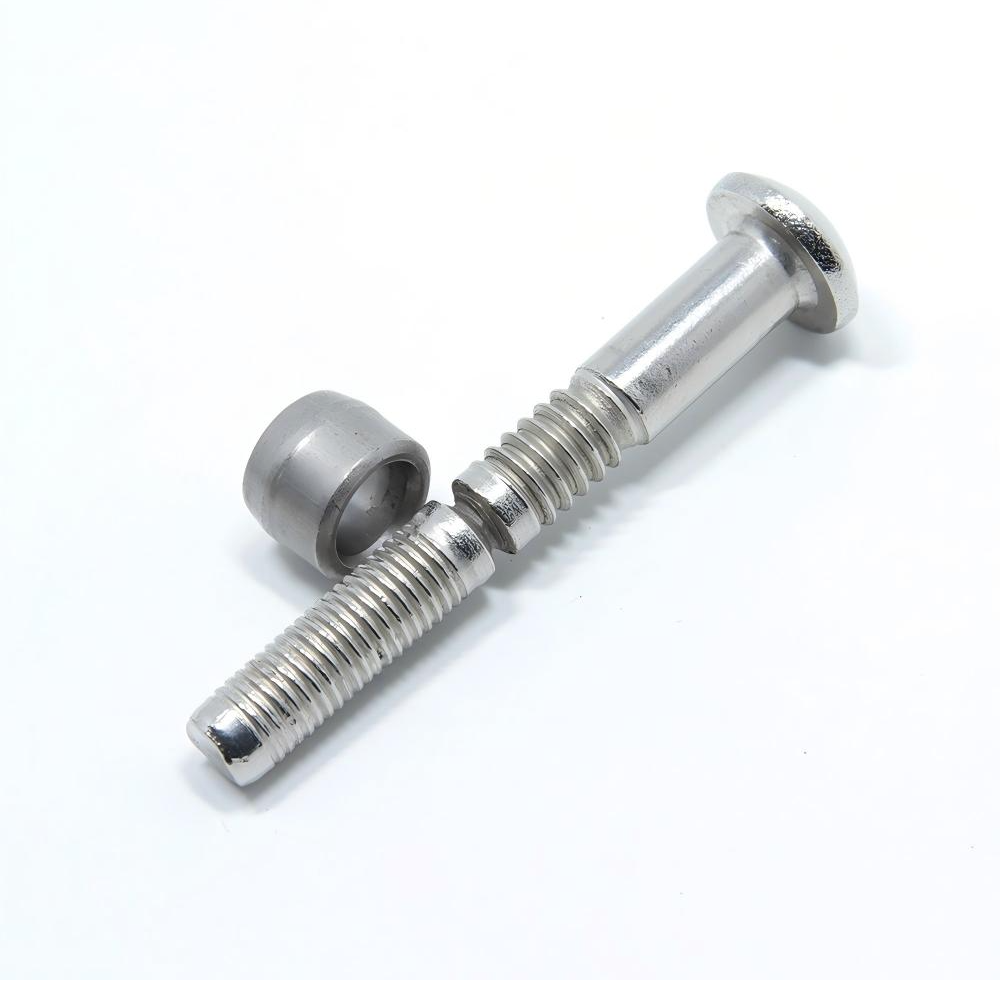
Ring Groove Rivets
Rivet Nuts
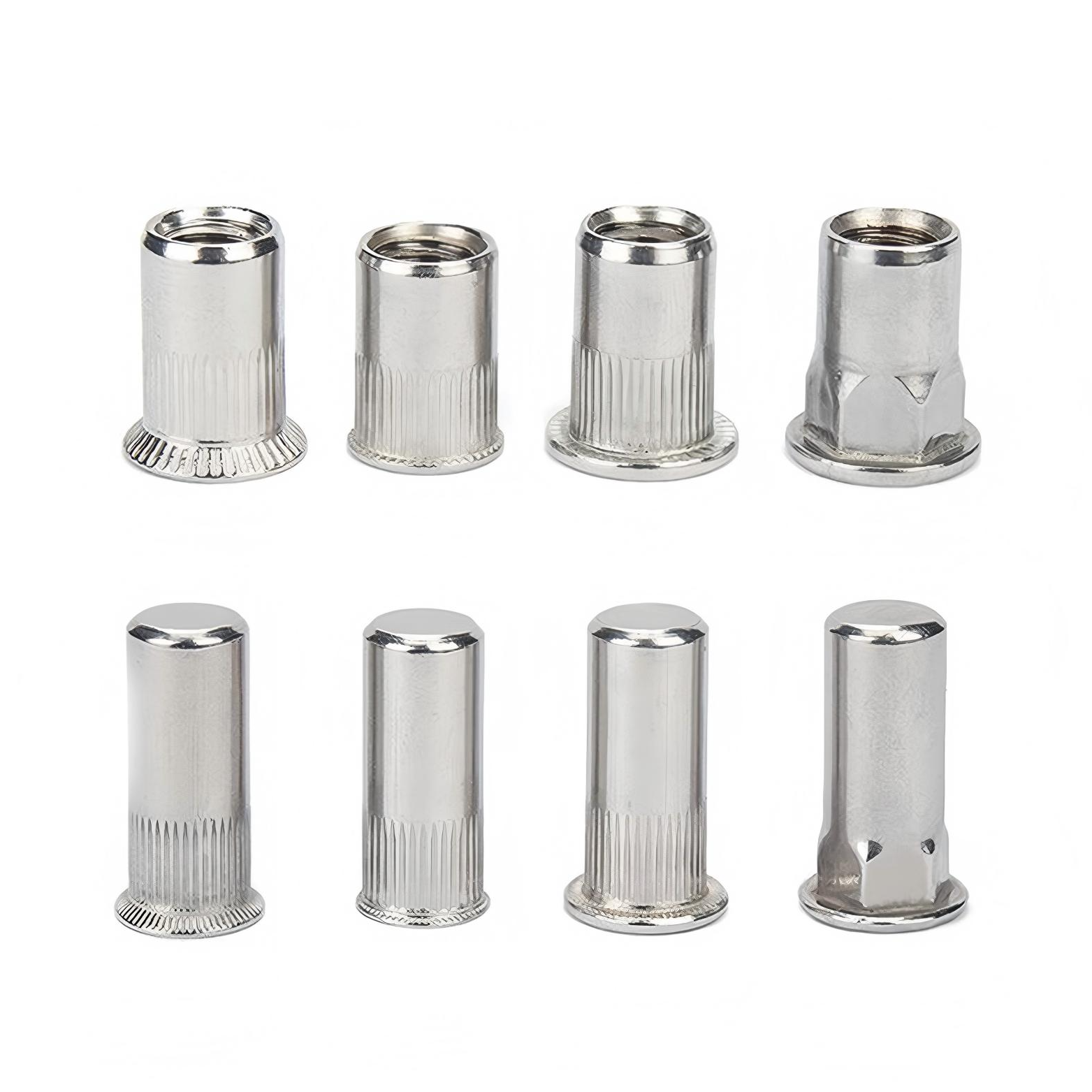
Rivet Nuts
Threaded on one end only
Press-Fastening Inserts
.webp)
Press-Fastening Stud (Internal Thread)
-1.webp)
Press-Fastening Nut (Internal Thread)
.webp)
Press-Fastening Screw (External Thread)
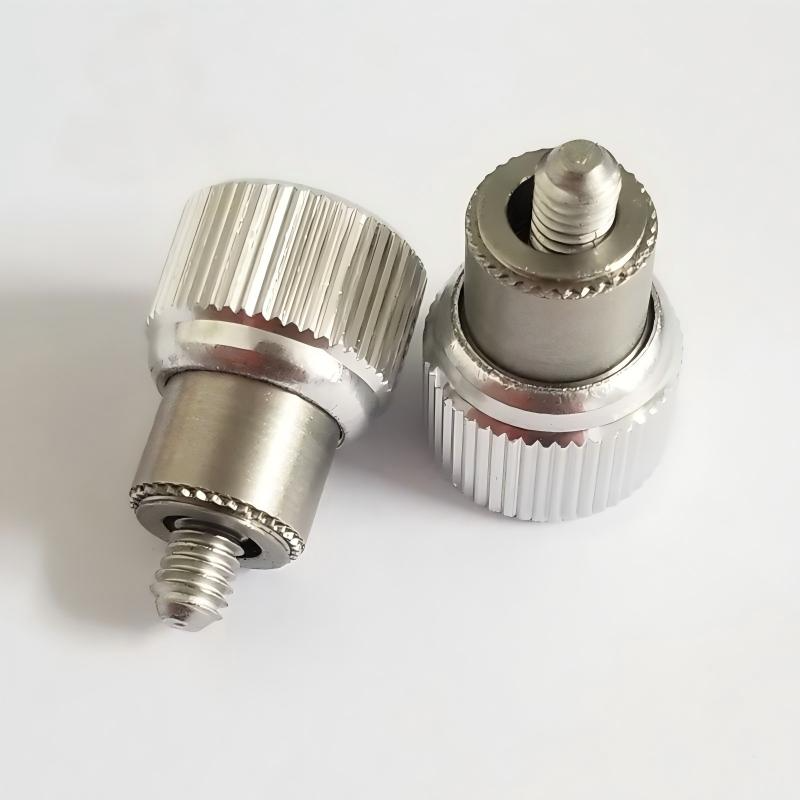
Press-Fastening Spring Screw / Thumb Screw
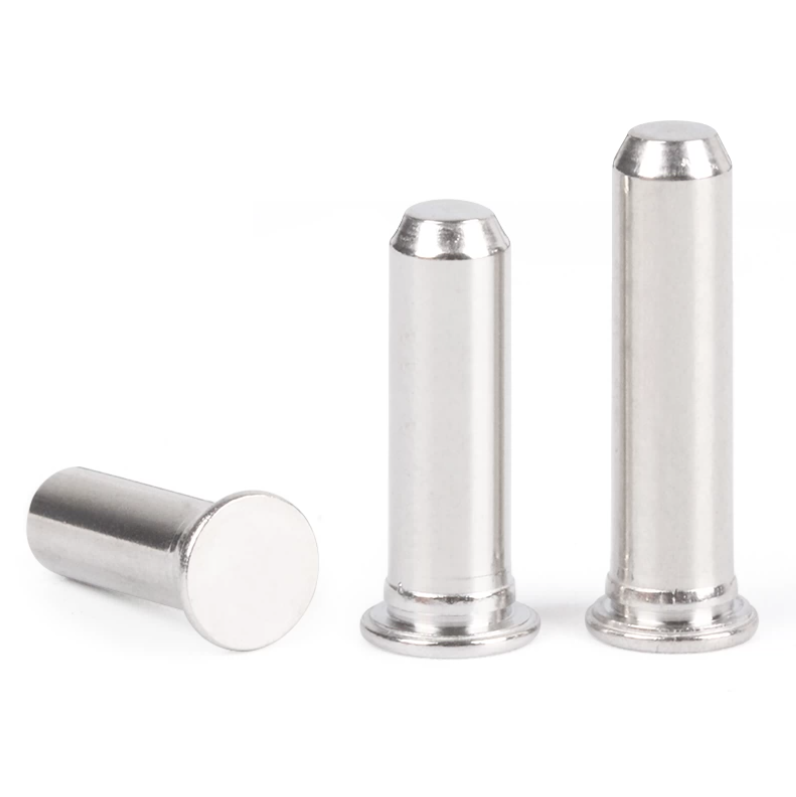
Guide Pin
Rivets: Types, Applications, and Why They Still Matter in Modern Manufacturing
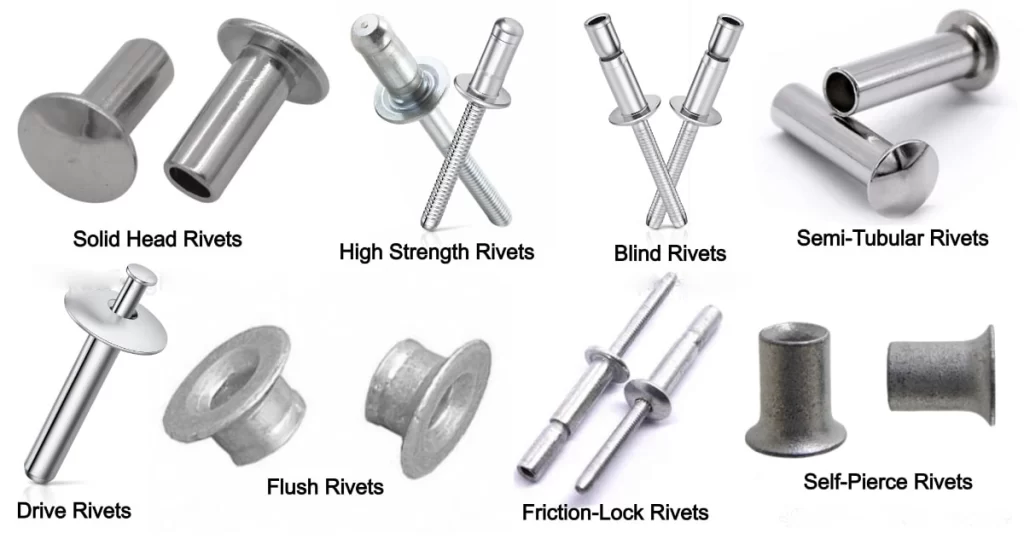
Rivets have been holding the world together for thousands of years, and they’re not going anywhere. From the pyramids of Egypt to modern jetliners, these humble fasteners have proven their worth time and time again. Today, rivets remain one of the most reliable methods for joining materials, offering strength, durability, and vibration resistance that other fastening methods simply can’t match.
If you’re in manufacturing, construction, or any industry that requires permanent mechanical joints, understanding rivets is non-negotiable. This guide breaks down everything you need to know about rivets—from the basic types to advanced applications—so you can make the right choice for your project.
What Exactly Is a Rivet?
At its simplest, a rivet is a permanent mechanical fastener. It typically consists of a head on one end and a cylindrical shaft (or shank) on the other. The shaft is inserted through pre-drilled holes in the materials being joined, and then the tail end is deformed—usually by hammering or using a rivet gun—to create a second head that locks everything in place.
Unlike bolts or screws, rivets don’t rely on threading. They create a permanent bond by mechanical deformation, which makes them ideal for applications where vibration could cause threaded fasteners to loosen over time. Once a rivet is set, it’s not coming loose on its own.
How Rivets Work: The Installation Process
Installing a rivet is straightforward, but getting it right matters. Here’s how the process typically works:
Drill or punch a hole through the materials you’re joining. The hole diameter should be slightly larger than the rivet shank—typically about 1.5 times the rivet diameter.
Insert the rivet through the hole, with the factory head on one side and the tail protruding from the other.
Deform the tail using a hammer, rivet gun, or specialized tool. The tail flattens and expands, creating a second head (called the shop head) that clamps the materials together.
The joint is complete—permanent, secure, and ready to handle whatever loads come its way.
The key difference between rivet types comes down to how that tail gets deformed and whether you need access to both sides of the workpiece.
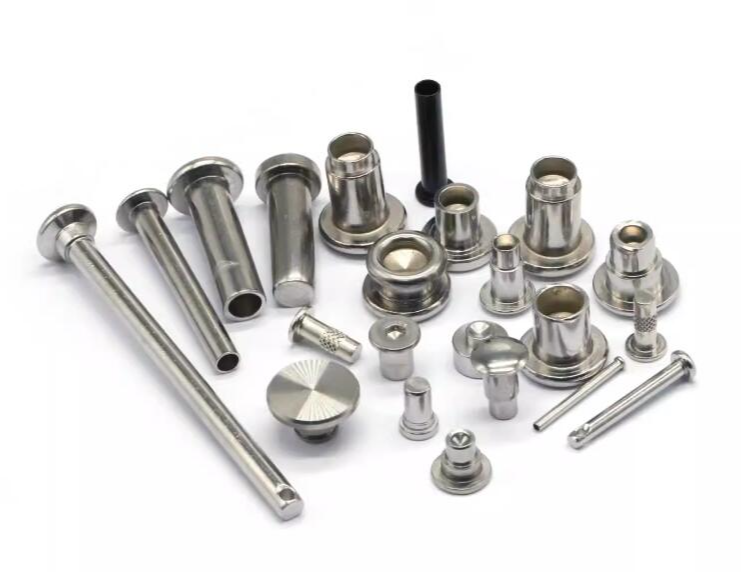
The Main Types of Rivets You Need to Know
Not all rivets are created equal. Each type serves a specific purpose, and choosing the right one can make or break your project. Here are the most common types of rivets you’ll encounter:
1. Solid Rivets
Solid rivets are the original—the great-granddaddy of all rivets. They consist of a solid shaft with a head on one end. To install them, you need access to both sides of the workpiece: one side for the rivet head, the other to hammer or “buck” the tail into shape.
These rivets are incredibly strong. They’re the go-to choice for heavy-duty applications like bridges, ships, aircraft, and steel structures. Solid rivets are manufactured according to DIN standards 660, 661, and 7338, and they offer maximum strength and durability. If you need a joint that can handle serious loads and won’t budge, solid rivets are tough to beat.
2. Blind Rivets (Pop Rivets)
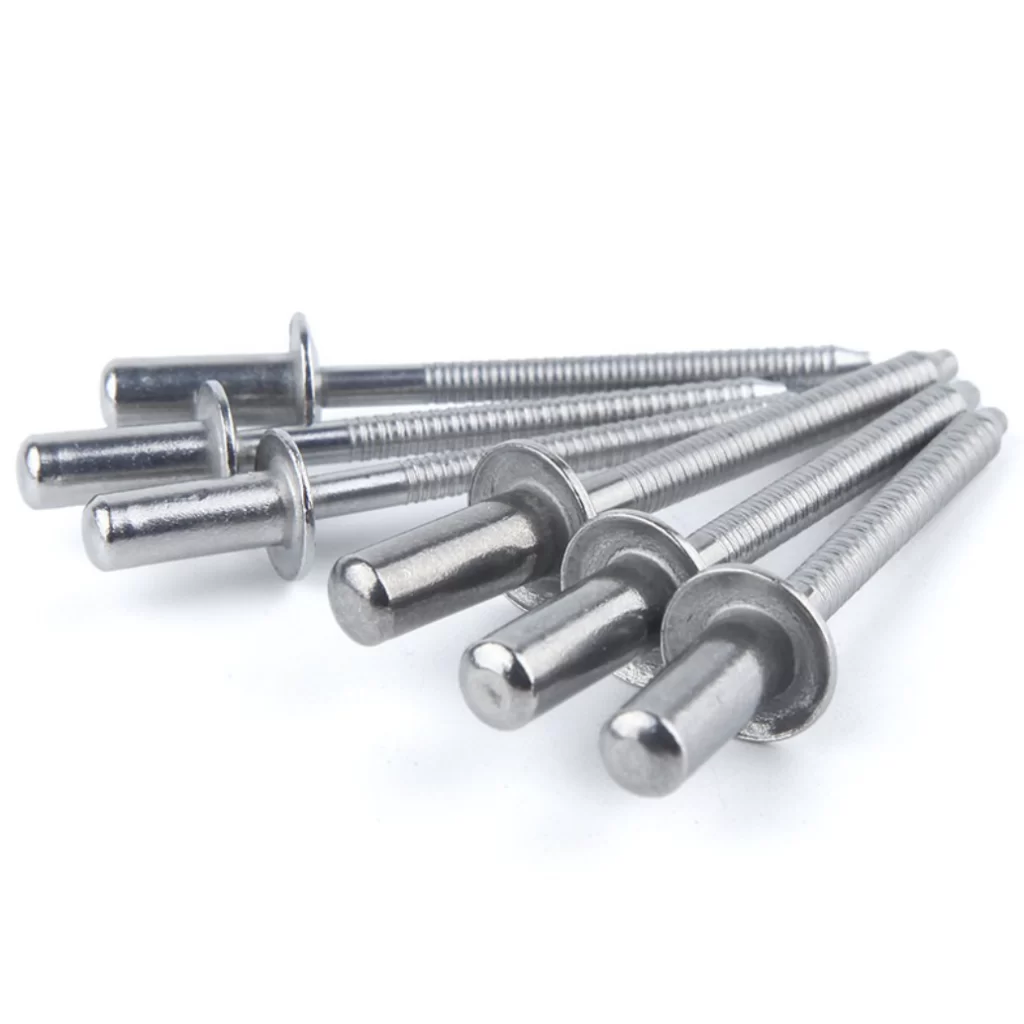
Blind rivets—often called pop rivets—are a game-changer for situations where you can only access one side of the workpiece. They consist of a tubular body with a mandrel (a thin stem) running through the center.
To install a blind rivet, you insert it into a pre-drilled hole, then use a rivet gun to pull the mandrel through the body. This action expands the body on the blind side, forming a secure joint. Once enough force is applied, the mandrel snaps off with a distinctive “pop” sound.
Blind rivets are incredibly versatile. They work with various materials—aluminum, steel, copper, even nylon—and are widely used in automotive repairs, electronics, construction, and countless other applications. They’re particularly suitable for situations where the workpiece can only be riveted from one side.
3. Semi-Tubular Rivets
Semi-tubular rivets look similar to solid rivets, but with a hole drilled partially through the shaft. This hollow section requires less force to deform during installation—about 25% less than solid rivets. They’re perfect for lighter applications like electronics, leather goods, and small assemblies where you want a quick, clean joint without adding unnecessary weight.
4. Tubular Rivets
Tubular rivets are similar to semi-tubular but with a fully hollow shaft. They’re even easier to set and are commonly used in applications where weight reduction matters.
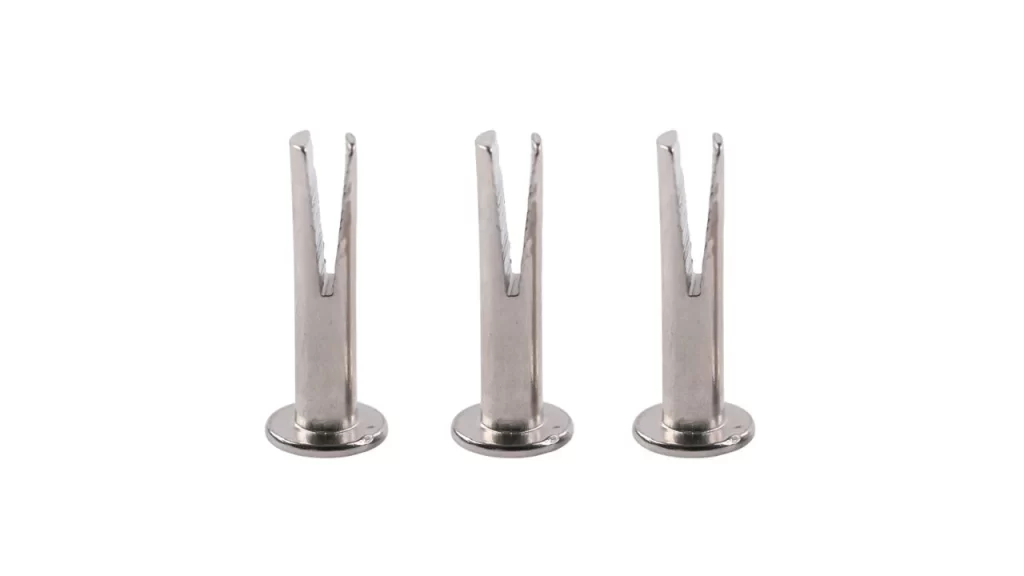
5. Split Rivets (Bifurcated Rivets)
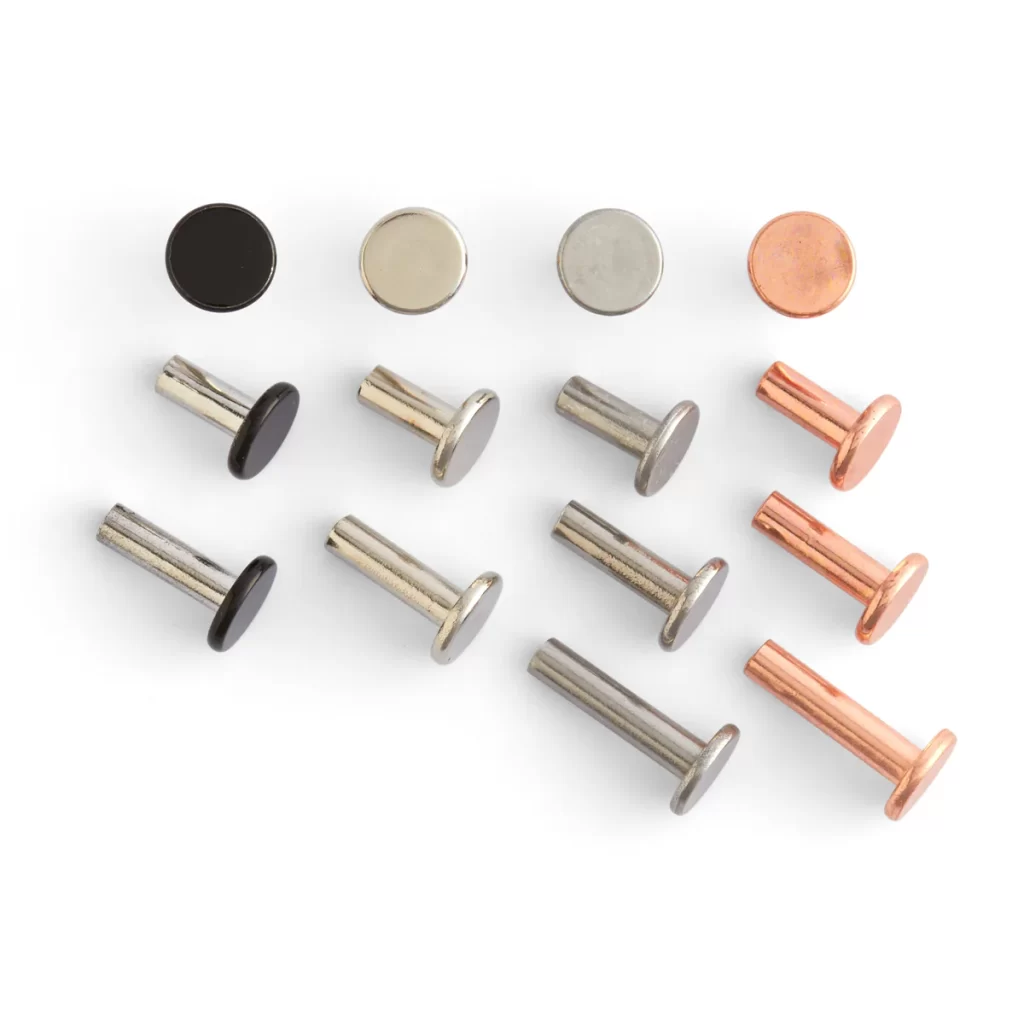
Split rivets have a shaft that’s divided into two legs. When installed using a wedge tool, the legs flare out to secure the joint. They work best with softer materials like plastics, leather, and fabric.
6. Self-Piercing Rivets
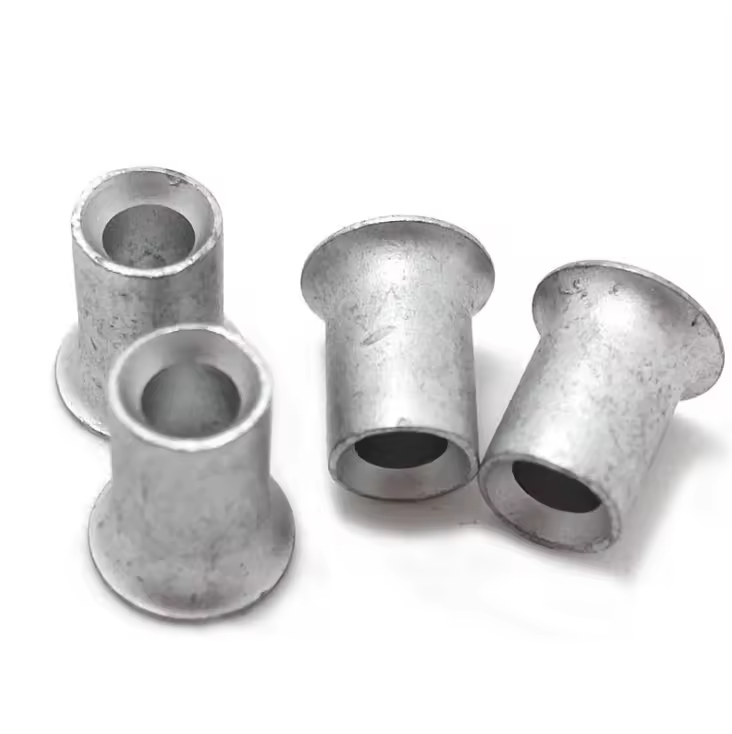
Self-piercing rivets eliminate the need for pre-drilled holes. They punch through the materials being joined and interlock securely, making them ideal for high-stress applications and joining dissimilar materials. Studies show that self-piercing riveted joints can actually achieve higher load capacity than traditional pre-drilled joints with aluminum alloy rivets.
7. Structural Rivets
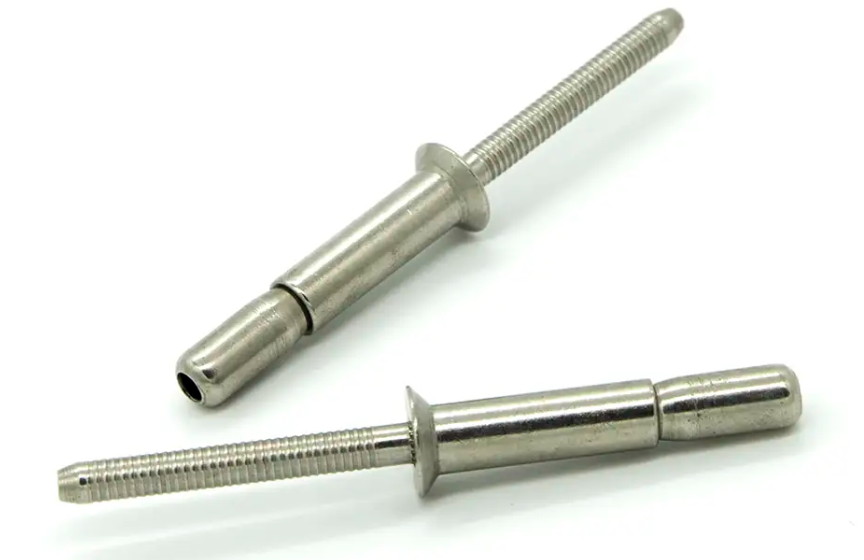
Structural rivets are high-strength blind rivets engineered for heavy-duty applications where structural integrity is critical. They’re designed to withstand high shear and tensile loads and are often used in construction, transportation, and infrastructure projects. Structural rivets lock the mandrel in place and deliver superior strength for vibration-prone joints.
Rivet Materials: Choosing the Right One for Your Application
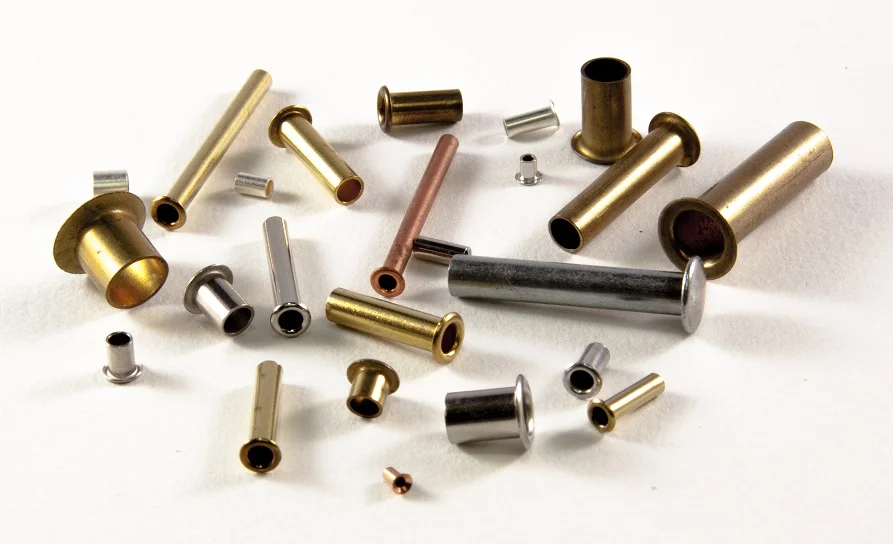
The material you choose for your rivets matters just as much as the type. Different materials offer different properties, and matching the right rivet material to your application is essential for long-term performance.
Aluminum is lightweight and corrosion-resistant, making it perfect for outdoor applications and aerospace use. Aluminum rivets are also easy to deform, which means they can be installed with hand-operated tools.
Steel provides robust strength for heavy loads and load-bearing structures. Low-carbon steel is flexible and commonly used, while high-carbon steel offers even greater strength.
Stainless steel delivers excellent corrosion resistance and durability, ideal for demanding environments.
Copper is visually appealing, rustproof, and an excellent conductor of heat and electricity, making it suitable for plumbing and electrical applications.
Brass offers good strength, corrosion resistance, and a non-sparking quality that makes it useful in certain industrial settings.
One critical consideration when selecting rivet materials: avoid galvanic corrosion. When you join dissimilar metals, the combination can create an electrochemical reaction that degrades the joint over time. Make sure your rivet material is compatible with the materials you’re joining.
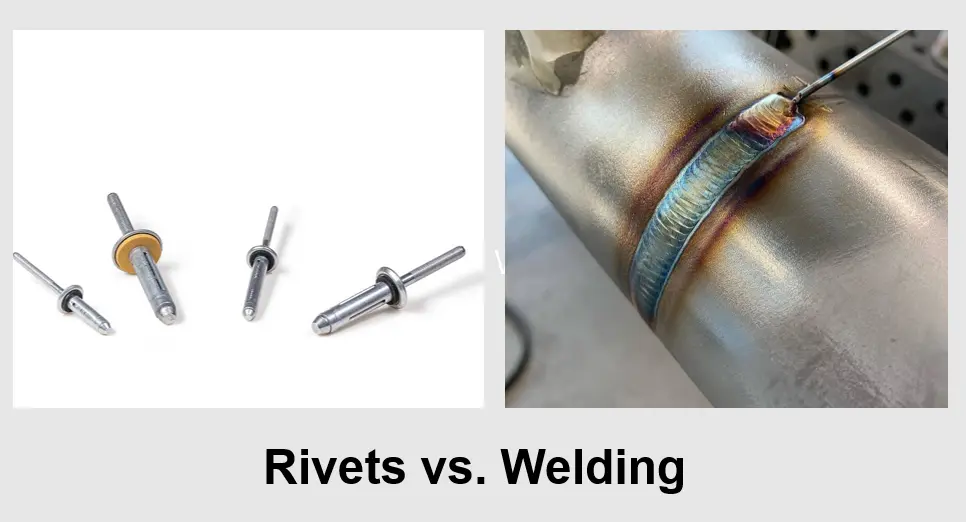
Riveting vs. Welding: Which One Should You Choose?
This is one of the most common questions in manufacturing. Both riveting and welding have their place, but they serve different purposes.
When riveting wins:
Dissimilar materials: Riveting can join aluminum to steel, stainless to galvanized—no problem. Welding typically requires similar materials.
No heat distortion: Riveting doesn’t introduce heat, which means no warping, discoloration, or metallurgical changes to your materials.
Speed: Riveting is fast and doesn’t require post-installation cleanup. A riveting gang can turn out about double the daily footage of laps and butts that a welder can.
Vibration resistance: Riveted joints handle vibration exceptionally well because they don’t have threads that can loosen.
Lower skill barrier: Riveting requires less specialized knowledge than welding.
When welding wins:
Strength under tension: If your joint needs to withstand forces that pull the pieces apart, a properly welded joint will generally outperform a riveted one.
Aesthetics: Welds can be ground and polished to create a smooth, nearly invisible finish. Rivets are always visible.
Design flexibility: Welding doesn’t require you to design flanges or accommodate rivet tools.
The bottom line? If you’re joining dissimilar materials, need speed, want to avoid heat distortion, or require vibration-resistant joints, riveting is your answer. If you need maximum tensile strength or an invisible finish, welding might be the better choice.
Where Rivets Are Used: Real-World Applications
Rivets are everywhere. You just might not notice them. Here are some of the key industries and applications where rivets play an essential role:
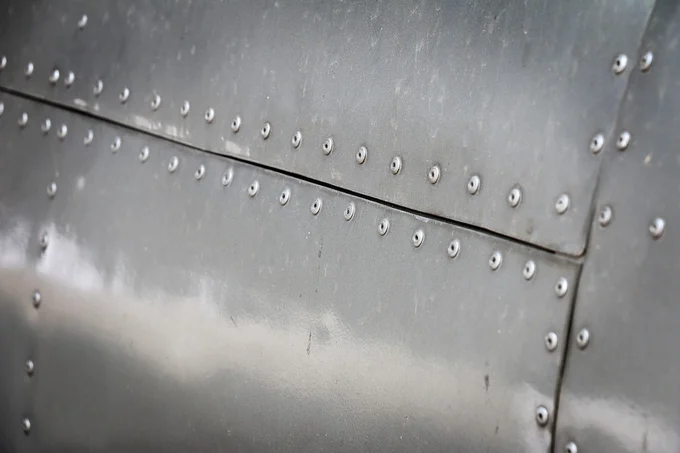
Aerospace is perhaps the most demanding application for rivets. Aircraft rely heavily on rivets—particularly solid rivets—to ensure structural integrity. Jumbo jets use thousands of rivets in their construction, and rivets are the most common method used to fasten aluminum alloys in aircraft construction. The aerospace industry’s reliance on rivets is driven by the need for lightweight, high-strength permanent joints.
Construction relies on rivets for joining steel girders, bridge elements, and other structural components. Structural rivets are essential for buildings, bridges, and infrastructure projects where joint integrity is critical.
Automotive manufacturers use rivets to secure body panels, chassis components, and increasingly, battery holders for electric vehicles. Rivets are particularly useful for joining aluminum and steel in modern lightweight vehicle designs.
Marine and shipbuilding have used rivets for centuries. Solid rivets remain the standard for joining hull plates and other structural elements where water resistance and strength are paramount.
Electronics manufacturing uses smaller rivets for assembling devices where permanent, reliable connections are needed without adding significant weight.
HVAC and sheet metal work relies heavily on tubular and blind rivets for ducting, enclosures, and assemblies.
Sports equipment like bicycles, skateboards, and ski bindings often use rivets for their combination of strength and reliability.
The Rivet Market: Growth and Trends
The fastener industry is massive, and rivets are a significant part of it. The global industrial fasteners market was valued at USD 88.6 billion in 2025 and is projected to reach USD 134.6 billion by 2033, growing at a CAGR of 5.37%. The solid rivet market alone was estimated at USD 3.78 billion in 2025 and is projected to reach USD 4.58 billion by 2032.
Key trends driving this growth include:
Increasing demand for lightweight materials in automotive and aerospace applications
Growth in construction and infrastructure development worldwide
Rising demand for high-strength and corrosion-resistant fasteners
Aerospace fastener market expected to grow at a CAGR of 7.2% from 2025 to 2031
The aerospace rivets segment alone generated USD 3.1 billion in 2024. These numbers reflect a simple reality: rivets aren’t going anywhere.
About Rivets Packaging And Transportation
Packaging Materials
Choose materials with good moisture-proof, shock-proof, anti-corrosion and sealing properties, generally choose cartons, wooden boxes, plastic packaging and other materials.
Packaging Specifications
In compliance with relevant national standards and regulations, packaging specifications should be reasonably designed based on the size, weight, material, quantity, etc. of the product to avoid collisions and extrusions during transportation.
Packaging Form
There are two forms of single product packaging and batch packaging. Single product packaging is generally suitable for small batches of products, and batch packaging is suitable for large quantities of products.
Logo
Mark the product name, quantity, specifications, moisture-proof grade, shelf life and other information on the packaging.
Save
Avoid contact with toxic and flammable substances. The storage environment should be kept dry, ventilated, and clean. The storage location should be set up reasonably to avoid damage and contamination.
Transportation Method
It can be carried out through various modes of transportation such as road, railway, aviation, and sea transportation, among which road and sea transportation are the most common. We are close to Shanghai Port and Ningbo Port, most customers choose Shanghai Port. We pursue smooth transportation, avoid bumps and collisions, and do our best to ensure that products are delivered to customers in good condition and on time.
Temperature and Humidity Adjustment
Try to maintain a suitable temperature and humidity environment to avoid being affected by excessively high or low temperature and humidity, which may affect the quality and life of the product.
Safety Guarantee
Take necessary safety protection measures during transportation to avoid dangerous situations such as fires, explosions, accidents, etc., and ensure that they are not damaged or lost during transportation.
Insurance Requirements
In order to ensure transportation safety and improve transportation insurance coverage, you can purchase cargo transportation insurance when purchasing our high-value fastener products to avoid accidental loss or damage.
MYWAY Services
MYWAY strictly complies with the requirements of the ISO9001 quality certification system, strictly controls quality, implements it at every level, and assigns responsibilities to everyone to ensure the healthy operation of the comprehensive system of design, production, sales, and after-sales service. In order to strengthen communication with users, better provide users with high-quality products, and better serve users with the brand, we have made the following commitments:
1. Products are designed and manufactured in strict accordance with standards. We produce non-standard products according to the drawings provided by customers.
2. Pre-sales service
Serving customers: product introduction, answers to technical questions, and engineering-assisted design.
3. Sales service
1). The products are based on the needs of user orders, with quality and delivery time as the premise.
2). During the use of the product, our company regularly organizes technical and quality inspection service personnel to visit and solicit feedback from users on the quality, usage status, improvement opinions and other aspects of the product, so as to further improve product quality.
4. After-sales service
1). If users have any problems or information when using our products, please report them back to the company in a timely manner so that the company can properly handle and improve them so that our products can better meet your requirements.
2). If the product does not work properly or is damaged due to quality problems during the warranty period, our company will be responsible for free repair or replacement. If the product is damaged or does not work properly due to improper use by the user, our company can provide repair services. If users need it, our company can provide users with free pre-sales and after-sales technical consultation.
.After-sales service. Users are required to fill in the product service and quality feedback information form and make appraisal opinions in order to improve the quality of MYWAY products and services.
Frequently Asked Questions About Rivets
Q1: What are rivets used for?
A: Rivets are used to create permanent, vibration-resistant joints between two or more materials. They’re common in aerospace, automotive, construction, shipbuilding, electronics, and countless other industries where reliable fastening is essential.
Q2: What's the difference between a rivet and a bolt?
A: The key difference is permanence. Rivets create permanent joints through mechanical deformation—once installed, they can’t be removed without destroying the rivet. Bolts are threaded fasteners that can be tightened, loosened, and reused. Rivets are stronger in shear applications and resist vibration better, while bolts offer greater tensile strength and adjustability.
Q3: What materials are rivets made from?
A: Rivets are commonly made from aluminum, steel, stainless steel, copper, and brass. The choice depends on the application requirements for strength, corrosion resistance, weight, and electrical conductivity.
Q4: Can rivets join dissimilar materials?
A: Yes. One of the biggest advantages of riveting is that it can join different materials—aluminum to steel, for example—without the compatibility issues that plague welding. Just be careful to avoid galvanic corrosion by choosing compatible materials.
Q5: What's a blind rivet?
A: A blind rivet (also called a pop rivet) is a type of rivet that can be installed from one side of the workpiece, making it perfect for situations where you can’t access the back side.
Q6: How do I choose the right rivet for my project?
A: Consider: What materials are you joining? Do you need access to both sides of the workpiece? What loads will the joint need to handle? Will it be exposed to vibration or corrosion? Answering these questions will guide you to the right rivet type and material.
Q7: Are rivets stronger than screws?
In shear applications and under vibration, rivets often outperform screws. However, screws and bolts generally offer better tensile strength (resistance to pulling forces). The right choice depends on your specific application.
Q8: Can rivets be removed?
A: Rivets are designed to be permanent, but they can be removed by drilling out the head, grinding it off, or using specialized removal tools. However, removal typically destroys the rivet.
Q9: What industries use rivets the most?
A: Aerospace, automotive, construction, shipbuilding, and electronics are the biggest users of rivets. The aerospace industry alone uses thousands of rivets per aircraft.
Q10: How do I know what size rivet to use?
A: The right size depends on the thickness of the materials being joined and the required strength. Generally, the rivet diameter should match the hole size, and the grip range (the total thickness of materials) should fall within the rivet’s specified range.
We’re professional bolt manufacturers and suppliers in China, specialized in providing high quality customized products with low price. We warmly welcome you to wholesale or buy discount bolt in stock here from our factory. Contact us for free sample.