
MYWAY Metal Nuts – Wide Range, Great Value. Your China Fastener Manufacturer.
11+ Years Expertise | Professional Fastener Manufacturer | Standard & Custom Parts | DIN, ISO, ANSI Certified | Strong R&D | Ample Stock | Cost-Effective |
Professional Team | Serving 40+ Countries | Reliable Logistics
Stainless Steel Nylon Lock Hex Nut DIN985

Stainless Steel Nylon Lock Hex Nut DIN985
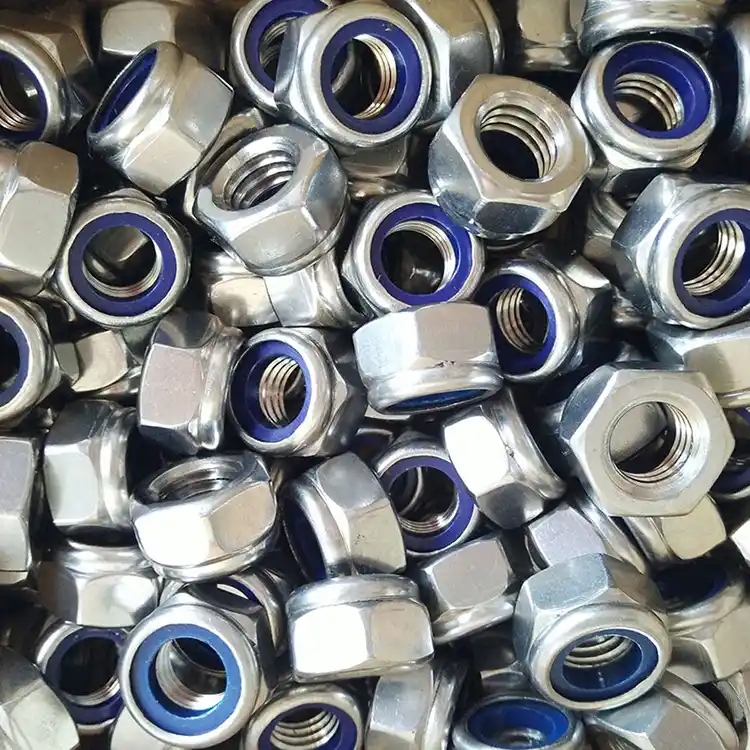
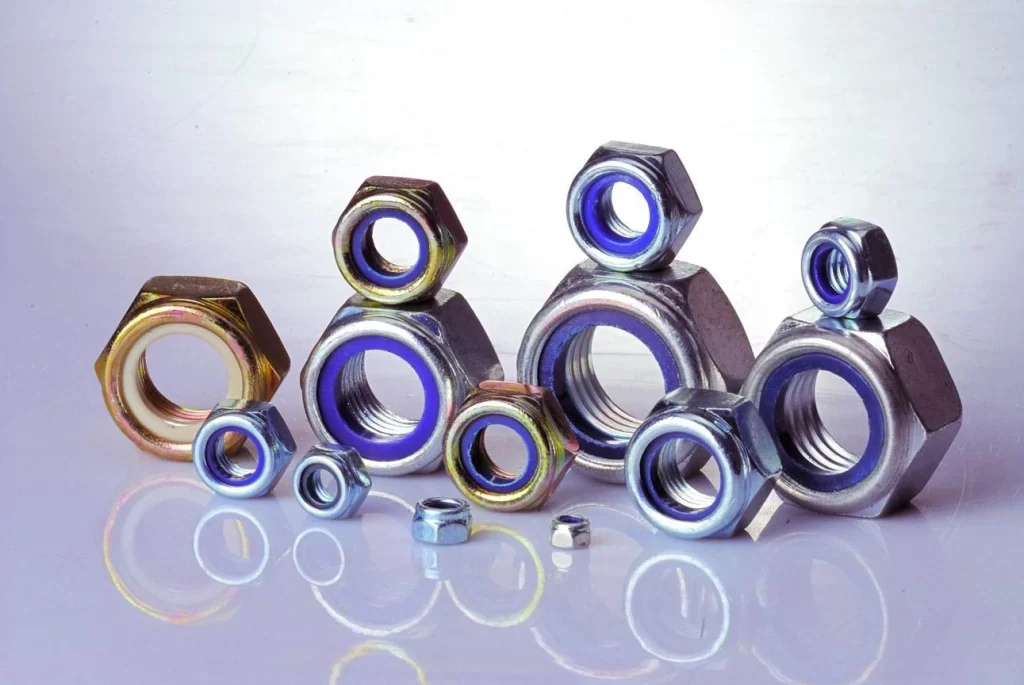
The Stainless Steel Nylon Lock Hex Nut DIN985 is a high quality nut that is designed to securely fasten bolts and screws. The nut is made from durable stainless steel, which provides excellent strength and resistance to corrosion. The nylon locking insert ensures that the nut stays in place and prevents it from coming loose.
Description
Nylon Lock Hex Nut DIN985 information
Stainless Steel Nylon Lock Hex Nut DIN985 is a type of hex nut that comes with an integrated nylon insert. The nylon lock hex nut is widely used in various applications because of its exceptional locking properties and durability. This type of nut can be easily identified by its hexagonal shape that has a nylon insert in the center.
The nut is made of stainless steel, which provides excellent resistance to rust and corrosion. Stainless steel is also known for its high strength, which enables the nut to withstand high pressure and high temperatures. The stainless steel material used in the nut gives it a sleek, polished look, and makes it ideal for use in high-end applications.
The nylon insert in the hex nut plays a critical role in providing a secure and tight fit. The plastic material provides a cushioning effect that prevents the nut from loosening over time. The nylon insert helps to grip the threads of the bolt tightly, preventing it from vibrating or coming loose. This feature makes the nut ideal for use in high-vibration environments.
The DIN985 standard ensures that the hex nut is made to exacting specifications. The standard specifies the dimensions, materials, and tolerances that make up the nut, ensuring that it is uniform in size and shape. The DIN985 standard ensures that the nut can be used interchangeably with other nuts of the same dimensions, making it easy to find replacement parts.
Stainless Steel Nylon Lock Hex Nut DIN985 is a versatile and reliable fastener for almost any application. It provides excellent locking properties, durability, and resistance to corrosion. The nut’s nylon insert ensures a tight and secure fit that holds up against vibration and high temperatures. The DIN985 standard ensures that the nut is consistent in shape and size, making it easy to find replacements. Whether you are constructing a new project or replacing worn-out parts, this nut is an excellent choice for your fastening needs.
Nylon Lock Hex Nut DIN985 Dimensions
DIN 985 Nylon self-locking nut is a new type of high anti vibration and anti loose fastening parts, which can be used in various mechanical and electrical products with temperature from – 50 ℃ to 100 ℃. At present, the demand for nylon self-locking nut is increasing rapidly in aerospace, aviation, tank, mining machinery, automobile transportation machinery, agricultural machinery, textile machinery, electrical products and various kinds of machinery. This is because its anti vibration and anti loose performance is much higher than other anti loose devices, and its vibration life is several times or even dozens of times higher. At present, more than 80% of the accidents of machinery and equipment are caused by the loosening of fasteners, especially in mining machinery. The use of nylon self-locking nuts can eliminate the major accidents caused by loose fasteners.
Application of thread diameter m3-48mm nonmetallic undercut hexagon nut
Material, carbon steel and stainless steel
Thread tolerance: 6H
Property grade: carbon steel 5,6,8,10
Tolerance requirements: a according to DIN ISO 4759
Surface form: blackening treatment (heating or chemical), surface roughness according to din267, permissible surface defects according to din267, hot dip galvanizing according to din267
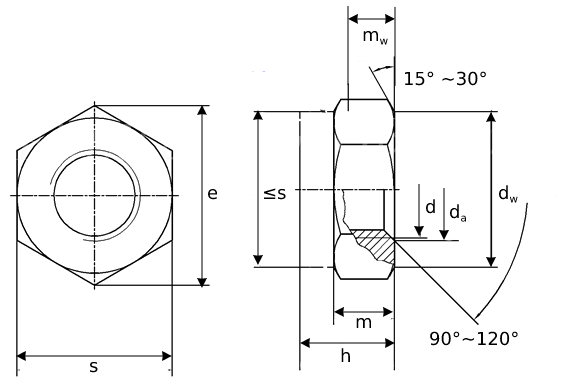
| Thread Size d | M3 | M4 | M5 | M6 | ||
|---|---|---|---|---|---|---|
| P | Pitch | Coarse thread | 0.5 | 0.7 | 0.8 | 1 |
| Fine thread 1 | / | / | / | / | ||
| Fine thread 2 | / | / | / | / | ||
| da | min | 3 | 4 | 5 | 6 | |
| max | 3.45 | 4.6 | 5.75 | 6.75 | ||
| dw | min | 4.6 | 5.9 | 6.9 | 8.9 | |
| e | min | 6.01 | 7.66 | 8.79 | 11.05 | |
| h | max=nominal size | 4 | 5 | 5 | 6 | |
| min | 3.7 | 4.7 | 4.7 | 5.7 | ||
| m | min | 2.4 | 2.9 | 3.2 | 4 | |
| mw | min | 1.65 | 2.2 | 2.75 | 3.3 | |
| s | max=nominal size | 5.5 | 7 | 8 | 10 | |
| min | 5.32 | 6.78 | 7.78 | 9.78 | ||
| per 1000 units≈kg | 0.5 | 1 | 1.4 | 2.4 | ||
| Thread Size d | M7 | M8 | M10 | ||
|---|---|---|---|---|---|
| P | Pitch | Coarse thread | 1 | 1.25 | 1.5 |
| Fine thread 1 | / | 1 | 1 | ||
| Fine thread 2 | / | / | 1.25 | ||
| da | min | 7 | 8 | 10 | |
| max | 7.75 | 8.75 | 10.8 | ||
| dw | min | 9.6 | 11.6 | 15.6 | |
| e | min | 12.12 | 14.38 | 18.9 | |
| h | max=nominal size | 7.5 | 8 | 10 | |
| min | 7.14 | 7.64 | 9.64 | ||
| m | min | 4.7 | 5.5 | 6.5 | |
| mw | min | 3.85 | 4.4 | 5.5 | |
| s | max=nominal size | 11 | 13 | 17 | |
| min | 10.73 | 12.73 | 16.73 | ||
| per 1000 units≈kg | 3 | 5.1 | 10.6 | ||
| Thread Size d | M12 | M14 | M16 | ||
|---|---|---|---|---|---|
| P | Pitch | Coarse thread | 1.75 | 2 | 2 |
| Fine thread 1 | 1.5 | 1.5 | 1.5 | ||
| Fine thread 2 | 1.25 | / | / | ||
| da | min | 12 | 14 | 16 | |
| max | 13 | 15.1 | 17.3 | ||
| dw | min | 17.4 | 20.5 | 22.5 | |
| e | min | 21.1 | 24.49 | 26.75 | |
| h | max=nominal size | 12 | 14 | 16 | |
| min | 11.57 | 13.3 | 15.3 | ||
| m | min | 8 | 9.5 | 10.5 | |
| mw | min | 6.6 | 7.7 | 8.8 | |
| s | max=nominal size | 19 | 22 | 24 | |
| min | 18.67 | 21.67 | 23.67 | ||
| per 1000 units≈kg | 17.2 | 26 | 34 | ||
| Thread Size d | M18 | M20 | M22 | ||
|---|---|---|---|---|---|
| P | Pitch | Coarse thread | 2.5 | 2.5 | 2.5 |
| Fine thread 1 | 2 | 2 | 2 | ||
| Fine thread 2 | 1.5 | 1.5 | 1.5 | ||
| da | min | 18 | 20 | 22 | |
| max | 19.5 | 21.6 | 23.7 | ||
| dw | min | 24.9 | 27.7 | 29.5 | |
| e | min | 29.56 | 32.95 | 35.03 | |
| h | max=nominal size | 18.5 | 20 | 22 | |
| min | 17.66 | 18.7 | 20.7 | ||
| m | min | 13 | 14 | 15 | |
| mw | min | 9.9 | 11 | 12.2 | |
| s | max=nominal size | 27 | 30 | 32 | |
| min | 26.16 | 29.16 | 31 | ||
| per 1000 units≈kg | 45 | 65 | 75 | ||
| Thread Size d | M24 | M27 | M30 | ||
|---|---|---|---|---|---|
| P | Pitch | Coarse thread | 3 | 3 | 3.5 |
| Fine thread 1 | 2 | 2 | 2 | ||
| Fine thread 2 | / | / | / | ||
| da | min | 24 | 27 | 30 | |
| max | 25.9 | 29.1 | 32.4 | ||
| dw | min | 33.2 | 38 | 42.7 | |
| e | min | 39.55 | 45.2 | 50.85 | |
| h | max=nominal size | 24 | 27 | 30 | |
| min | 22.7 | 25.7 | 28.7 | ||
| m | min | 15 | 17 | 19 | |
| mw | min | 13.2 | 14.8 | 16.5 | |
| s | max=nominal size | 36 | 41 | 46 | |
| min | 35 | 40 | 45 | ||
| per 1000 units≈kg | 100 | 162 | 212 | ||
| Thread Size d | M33 | M36 | M39 | ||
|---|---|---|---|---|---|
| P | Pitch | Coarse thread | 3.5 | 4 | 4 |
| Fine thread 1 | 2 | 3 | 3 | ||
| Fine thread 2 | / | / | / | ||
| da | min | 33 | 36 | 39 | |
| max | 35.6 | 38.9 | 42.1 | ||
| dw | min | 46.6 | 51.1 | 55.9 | |
| e | min | 55.37 | 60.79 | 66.44 | |
| h | max=nominal size | 33 | 36 | 39 | |
| min | 31.4 | 34.4 | 37.4 | ||
| m | min | 22 | 25 | 27 | |
| mw | min | 18.2 | 19.8 | 21.5 | |
| s | max=nominal size | 50 | 55 | 60 | |
| min | 49 | 53.8 | 58.8 | ||
| per 1000 units≈kg | 317 | 415 | 499 | ||
| Thread Size d | M42 | M45 | M48 | ||
|---|---|---|---|---|---|
| P | Pitch | Coarse thread | 4.5 | 4.5 | 5 |
| Fine thread 1 | 3 | 3 | 3 | ||
| Fine thread 2 | / | / | / | ||
| da | min | 42 | 45 | 48 | |
| max | 45.4 | 48.6 | 51.8 | ||
| dw | min | 60.6 | 64.7 | 69.4 | |
| e | min | 72.09 | 76.95 | 82.6 | |
| h | max=nominal size | 42 | 45 | 48 | |
| min | 40.4 | 43.4 | 46.4 | ||
| m | min | 29 | 32 | 36 | |
| mw | min | 23.1 | 24.8 | 26.5 | |
| s | max=nominal size | 65 | 70 | 75 | |
| min | 63.8 | 68.1 | 73.1 | ||
| per 1000 units≈kg | 628 | 771 | 998 | ||
Common Bolt Materials
Fasteners are fabricated from a variety of materials. These options include metals and polymers. Stainless steel offers strength and corrosion resistance. While polymer options have less strength than stainless, they are a good choice for resisting chemicals. The most common materials are:
- Stainless steel
- Alloy steel
- Low carbon steel
- Medium carbon steel
- Titanium
- Polymers, such as nylon
Finish Options
The use of heat treatments and application of various finishes, also known as “plating,” affects the look and performance of fasteners. Finishes provide material stability and protect the fasteners from corrosion and rust. Below are some common heat treatment and finish benefits:
- Zinc coating – Most common, low cost, resists corrosion and rust
- Galvanized – Superior corrosion protection, anti-seize, higher upfront investment
- Stainless – Great for humid environments, strong, ideal for electrical or mechanical uses
- Black – Adds color, provides better grip, deflects light
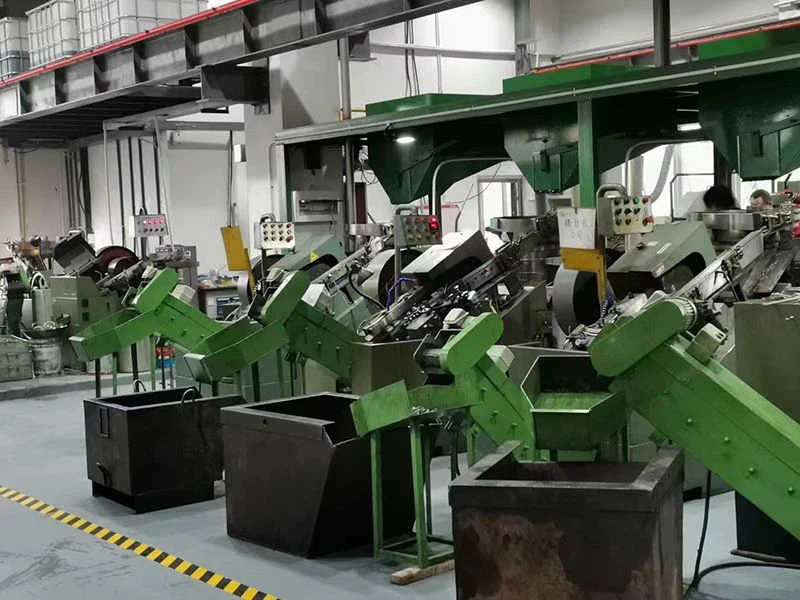
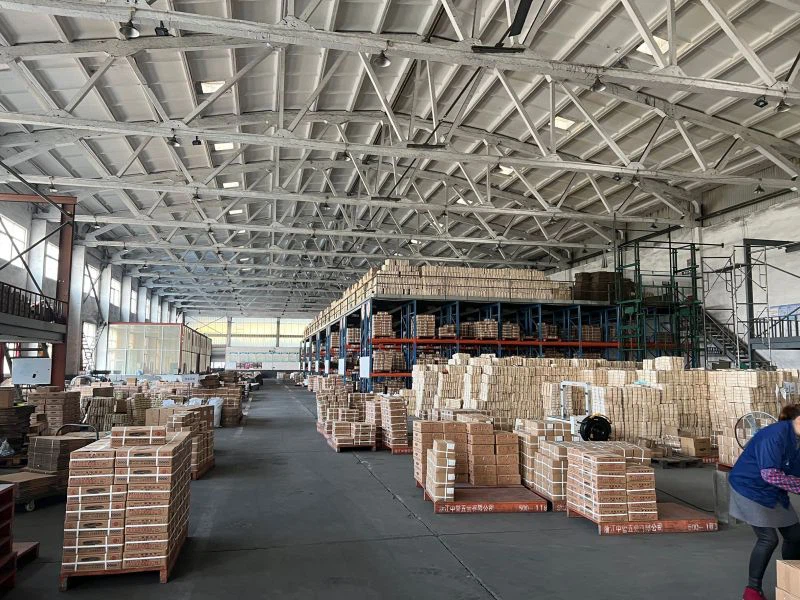
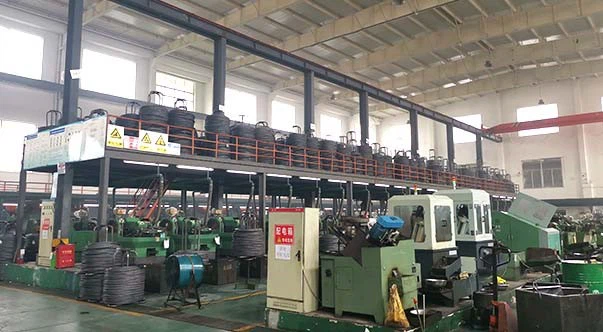
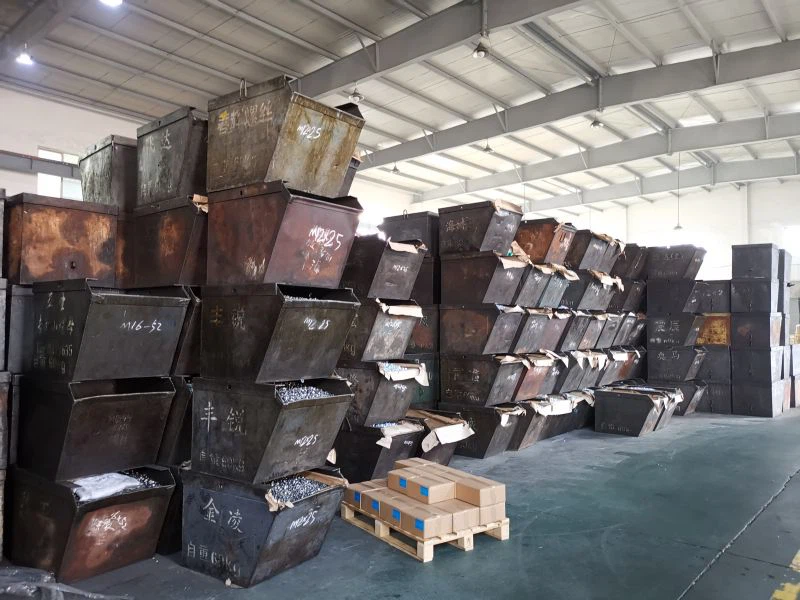
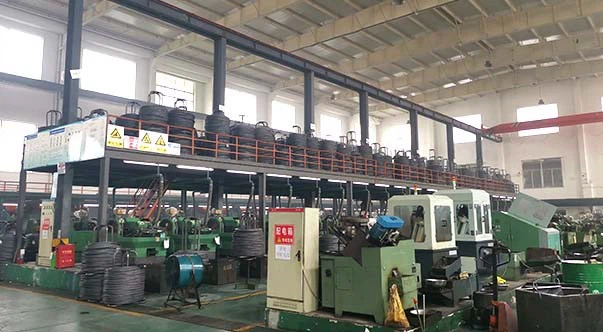
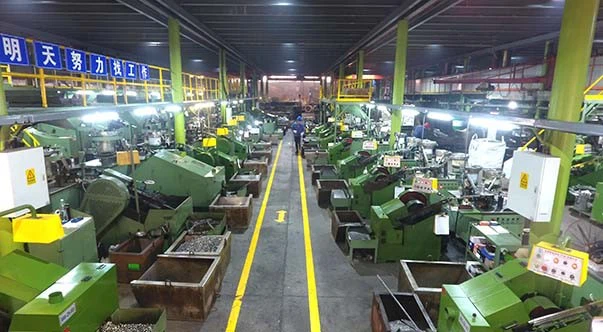
Our Nut Factory
MYWAY Services
MYWAY strictly complies with the requirements of the ISO9001 quality certification system, strictly controls quality, implements it at every level, and assigns responsibilities to everyone to ensure the healthy operation of the comprehensive system of design, production, sales, and after-sales service. In order to strengthen communication with users, better provide users with high-quality products, and better serve users with the brand, we have made the following commitments:
1. Products are designed and manufactured in strict accordance with standards. We produce non-standard products according to the drawings provided by customers.
2. Pre-sales service
Serving customers: product introduction, answers to technical questions, and engineering-assisted design.
3. Sales service
1). The products are based on the needs of user orders, with quality and delivery time as the premise.
2). During the use of the product, our company regularly organizes technical and quality inspection service personnel to visit and solicit feedback from users on the quality, usage status, improvement opinions and other aspects of the product, so as to further improve product quality.
4. After-sales service
1). If users have any problems or information when using our products, please report them back to the company in a timely manner so that the company can properly handle and improve them so that our products can better meet your requirements.
2). If the product does not work properly or is damaged due to quality problems during the warranty period, our company will be responsible for free repair or replacement. If the product is damaged or does not work properly due to improper use by the user, our company can provide repair services. If users need it, our company can provide users with free pre-sales and after-sales technical consultation.
.After-sales service. Users are required to fill in the product service and quality feedback information form and make appraisal opinions in order to improve the quality of MYWAY products and services.
FAQ
Q: What is the function of a nut?
A: A nut is a mechanical fastener with a threaded hole. It is attached to a bolt, screw or stud to provide a clamping force and prevent axial movement.
Q: Do screws have nuts?
A: Screws don’t need nuts, as they become secure by being tightened into the hole with a screwdriver or driver bit which fits into the drive recess. Generally speaking, screws are shorter than the width of the material they are being screwed into, so that they don’t protrude on to the other side.
Q: What is the difference between a lock nut and a hex nut?
A: The term “Lock Nut” is used to describe a nut that is designed to provide higher resistance to loosening as compared to a standard hex nut. Lock Nuts are commonly used in applications that encounter vibration or impact forces that can cause a standard nut to loosen over time.
Q: What is the difference between a square nut and a hex nut?
A: Hex nuts are easier to install and tighten than square nuts. They have six sides, whereas square nuts only have four sides. Because they have more sides, hex nuts offer more torque, which makes them easier to install and tighten. You can install hex nuts in smaller spaces.
Q: What is a DIN 934 nut?
A: Din 934 is the standard for Hexagon nuts with metric coarse and fine pitch thread – There are two product classes A (up to M16) and B (> M16) DIN stands for “Deutsches Institut für Normung”, meaning “German institute for standardisation” and is widely accepted globally, though many are not superseded by ISO standards.
Q: What is the ASTM standard for hex nuts?
A: Hex nuts (also referred to as finished hex nuts) are available in ASTM A563-A and compatible with low carbon steel bolts such as ASTM A307, ASTM F1554 grade 36, SAE grade 2, and AASHTO M183.
Q: What is DIN 936?
A: DIN 936 hex nuts are jam nuts, it has a fine thread.
Q: What is flange nut as per DIN 6923?
A: DIN 6923 ISO 4161 Serrated Flange Nut are hex nuts with non-spinning washers attached at the bottom. Below the washers are serrations which prevent them from being used with washers or on surfaces that can be scratched and help the nuts to securely fasten when vibrations are present.
Q: What is DIN 985?
A: DIN 985 Nylon Insert Hex Lock Nuts are internally machine screw threaded hex nuts that rely upon an undersized captive nylon (polyamide) washer to create the prevailing torque feature that resists rotation and, hence, loosening.
Q: What is DIN 6926?
A: Metric DIN 6926 Nylon Insert Hexagon Flange Lock Nuts have a circular washer like flange shaped base that increases the. weight bearing surface to distribute the load over a greater area when tightened The flange eliminates the need to use a washer. with the nut.
Q: What is DIN 980?
A: DIN 980 lock nuts, all metal lock nut is also known as all metal self-locking nut. There are two main locking forms:
a. This kind of nut is called 980-v type, and the common forms are as follows: end face three-point type, elliptical type, side extrusion type.
b. The nut is embedded with a metal locking plate, which can prevent loosing by the locking ring. This kind of nut is called 980-m
Material: Carbon Steel
Type: All metal prevailing Torque, Hex Nuts
Thread Size: M3 ~ M39
Surface Finish: Plain, Black, Zinc Plated, Yellow Plated, H.D.G, Chrome Plated
Class: 4, 6, 8, 10
Q: What is the din standard for square nuts?
A: Square nuts, DIN 557.
Q: What is DIN 562?
A: DIN 562 – Square thin nuts.
Q: What is DIN 929?
A: Hexagon weld nuts.Three uniform projections ensure reliable contact with the weld surface, even if it is not perfectly flat. The precision pilot accurately locates the threads in the pilot hole and prevents the nut from slipping off center during welding.
We’re professional bolt manufacturers and suppliers in China, specialized in providing high quality customized products with low price. We warmly welcome you to wholesale or buy discount bolt in stock here from our factory. Contact us for free sample.