
MYWAY Metal Weld Studs – Wide Range, Great Value. Your China Fastener Manufacturer.
11+ Years Expertise | Professional Fastener Manufacturer | Standard & Custom Parts | DIN, ISO, ANSI Certified | Strong R&D | Ample Stock | Cost-Effective |
Professional Team | Serving 40+ Countries | Reliable Logistics
Weld Studs
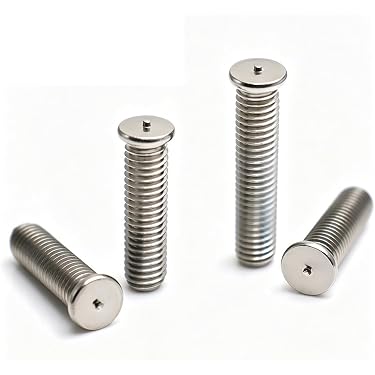
Single-End Weld Stud
DIN32501
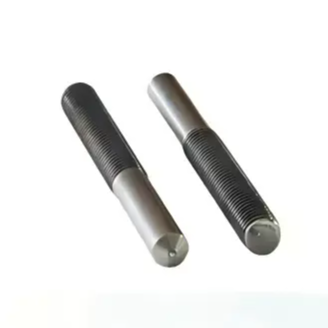
Arc Weld Stud With Ceramic Ferrule, Type PD
ISO13918 PD
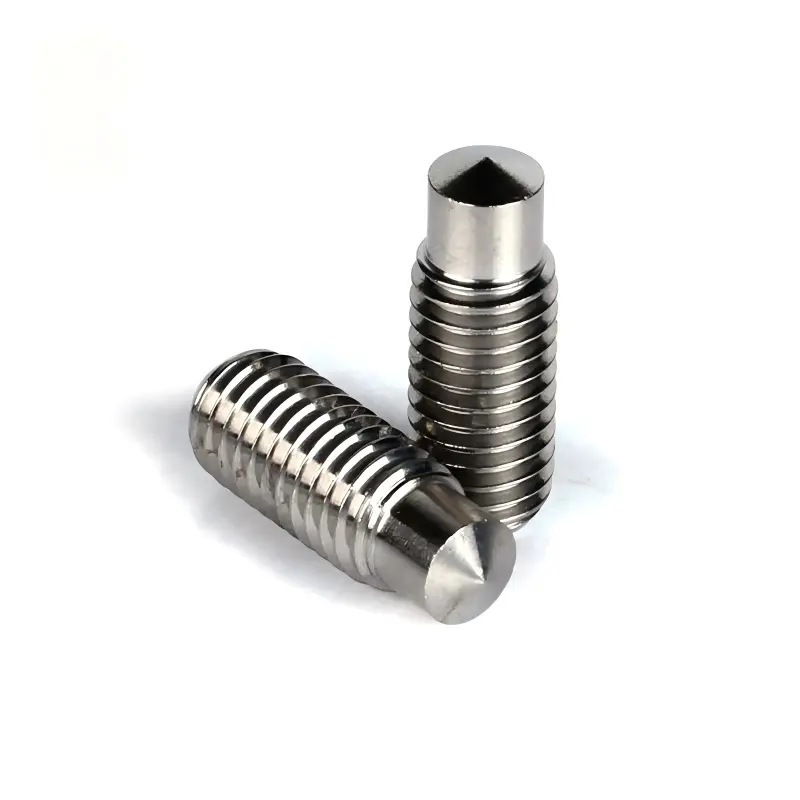
Reduced Base Weld Stud, Type RD
ISO13918 RD
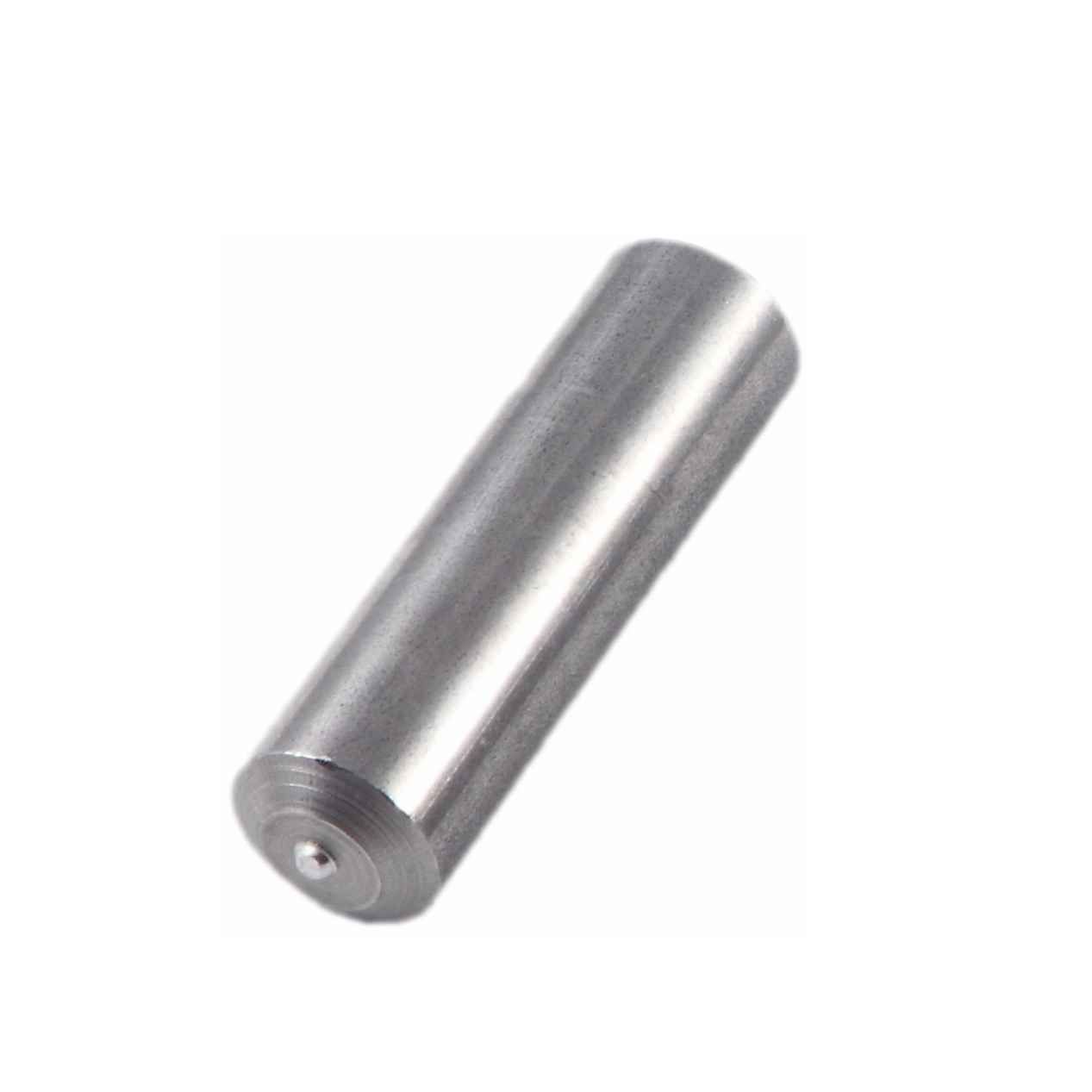
Arc Weld Unthreaded Stud, Type UD
ISO13918 UD
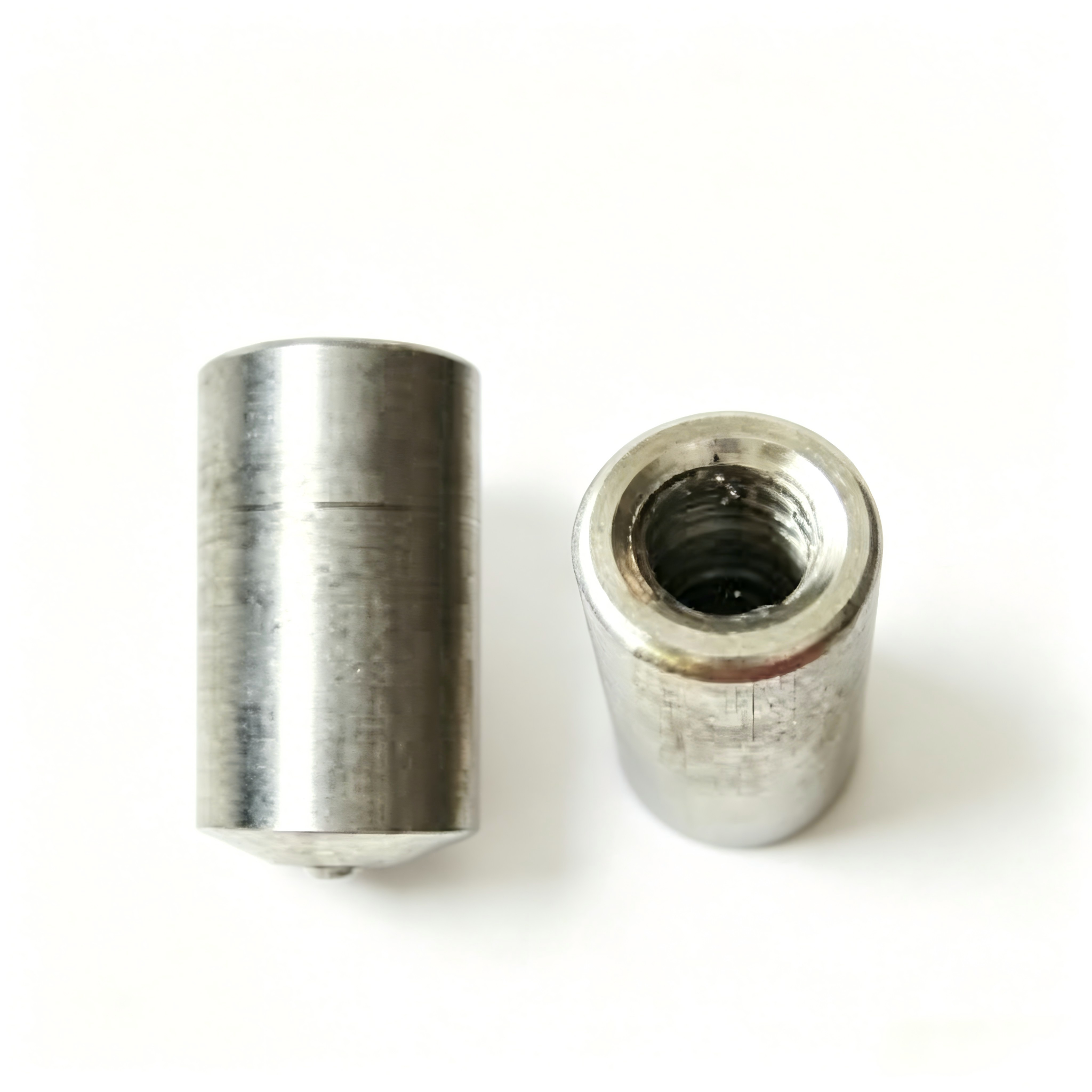
Internally Threaded Weld Stud, Type ID
ISO13918 ID
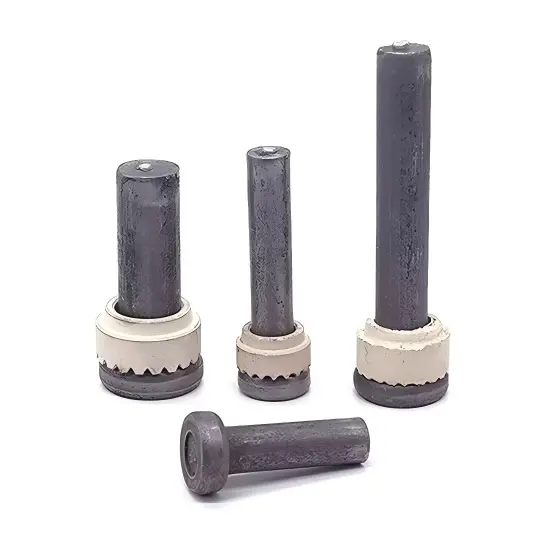
Arc Weld Stud With Ceramic Ferrule, Type SD
ISO13918 SD
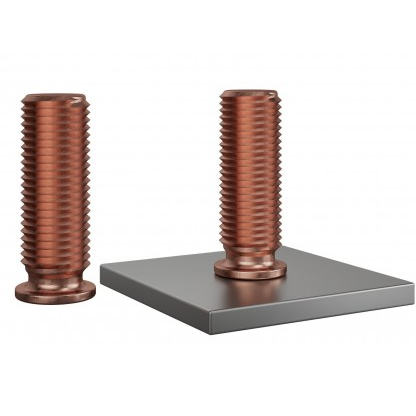
Flanged Weld Stud, Type PS
ISO13918 PS
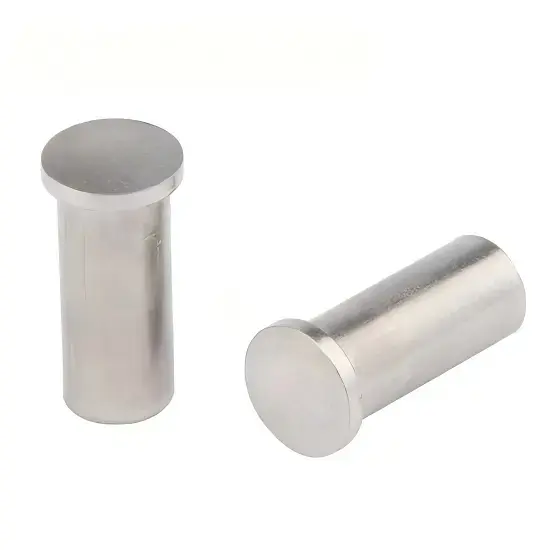
Unthreaded Weld Stud US
ISO13918 US
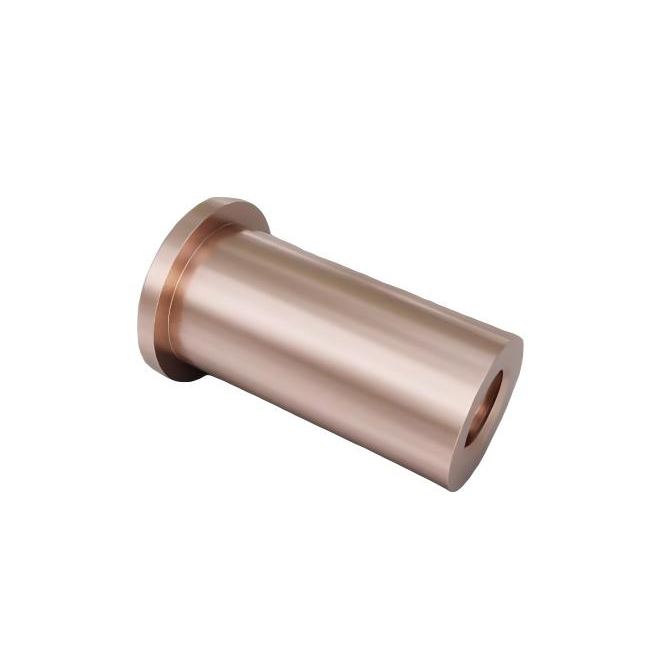
Internally Threaded Weld Stud IS
ISO13918 IS
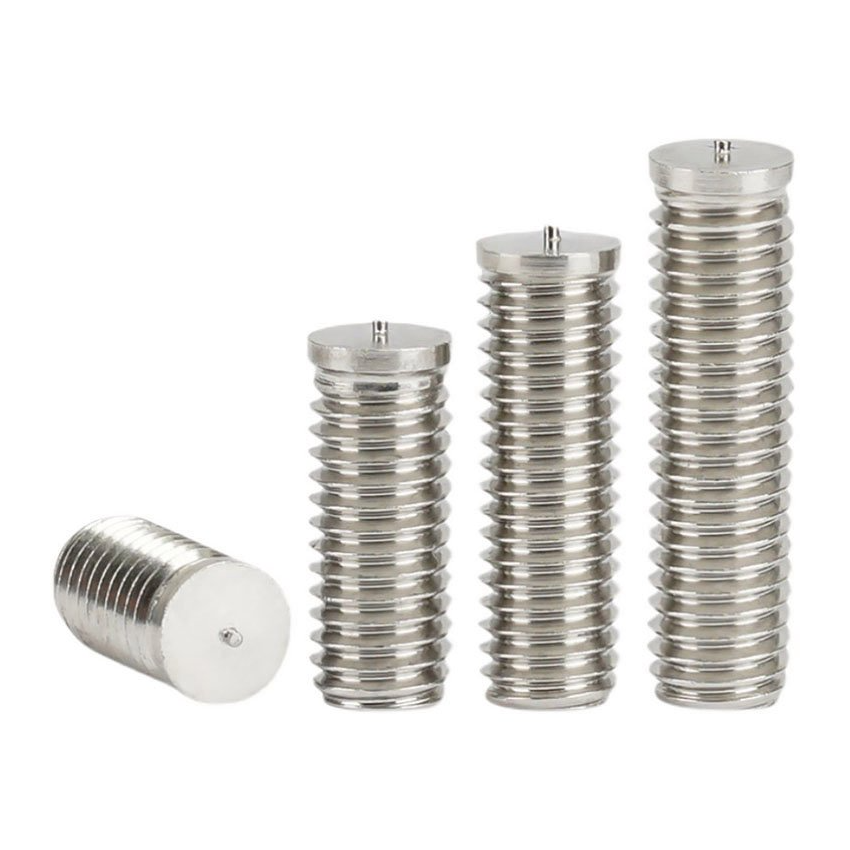
Arc Weld Stud, Type PT
ISO13918 PT
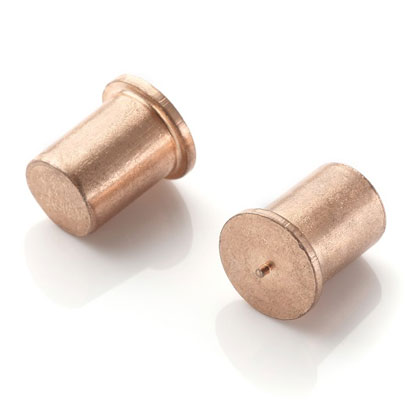
Arc Weld Unthreaded Stud, Type UT
ISO13918 UT
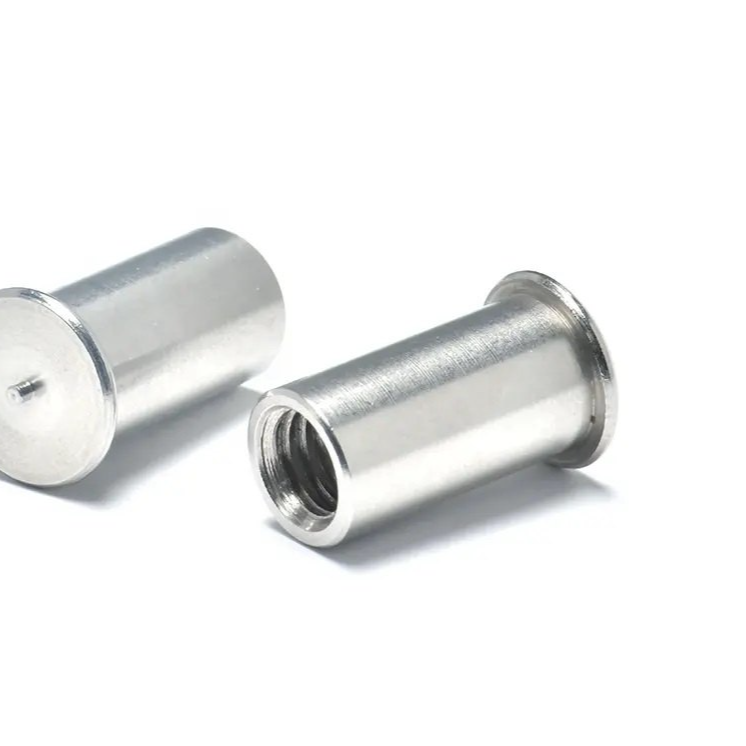
Arc Weld Internally Threaded Stud, Type IT
ISO13918 IT
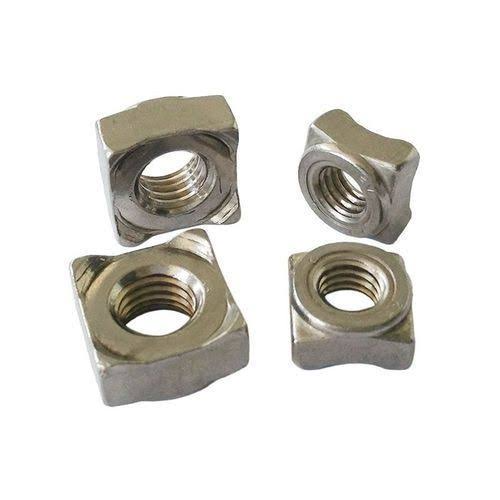
Square Weld Nuts
DIN 928
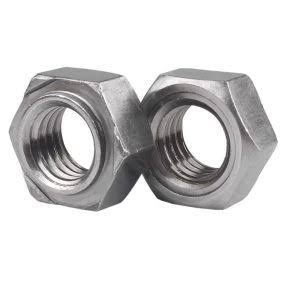
Hexagon Weld Nuts
DIN 929
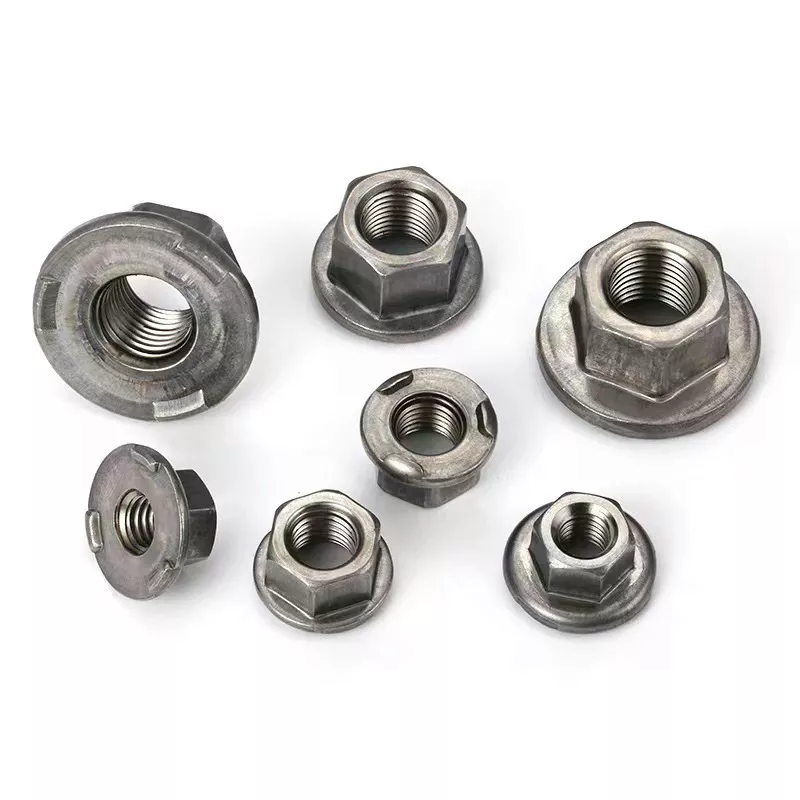
Hexagon Weld Nuts with Flange
DIN 977
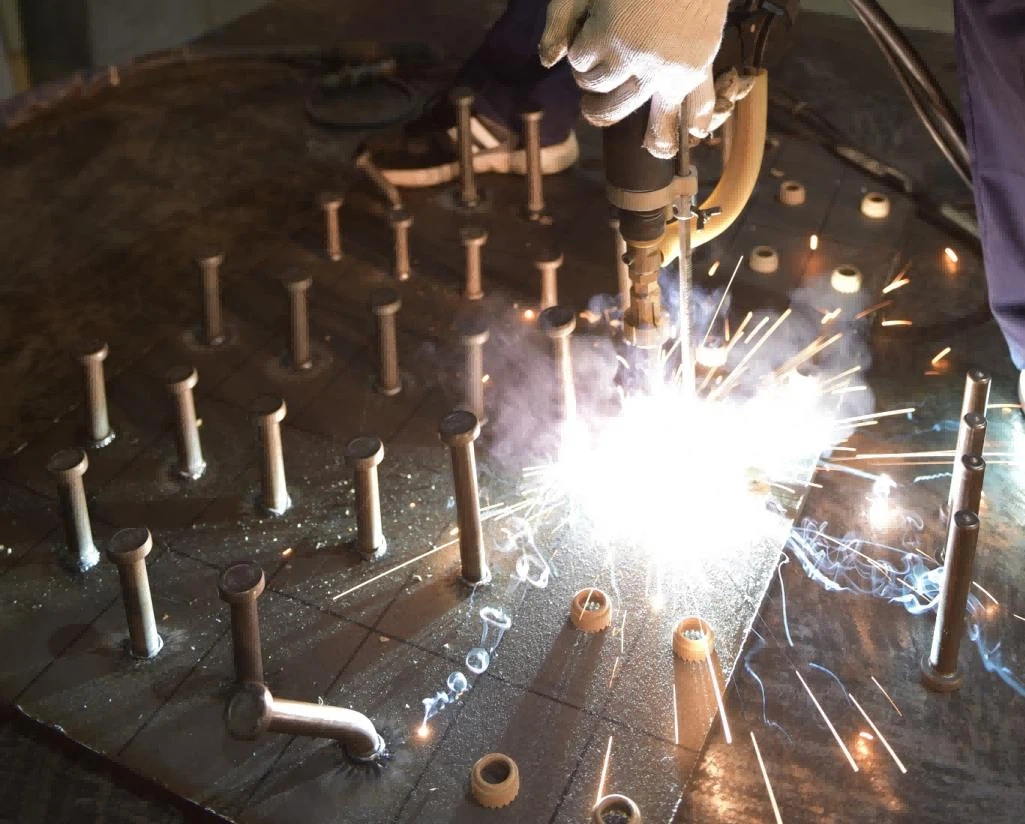
What Is A Weld Studs?
A welding stud is a screw connected to a parent part by welding. It is also called an energy storage nail, an electric bolt welding stud, a welding screw or a planted welding nail. It is widely used in building wall decoration, automobiles, airplanes, ships, electronics, instruments, air conditioners, boilers, computers, household appliances, kitchen equipment, medical equipment and other industries. Welding studs are divided into two types according to the thread: external thread welding studs and internal thread welding studs. They are divided into headed and headless types according to the type. They are divided into carbon steel, copper plating, stainless steel, copper and aluminum according to the material. There are national standards that specify the specifications and dimensions of such welding studs, and all manufacturers produce them according to the standards.
The main function of welding studs is to provide strong fixing force and connection force to connect two or more components together to avoid loosening and falling off, thereby ensuring the normal operation of equipment and components. In some environments, such as high temperature and high pressure, welding studs can also withstand large tensile and shear forces to keep the connection firm and stable. In addition, welding studs can also realize the functions of electrical and thermal conductivity in some special occasions, such as as the connection point of electronic components in circuit board manufacturing, or as the connection point of heat sink and heat pipe in the manufacture of radiators.
Welding studs have a wide range of applications, not only in the construction field, but also in the fields of machinery manufacturing, automobile manufacturing, aerospace, etc. In the construction field, welding studs are often used to connect materials of different materials, such as connecting wood, metal, concrete and other materials together. In the field of machinery manufacturing, welding studs are often used to connect machine parts to ensure the stability and mechanical properties of the machine. In the automotive field, welding studs are mainly used to connect car body parts, such as car shell panels, doors, and car bodies. In the aerospace field, welding studs are mainly used to connect the structural parts of aircraft.
In general, welding studs are a commonly used connection material with strong fixing and connection forces. They can achieve multiple functions such as electrical conductivity and heat conduction, and are suitable for the manufacture and repair of various equipment and components. As an important part of production, welding studs play an important role in the manufacturing and repair process, and have contributed to production and social development.
What Is A Weld Studs?
1. Drawn Arc Weld Studs
As a company specializing in welding studs and stud welding equipment, Image Industries offers a much greater range of studs than our industry competitors. With our ability to work with your design and engineering team to create custom-drawn arc weld studs to meet your project’s needs and specifications, we can provide the ideal parts for your projects in both high volume and smaller sourcing needs.
We specialize in many different categories of weld studs, such as drawn arc weld studs and CD weld studs, as well as specialized studs for cable management and hydraulic fittings. In this article, we highlight a few of our most popular drawn arc welding stud options.
Image offers a broad range of studs to match any application that you need completed.
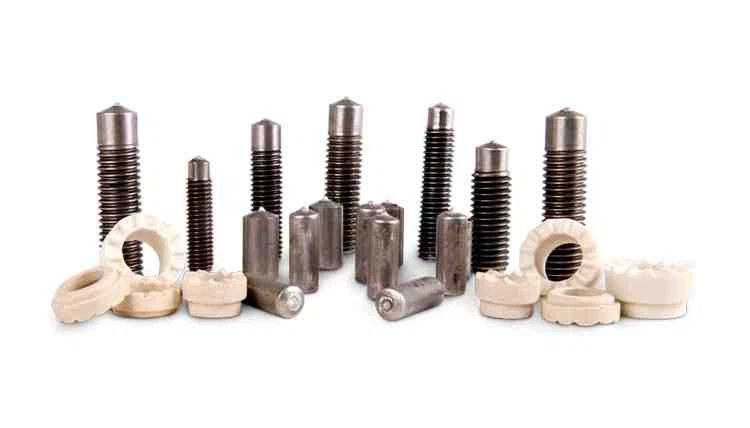
●Full Thread: Fully threaded arc studs are the most common arc stud and are used in thousands of different applications
●Partial Thread: Partially threaded weld studs provide more shear than the same size fully threaded stud
●No Thread: No-thread studs are typically used in equipment manufacturing and fabrication to form handles, stops, and locators. These come in a range of sizes, and, like most welding studs, they are available in mild and stainless steel.
●Collar Stud: Collar Studs are usually used as standoffs for wire routing, plate spacing etc.
●Full Base: Full base studs are used when maximum shear is needed for a given thread size
●Reduced Base: Reduced base studs are used when the application design does allow clearance for the collar of weld flash
Threaded Weld Studs
The vast majority of our on-hand inventory is threaded weld studs. These studs are used to fasten or join a base workpiece to another part or component. The threading on the stud allows a nut to be used to fasten two pieces without drilling a hole or needing to secure the opposite end of the stud to tighten the nut.
2. Capacitor Discharge Weld Studs
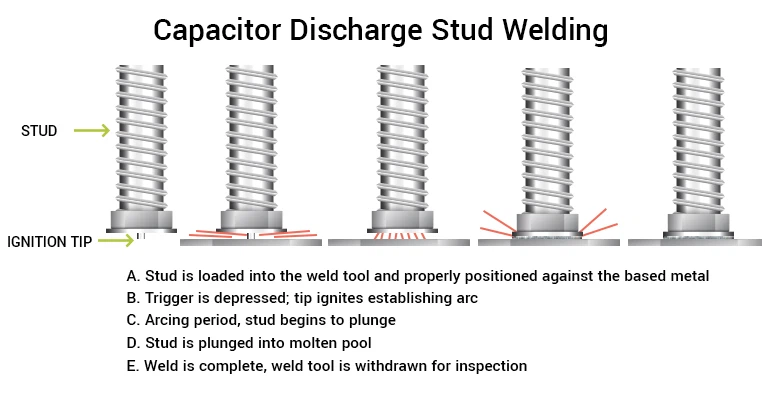
Capacitive Discharge (CD) stud welding is a proven technology that has been in use for over 50 years. The broad range of use and applications is appealing to those looking for a fast, easy, and versatile process. The equipment is generally small and operates off of low voltage (110V or 240V in North America, 220V in Europe, for example). Fasteners designed for CD welding typically have a flange formed on the weld end in conjunction with a tip that initiates the discharge arc and subsequently vaporizes once electrical current is applied. The re-solidified flange enables a strong weld.
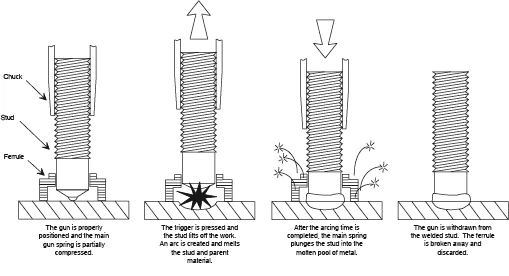
To perform a weld using a CD stud welding system and a CD weld stud, you begin by loading a weld stud into its appropriately sized chuck or collet attached to the welding gun and then placing the welded end against the metal substrate it will be welded to. The power supply will then communicate with the gun, raise the stud slightly from the substrate, and send an electrical current stored in the capacitor to the metal piece and fastener. The heat resulting from this arc melts the metal substrate as well as the tip and collar of the fastener. For the fraction of a second the fastener end and mating substrate are molten, a spring within the gun plunges the fastener into the substrate strongly fusing them together as they cool.
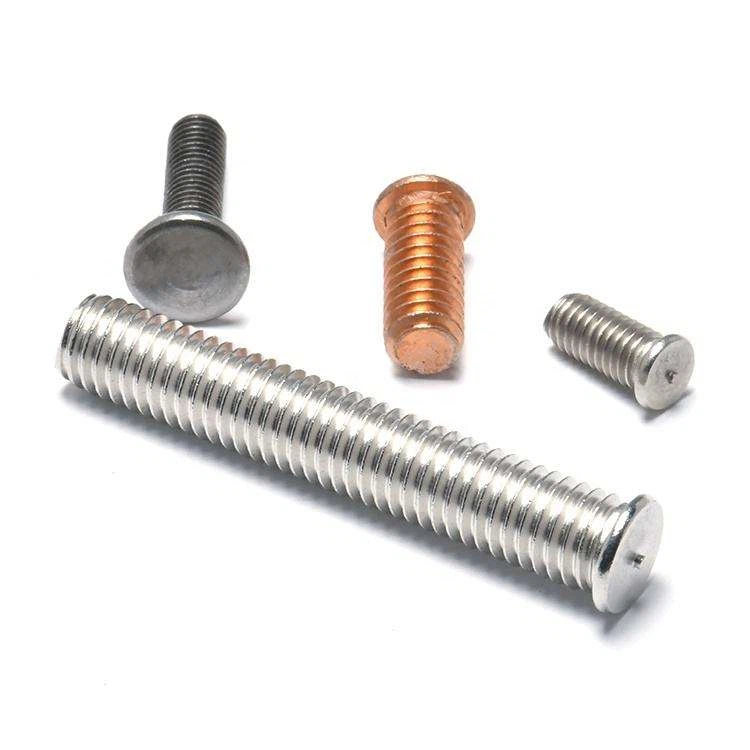
At Image Industries, orange of Capacitor Discharge weld studs includes mild steel and stainless steel studs, aluminum alloy studs, and lead-free brass studs. Our CD weld studs are available in threaded, unthreaded, tapped, collar, and internally threaded forms, making them ready to be used in any type of CD welding project.
3. Construction Weld Studs
However, it is also possible to use our headed stud anchors for precast concrete. This is most commonly seen in construction where steel beams and framing is used in conjunction with concrete tilt-up walls.
Image Industries offers three construction weld stud products:
●Headed anchor
●Shear connector
●Deformed bar anchor
Options in Anchors
Shear connector studs and headed anchor studs are used in construction to attach two different materials, typically concrete and steel. They are essential in bridge construction and building construction where the headed part of the stud forms the anchor into the concrete, joining the two materials together, forming a composite construction and providing major cost savings.
The most common options in a headed stud anchor used in precast concrete will be either mild steel or stainless steel. The specific length and body diameter will be determined by the specific applications for the job. This, in turn, will be calculated to include the maximum yield strength as well as the maximum yield shear that will be present.
Typically, headed stud anchor sizes and diameters will also vary based on the specific placement or type of precast concrete structure. Most are three to eight inches in length and are patterned in specific groups to address load capacity requirements.
Issues that have to be carefully considered when using a headed stud anchor in a pre-cast construction project include concerns about the concrete breakout and pry-out. This is most commonly associated with free edges and shear force that is directed away, but with proper placement of the anchors as well as consideration for the specifics of the design, these issues can be addressed.
4. Advanced Process Weld Studs
5. Weldable Cable Management Mounts
QuikLinx Cable Tie Mounts
Instead of using a weld stud, screw, or adhesive, it is possible to install high-tech QuikLinx metal cable tie mounts almost instantly with arc stud welding technology. With different options and designs, including those for use with short cycle and gas arc stud weld processes, these cable tie holder designs can be applied in a fraction of a second, providing a solid weld between the mount and the metal surface. With the ability to apply these using a stud weld system at about 3 seconds per cable tie mount, this is a cost-effective, fast, and easy way to run a cable across structural components that were extremely challenging to work with in the past.
These small-sized mounts come with wings that allow for the cable tie to be inserted through the mount to hold the cable or cable assembly solidly in place. Additionally, we provide the option of a single shot system, which is ideal for lower volume applications for metal cable tie mounts, or a magazine-fed system that is effective for rapid and exclusive installation of the tie mounts.
CD Wire Tie Studs
When it comes to cable management products, Capacitor Discharge (CD) wire tie studs are the superior option for securing cable tie bases as compared to common adhesives or screws. Their use ranges across a variety of workplace environments, from cables for heavy machinery to standard desk space equipment. They offer quick wire security so you can focus on work without worrying about causing damage or accidents.
CD Ground Studs
CD ground studs can be used wherever a ground touchpoint is required. Image Industries offers CD ground studs that are designed to make it easy to establish a ground connection where you need it.
HD Wire Tie Studs
HD wire tie studs are a heavy duty gas arc solution that has the benefit of being able to weld through paint (black paint is recommended).
6. Hydraulic Cylinder Ports
●Hydraulic weld ports
●Hydraulic weld port plugs
●Tube line clamps
Companies have been manufacturing welded hydraulic cylinders for decades. Many different stud welding techniques have been used, including:
●MIG Welding
●Stick Welding
●Friction Welding
We developed a stud welding method that enhances the welding of the bosses or ports on hydraulic cylinders. Image’s hydraulic port welding process has many advantages for hydraulic cylinder manufacturers:
Fast Process
Because the stud weld process is fast (less than 1 second arcing time), the throughput is significantly enhanced compared to traditional hydraulic cylinder port welding.
Low Distortion
Because the stud weld process is fast, the amount of heat input into the tubing is low. This low overall heat input greatly reduces “egging” or ovality in the tube wall. This means that tube finishing can be done before port welding or that secondary post-port welding operations can be eliminated.
Fewer Leaks
Offering a full cross-sectional weld as opposed to a circumferential weld, the leak performance of the stud weld port is superior to conventional boss welding. The entire face of the bottom of the port is welded to the tube instead of the outside edge.
Reduce Tube Wall Thickness
Because of reasons 1, 2 & 3 above, many cylinder manufacturers have been able to reduce the tube wall thickness. One manufacturer went from a 7mm wall to a 5mm wall. This has saved that manufacturer tons of steel each year.
Saves a fitting
Often, manufacturers will weld an NPT fitting to the tube, and then the assembly will install a right angle JIC, O-ring boss, or O-ring face seal adapter into the NPT boss welded to the tube. Assembly is then tasked with trying to line up the adapter to a specific orientation to support a specific tube routing. This can mean loose or overly tight fittings. The stud weld port can be manufactured with the desired final fitting and welded at the exact orientation. This eliminates the adapter fitting and speeds up assembly.
7. Insulation Pins
●CD insulation pins
●Cupped head pins
●Double pointed insulation pins
Stud Welding Process
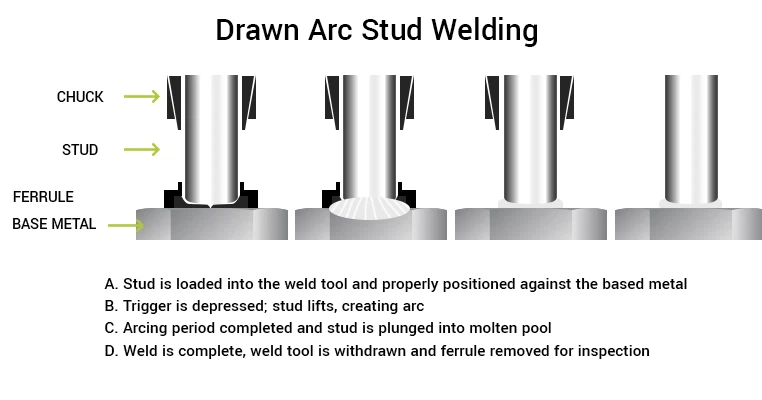
An arc is ignited between one end of the stud and the workpiece during stud welding. Both joining partners are melted and then joined under low contact pressure. The stud welding process usually takes less than a second and is used for round and rectangular cross-sections. A critical factor differentiating stud welding from other fastening methods is that the fastener is attached to the workpiece without marring the other side. The four most common techniques that are used for stud welding include:
●Capacitor Discharge
●Drawn arc
●Short arc
●Gas arc
Common Misconceptions About The Stud Welding Process
The stud welding process is often confused with other functions, including resistance and spot welding. Resistance welding and spot welding use electric current (not an arc) and high pressure to bond two items; stud welding does not. There is no high-pressure requirement in drawn arc stud welding.
Two Methods Of Stud Welding
Two stud welding methods are available – Arc Stud Welding and Capacitor Discharge (CD) Stud Welding.
The stud welding method used depends on the type of stud fastener that is needed, based on the application and the base metal the weld stud fastener well be welded to.
Equipment And Equipment Requirements For Stud Welding
Stud welding requires four essential pieces of equipment:
●Power supply
●Stud welding gun
●Cabling
●Weld studs
In addition to the welding equipment above, there are many stud welding accessories that help make the process easier such as grips, ferrule holders, and spark shields.
Stud Welding Fasteners
●Weld nuts
●Weld studs
●Weld pins
●Projection weld studs & screws
●CD weld fasteners
●Arc weld fasteners
How To Install Welded Stud Fasteners?
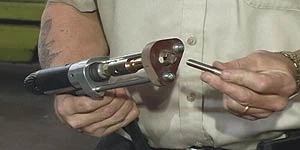
Step 1. Load
A weld stud fastener is manually or automatically inserted into the stud welding gun.
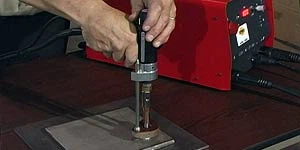
Step 2. Position
The Stud Welding Gun is positioned into firm contact with the work surface.
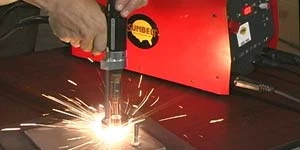
Step 3. Fire
The stud welding gun is activated and the fastener is welded in a fraction of a second. The weld between the fastener and base metal develops full strength instantly.
Advantages Of Weld Studs
Are you looking to find the best way to attach studs and other fasteners to sheet metals for diverse manufacturing applications? Stud welding is an excellent method to consider. Some of the benefits associated with stud welding products and manufacturing methods include:
●Enhanced accessibility
●Holes are not required
●Stud welding equipment is portable
●No reverse markings (with some applications)
●Fast attachments
Products Description
Weld Studs fasteners are used in a wide variety of industries:
●Aerospace
●Appliances
●Automotive
●Construction
●Electronics
●Forging Process
●Insulation Installation
●Light and Heavy Duty Equipment
●Offshore
●Petrochemical
●Shipbuilding
●Signs and Decorative Trim
●Toys
●Transportation
●Utilities Metalworking
About Weld Studs Packaging And Transportation
Packaging Materials
Choose materials with good moisture-proof, shock-proof, anti-corrosion and sealing properties, generally choose cartons, wooden boxes, plastic packaging and other materials.
Packaging Specifications
In compliance with relevant national standards and regulations, packaging specifications should be reasonably designed based on the size, weight, material, quantity, etc. of the product to avoid collisions and extrusions during transportation.
Packaging Form
There are two forms of single product packaging and batch packaging. Single product packaging is generally suitable for small batches of products, and batch packaging is suitable for large quantities of products.
Logo
Mark the product name, quantity, specifications, moisture-proof grade, shelf life and other information on the packaging.
Save
Avoid contact with toxic and flammable substances. The storage environment should be kept dry, ventilated, and clean. The storage location should be set up reasonably to avoid damage and contamination.
Transportation Method
It can be carried out through various modes of transportation such as road, railway, aviation, and sea transportation, among which road and sea transportation are the most common. We are close to Shanghai Port and Ningbo Port, most customers choose Shanghai Port. We pursue smooth transportation, avoid bumps and collisions, and do our best to ensure that products are delivered to customers in good condition and on time.
Temperature and Humidity Adjustment
Try to maintain a suitable temperature and humidity environment to avoid being affected by excessively high or low temperature and humidity, which may affect the quality and life of the product.
Safety Guarantee
Take necessary safety protection measures during transportation to avoid dangerous situations such as fires, explosions, accidents, etc., and ensure that they are not damaged or lost during transportation.
Insurance Requirements
In order to ensure transportation safety and improve transportation insurance coverage, you can purchase cargo transportation insurance when purchasing our high-value fastener products to avoid accidental loss or damage.
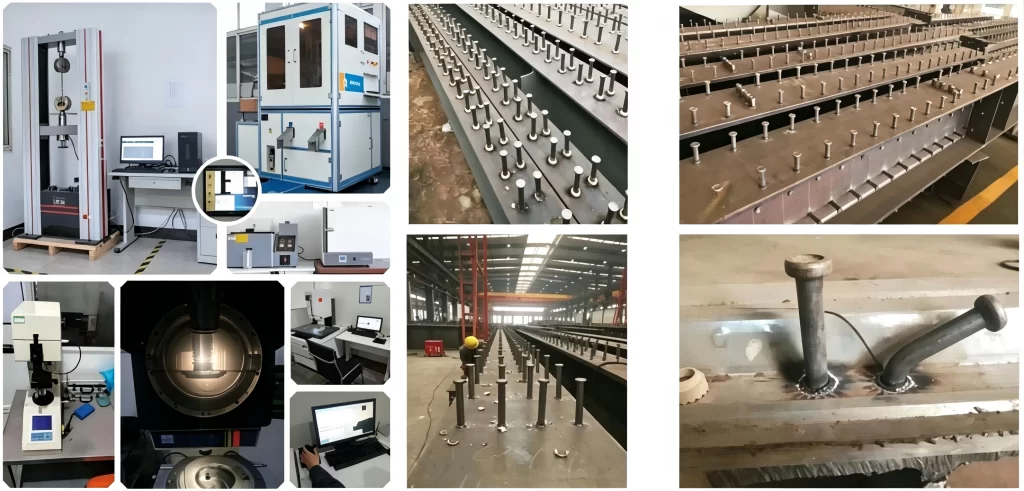
Our Weld Studs Factory
MYWAY Services
MYWAY strictly complies with the requirements of the ISO9001 quality certification system, strictly controls quality, implements it at every level, and assigns responsibilities to everyone to ensure the healthy operation of the comprehensive system of design, production, sales, and after-sales service. In order to strengthen communication with users, better provide users with high-quality products, and better serve users with the brand, we have made the following commitments:
1. Products are designed and manufactured in strict accordance with standards. We produce non-standard products according to the drawings provided by customers.
2. Pre-sales service
Serving customers: product introduction, answers to technical questions, and engineering-assisted design.
3. Sales service
1). The products are based on the needs of user orders, with quality and delivery time as the premise.
2). During the use of the product, our company regularly organizes technical and quality inspection service personnel to visit and solicit feedback from users on the quality, usage status, improvement opinions and other aspects of the product, so as to further improve product quality.
4. After-sales service
1). If users have any problems or information when using our products, please report them back to the company in a timely manner so that the company can properly handle and improve them so that our products can better meet your requirements.
2). If the product does not work properly or is damaged due to quality problems during the warranty period, our company will be responsible for free repair or replacement. If the product is damaged or does not work properly due to improper use by the user, our company can provide repair services. If users need it, our company can provide users with free pre-sales and after-sales technical consultation.
.After-sales service. Users are required to fill in the product service and quality feedback information form and make appraisal opinions in order to improve the quality of MYWAY products and services.
FAQ
Q: What is stud welding used for?
A: Stud welding is a widely used joining process within the industry that addresses various construction and assembly needs. The rapid and reliable attachment of fasteners onto metal surfaces along with its durable and strong bond means that it is very often a preferred or essential fastening process.
Q: How strong are weld studs?
A: Tensile Strength: 60,000 PSI Min. Yield Strength: 50,000 PSI Min.
Q: What is a CD weld stud?
A: Capacitor Discharge stud welding is a semi-automatic arc welding process. However, with CD welding, you have the ability to weld small diameter studs to very thin material.
Q: Is stud welding hard?
A: It’s Easier. Stud welding is a far more straightforward process than resistance welding. It only requires one step to join your materials together. To connect your two metals permanently, all you need is a few weld studs and your equipment.
Q: What grade are weld studs?
A: Stainless threaded weld studs are mostly stocked in grade 302HQ / 30430. on the weld end to preclude the plating from compromising the weld quality. studs can be annealed to a maximum of 75 Rockwell B hardness and 85 Rockwell B hardness, respectively.
Q: What is the spacing for welded studs?
A: The minimum spacing between the centre- lines of shear studs is governed by access requirements for the stud welding gun. A minimum spacing of between 60 mm and 70 mm is possible, depending on the size of the studs, but a minimum of 100 mm is pre- ferred by fabricators.
Q: How do you test a weld stud?
A: A simple way to test the shear torque of threaded studs is apply a straight pull of the Weld Stud Test Tool (no side load). When the wrench breaks-over and the stud is still attached then it passed. If the threaded stud breaks off – then it failed.
Q: Can Stud Welding Be Done In The Rain?
A: Recommendation for stud welding in cold or wet weather: Stud Welding shall not be done when the base metal temperature is below 0°F or when the surface is wet or exposed to falling rain or snow.
Q: What material is used for stud welding?
A: Both mild steels and stainless steels can be stud welded. In general, steel is great as a stud and base materials as it suits the drawn arc stud welding and capacitor discharge stud welding processes.
Q: How fast is stud welding?
A: Short cycle stud welding is a quicker form of the drawn arc stud welding process for attaching metal studs and other fasteners to metal sheets. It only takes from 10 up to 100 milliseconds to attach the stud to the parent sheet using this method.
Q: What's the hardest type of welding?
A: Tungsten Inert Gas (TIG) welding is widely considered the most challenging welding process to learn. The sheer complexity of the technique requires more practice and focus to master than other less-technical welding methods. TIG welding also results in some of the strongest and sturdiest welds in the industry.
Q: What is the minimum thickness for stud welding?
A: Short Cycle requires a minimum thickness of 1.5mm (regardless of diameter); Drawn Arc requires a minimum material thickness of one third of the stud diameter (e.g. 12mm Diameter has a minimum thickness of 4mm sheet).
Q: Are welds as strong as bolts?
A: There’s a common misconception that welding is stronger than bolting, but that simply isn’t true. Bolting is just as strong as welding—and can be stronger in some situations. The strength of a weld is largely determined by the expertise of the welder.
Q: What are the positions for welding studs?
A: Welding Position: SC Studs can be welded in the down hand, side hand and overhead positions. In the side hand and overhead positions this becomes increasingly more difficult as the stud diameter increases.
Q: What is the hammer test for stud welding?
A: All studs should be checked in this way by the welder or the welder’s mate. The bend test requires the head of a stud to be displaced laterally by approximately a quarter of its height using a 6 kg hammer. The weld should then be checked for signs of cracking or lack of fusion.
Q: What metal cannot be welded?
A: Some examples of material combinations that cannot be fusion welded successfully are aluminum and steel (carbon or stainless steel), aluminum and copper, and titanium and steel. Nothing can be done to alter their metallurgical properties.
Q: What PPE is needed for stud welding?
A: Protective clothing including long sleeves and long pants is recommended for protection during application of weld studs. Welding gloves, aprons or jackets are also recommended where appropriate. Respiratory protection is not needed in well ventilated areas.
Q: Is stud welding standard?
A: ISO 14555 – Welding – Arc stud welding of metallic materials. This is an important standard in stud welding. It covers the requirements for the qualification of welding personnel and welding procedures for the mechanical fastening of accessories using stud welding processes.
We’re professional bolt manufacturers and suppliers in China, specialized in providing high quality customized products with low price. We warmly welcome you to wholesale or buy discount bolt in stock here from our factory. Contact us for free sample.