
MYWAY Metal Anchors – Wide Range, Great Value. Your China Fastener Manufacturer.
11+ Years Expertise | Professional Fastener Manufacturer | Standard & Custom Parts | DIN, ISO, ANSI Certified | Strong R&D | Ample Stock | Cost-Effective |
Professional Team | Serving 40+ Countries | Reliable Logistics
Anchors
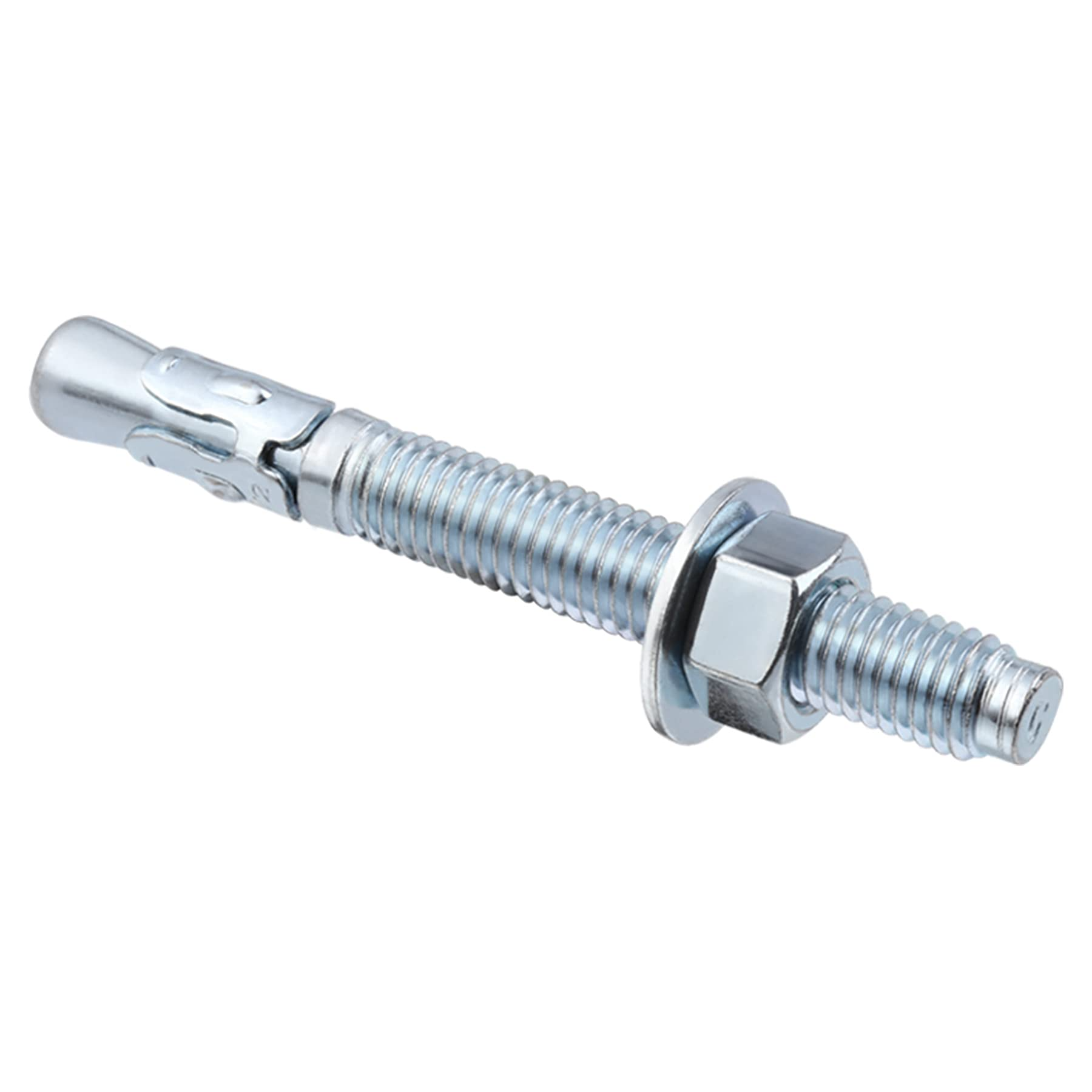
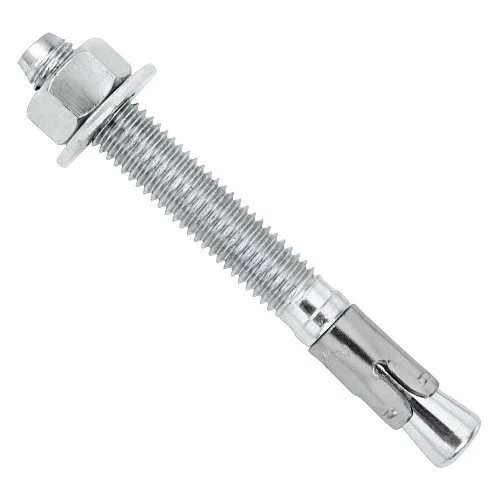
Wedge Anchors
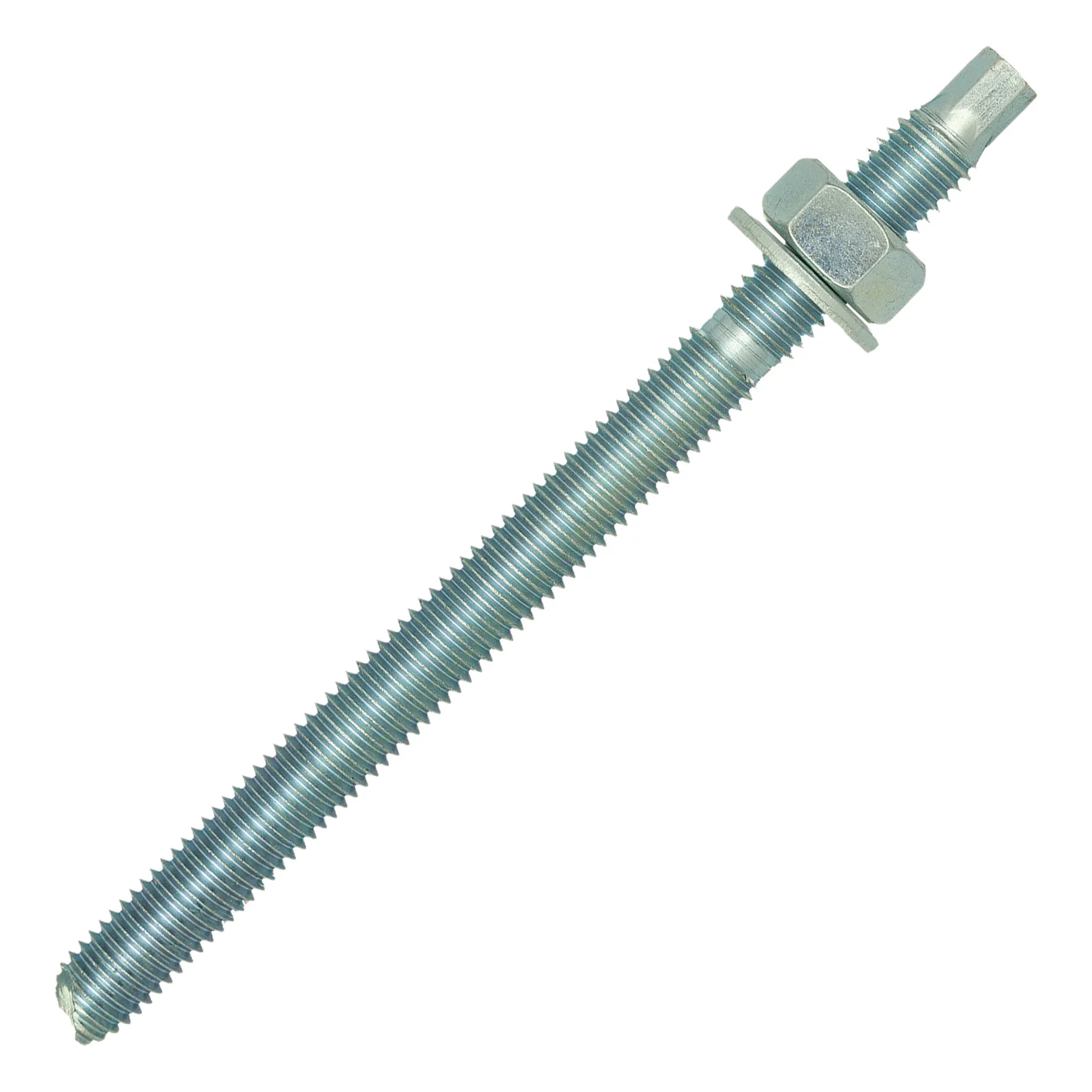
Chemical Anchor
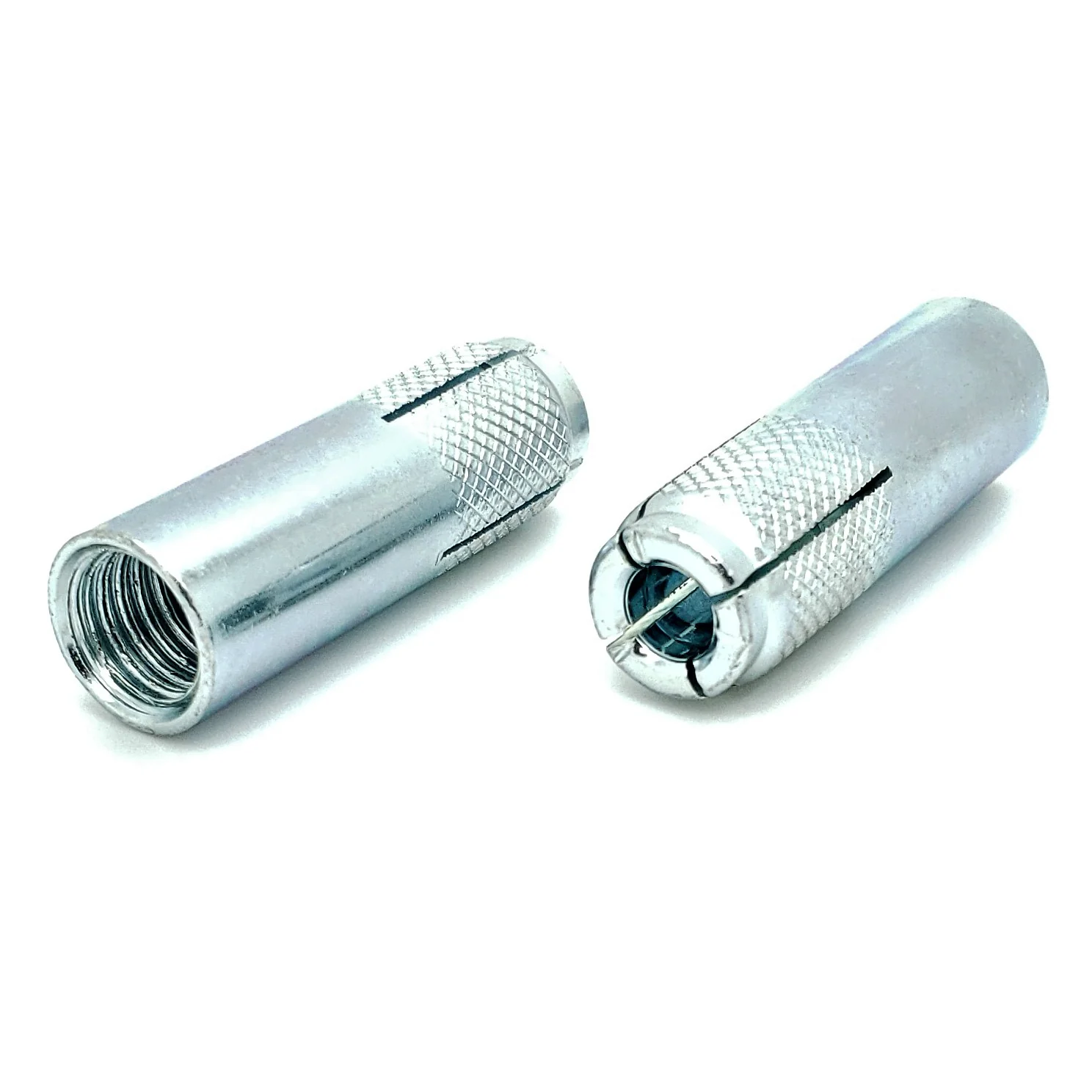
Drop In Anchor
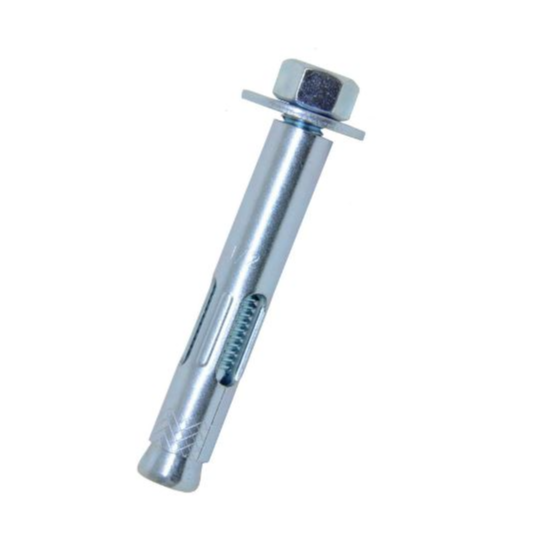
Sleeve Anchor
Mechanical Anchor
Anchors: Choosing and Installing the Right Anchor for Every Job
Ask any builder, engineer, or contractor what keeps them up at night, and chances are, anchors will be somewhere on that list. Not because anchors are complicated—but because the wrong anchor in the wrong place is one of the most expensive cheap mistakes you can make in construction. A cheap chemical anchor in the wrong substrate can lead to a very expensive remedial job. The right anchor for the wrong substrate fails the same way. The right anchor with the wrong drill bit, hole depth, or installation technique fails before it even gets loaded.
Whether you’re securing structural steel to a concrete foundation, mounting heavy machinery, hanging overhead piping, or simply attaching a railing to a brick wall, anchors are the critical link between your structure and what it supports. Choosing the right anchor can make the difference between a secure, long-lasting installation and costly maintenance—or worse, catastrophic failure.
So let’s break it down. No jargon. No fluff. Just practical, usable knowledge about anchors—what they are, how they work, and which one you need for the job.
What Exactly Are Anchors?
At their core, anchors are fastening devices designed to attach structural or non-structural components to concrete, masonry, brick, or rock. Unlike standard screws or bolts that cut threads into metal or wood, anchors are specially engineered to grip materials that you can’t simply thread into—like concrete, brick, and block. Standard fasteners like nails and screws typically aren’t enough to do the job on their own. Anchors provide that extra holding power.
The primary purpose of anchors is to provide secure attachment and load transfer. They connect metal parts to base materials through mechanical expansion, chemical bonding, or a combination of both.
The Two Big Categories: Cast-in-Place vs. Post-Installed Anchors
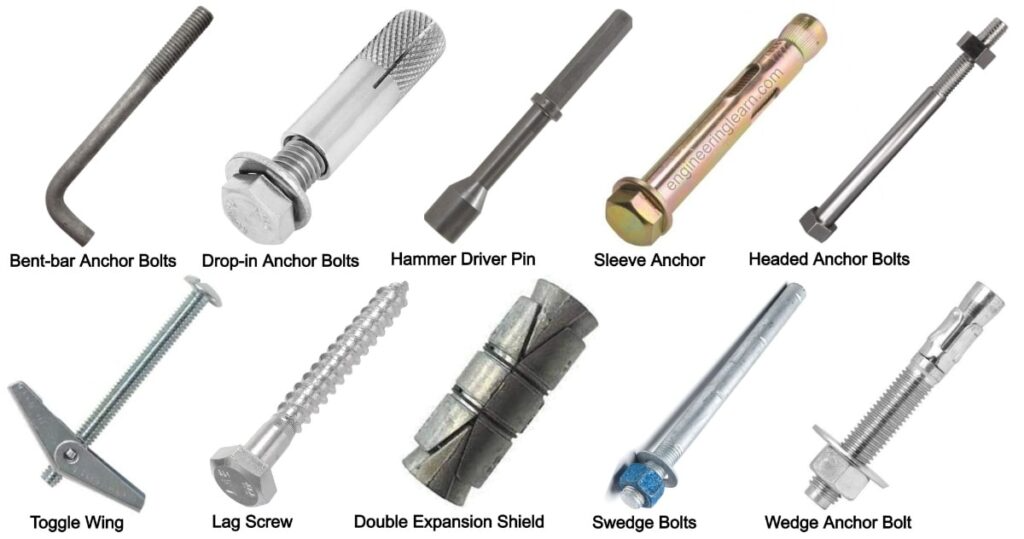
Anchor bolts fall into two main categories: Cast-in-Place Anchors and Post-Installed Anchors.
Cast-in-Place Anchors are set in position before the concrete is poured. Once the concrete cures, they’re locked in place for maximum strength. These include headed anchor bolts with hex or square heads for superior pull-out resistance in structural steel connections, and bent-bar anchor bolts like J-bolts and L-bolts that are bent into shape at the embedded end for better grip. Cast-in anchors are the most traditional type in industrial projects.
Post-Installed Anchors are installed after the concrete has hardened, requiring a drilled hole for placement. These are the anchors most contractors deal with daily—mechanical expansion anchors, adhesive anchors, and masonry screws. Post-installed anchors are where the real decision-making happens.
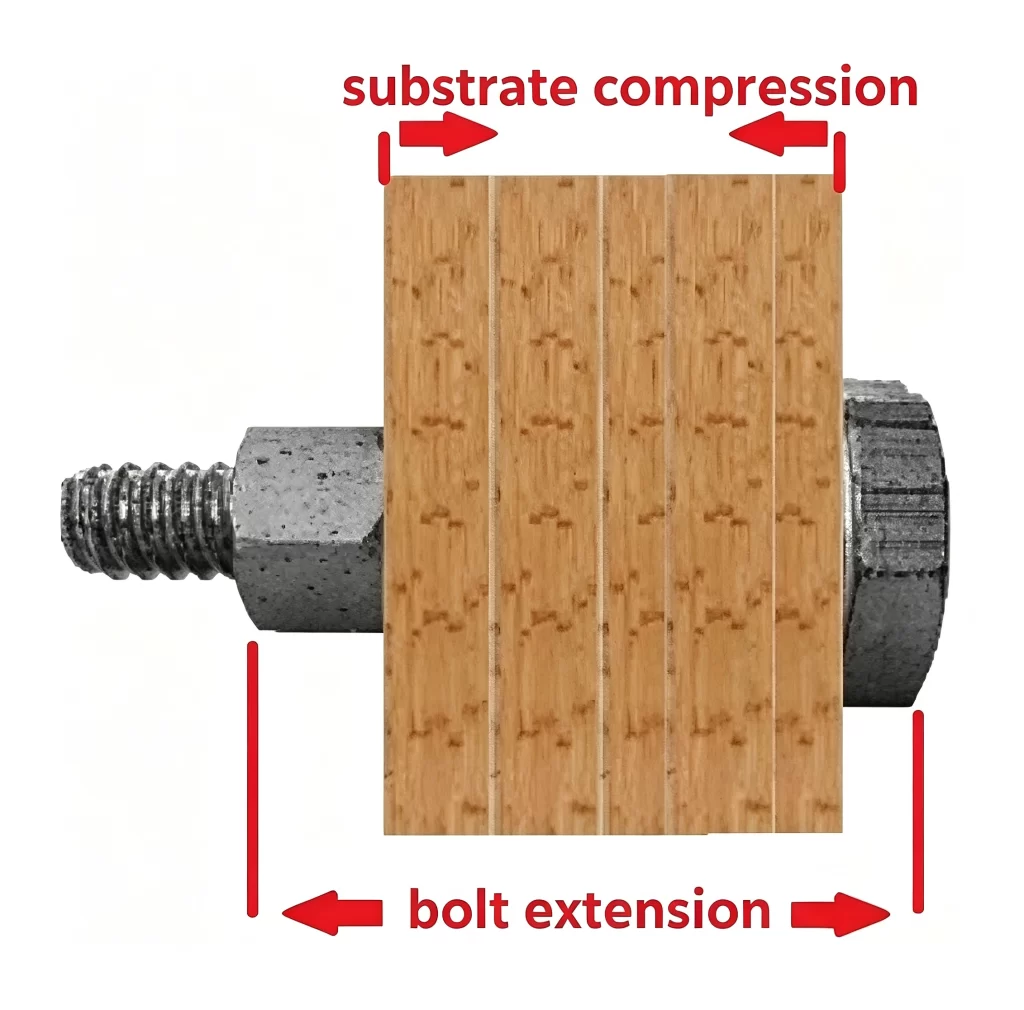
Nuts may loosen with vibration or dynamic loads, in which case locknuts, lock washers, or thread locker can provide jostle-resistant or permanent nut placement.
Mechanical Anchors vs. Chemical Anchors: The Core Decision
Every post-installed anchor falls into one of two primary types: mechanical anchors and chemical anchors.
Mechanical Anchors: Friction and Expansion
Mechanical anchors work through physical expansion. When you tighten the fastener, the anchor expands against the walls of the drilled hole, creating friction that grips the substrate. It’s a simple, reliable system—and it’s been working for decades.
The advantages are clear: Mechanical anchors are dust insensitive, easy to set, and can provide immediate loading right after installation. No waiting around for resin to cure. Drill, insert, tighten, done.
The trade-offs: Mechanical anchors require larger spacing and edge distances because the expansion creates stress in the surrounding concrete. They’re also less flexible in design—limited diameters, limited embedment depths. And if you’re working with hollow brick or weak substrate? Mechanical anchors will spin in the hole and fail.
Common types of mechanical anchors include wedge anchors (heavy-duty for solid concrete), sleeve anchors (versatile for concrete, brick, or block), drop-in anchors (flush-mount internal threads for overhead work), and masonry screws (self-threading into pre-drilled holes).
Chemical Anchors: Bonding and Adhesion
Chemical anchors—also called resin anchors or adhesive anchors—use a two-part resin system that’s injected into a clean drilled hole. A threaded stud is then pushed into the resin and held in place until it cures. The resin bonds to both the substrate and the steel, creating a chemical and mechanical connection along the full embedment depth.
The advantages are substantial: Chemical anchors don’t generate radial pressure on the base material, which reduces the risk of cracking, improves stress distribution around the drill hole, and allows work to be carried out closer to edges and other anchors. They offer greater adhesion surface—the mortar completely fills the drill hole, increasing the effective anchoring area. They perform well in hollow substrates, cracked concrete, and demanding conditions like vibration or humidity. And the rod is embedded in resin, reducing corrosion exposure.
The trade-offs: Chemical anchors require a curing time before the load can be applied—they’re not an immediate-load solution. They’re more sensitive to correct execution: hole cleaning, mixing, handling, and curing times all matter. Performance depends on application temperature and product condition. And they’re generally considered more expensive than mechanical anchors.
The Bottom Line
Mechanical anchors often score points with quick installation. Chemical bonded systems show their strengths with high loads, small edge distances, and sensitive substrates. Choose mechanical when you need speed and simplicity. Choose chemical when you need strength, flexibility, and minimal stress on the substrate.
The Anchor Families You Need to Know
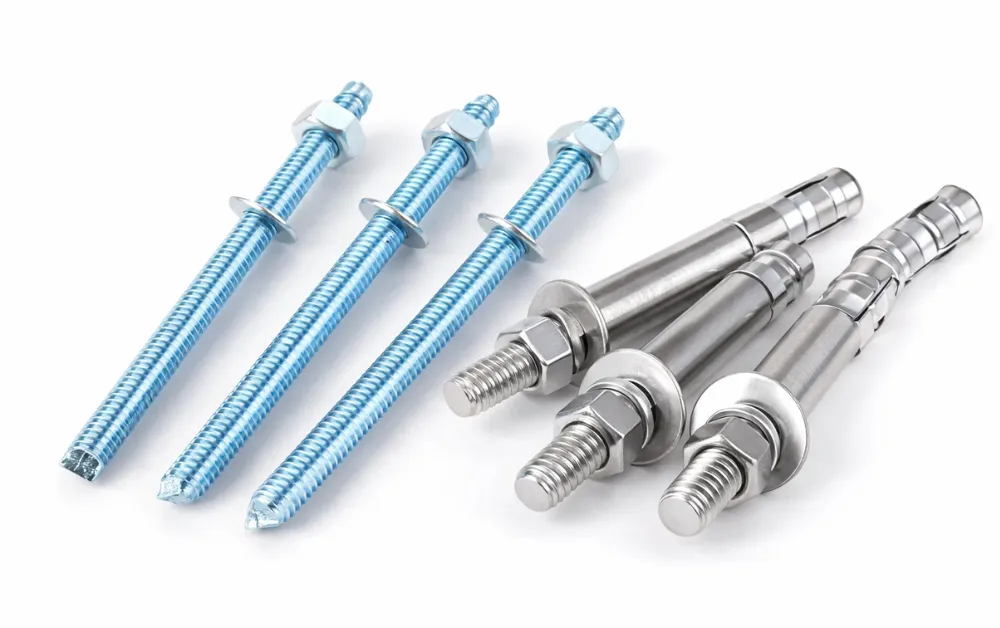
Let’s get specific. Here are the anchor types you’ll encounter most often—and what each one is actually good for.
Wedge Anchors
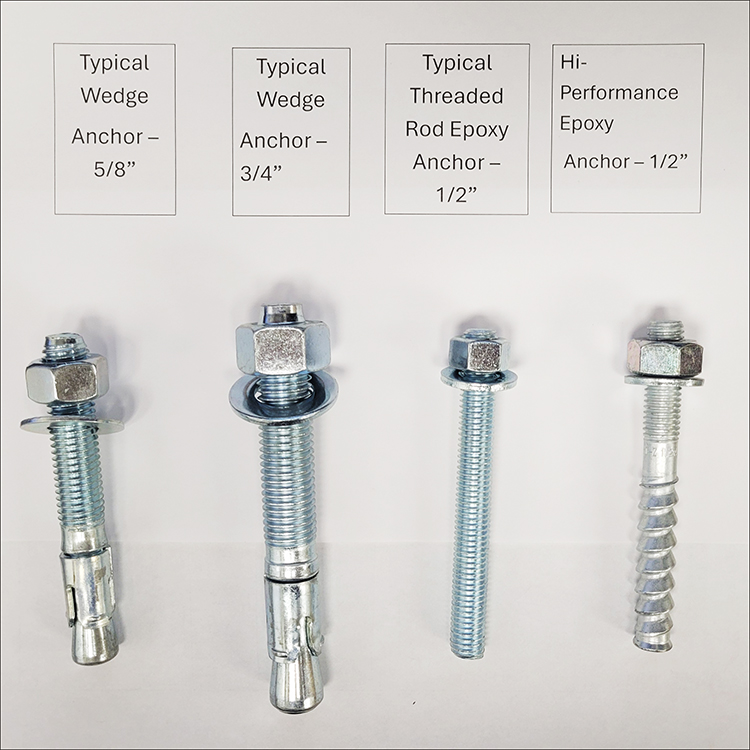
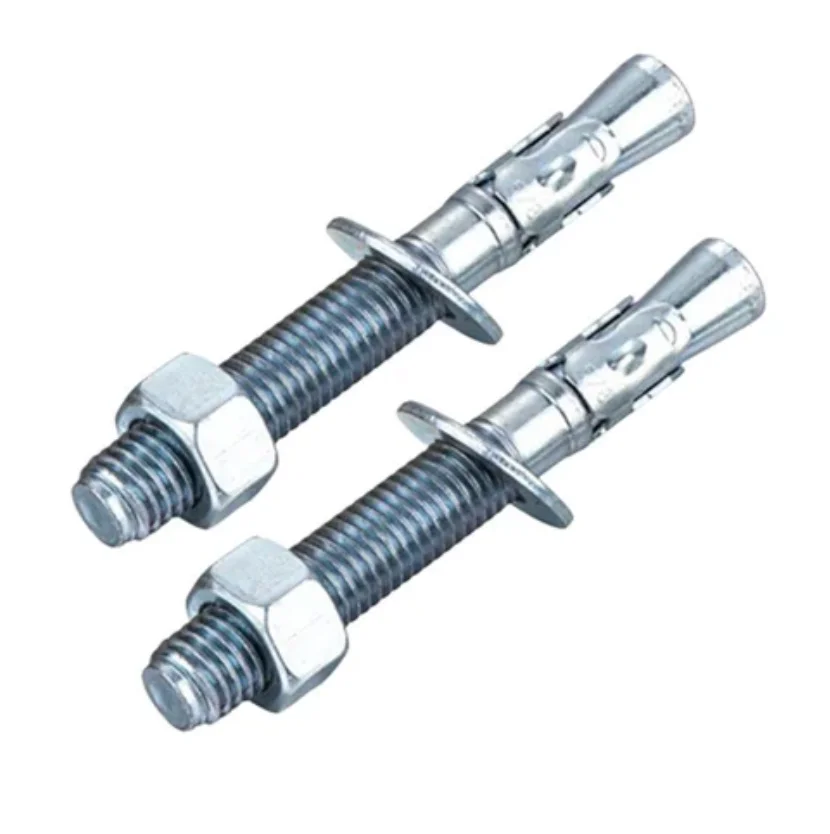
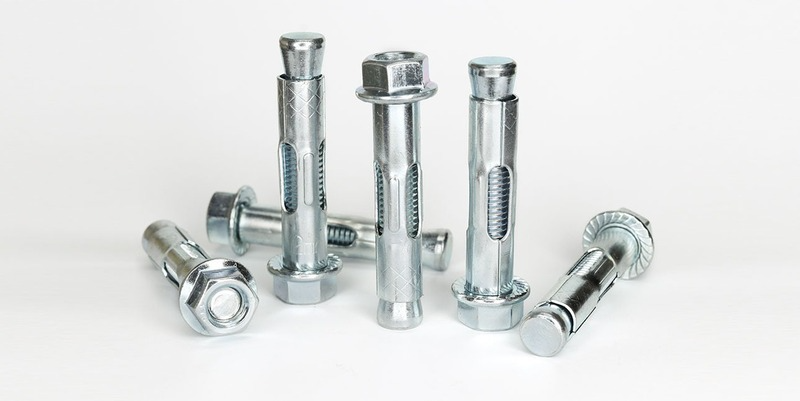
Wedge anchors—sometimes called stud anchors—are threaded expansion anchors used to connect medium to heavy fixtures to solid concrete. They consist of a threaded stud body, an integrated washer and nut, an expansion clip, and a wedge at the end. When you tighten the nut, the wedge is pulled upward into the expansion clip, causing it to deform against the walls of the hole and lock the anchor in place.
Best for: Solid, cured concrete. Heavy-duty applications. Cracked or uncracked concrete depending on the approval.
Avoid in: Hollow brick, soft block, edge work. Wedge anchors require solid surrounding material to expand against.
Installation tip: The drill bit diameter equals the nominal anchor diameter exactly. Don’t go oversize—the wedge needs the close hole fit to expand against. Tighten to the required installation torque—under-torque leaves the anchor loose, over-torque can crack the concrete.
Sleeve Anchors
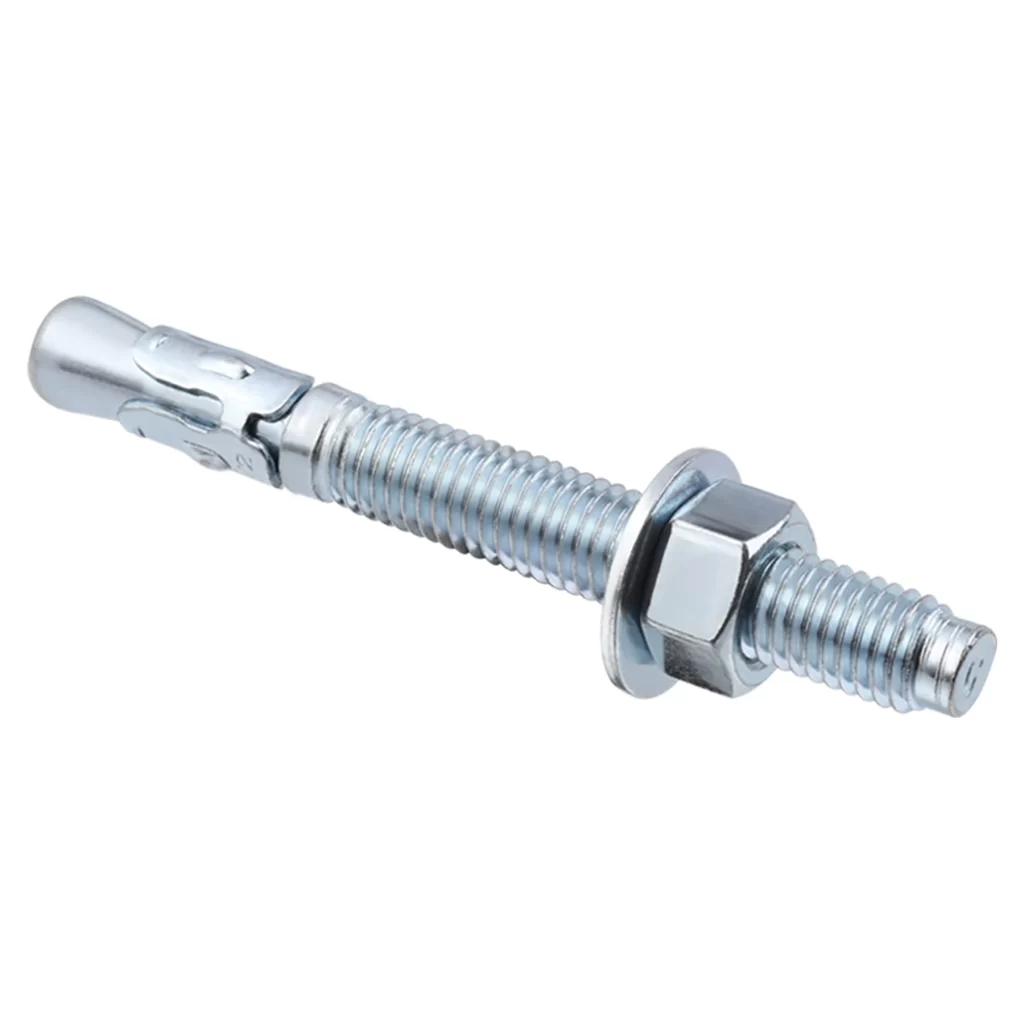
Sleeve anchors are versatile mechanical expansion anchors with a threaded bolt and expander sleeve. Tightening the nut compresses the sleeve along its entire length against the concrete or brick wall. The holding force is distributed along the full sleeve length rather than concentrated at a wedge cone, making them more forgiving in irregular or weaker substrates.
Best for: Solid concrete, solid brick, dense block. Light-to-medium applications.
Avoid in: Hollow brick, plasterboard, soft block.
Installation tip: Drill bit equals the sleeve outer diameter—which is sometimes larger than the stated thread size. Check the product label.
Drop-In Anchors
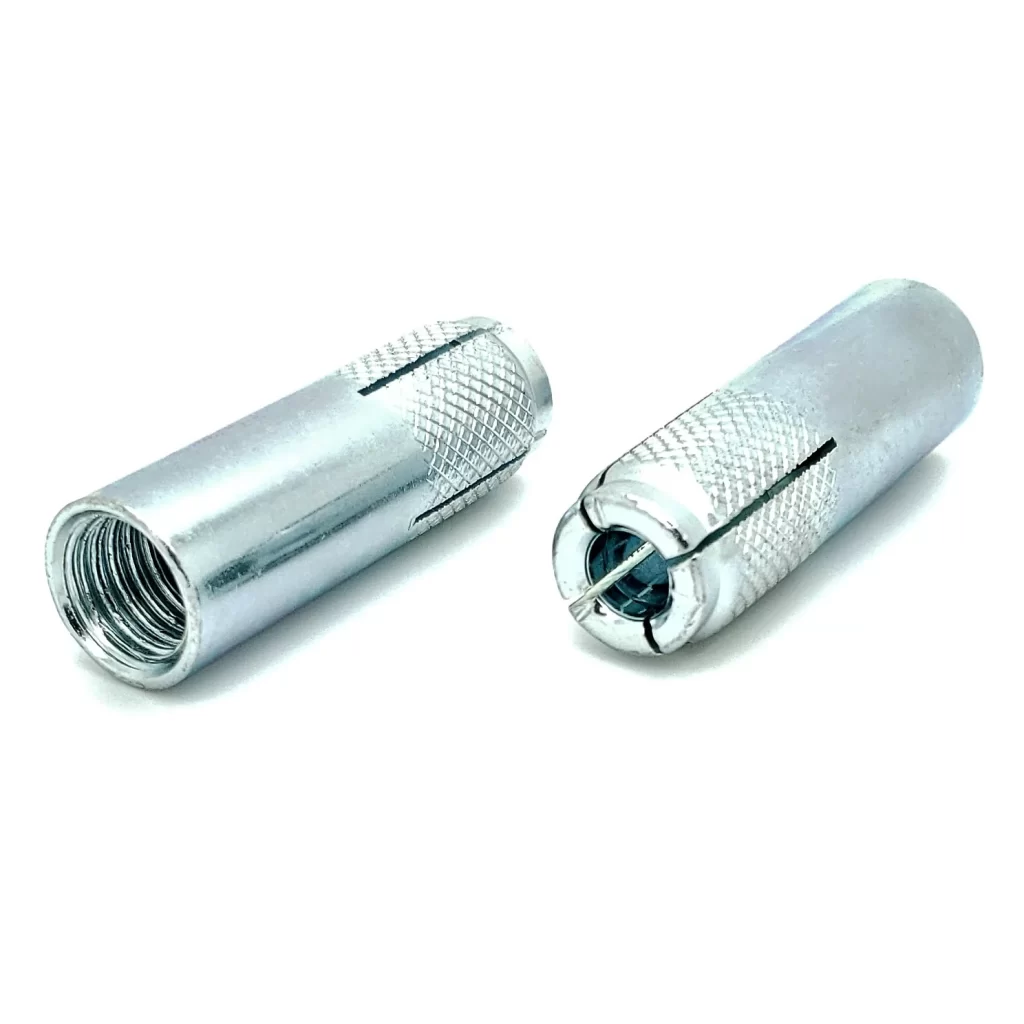
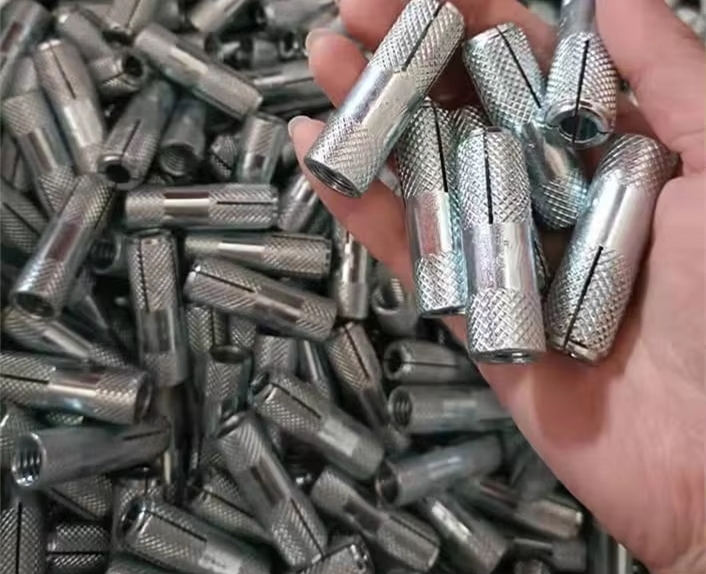
Drop-in anchors—also called flush-mount anchors—are female mechanical expansion anchors with internal threads that accept bolts or threaded rods. A setting tool drives an internal plug downward, expanding the sleeve outward against the concrete. Once set, the anchor sits flush with the surface until you thread in a bolt.
Best for: Solid concrete. Overhead applications like hanging conduit, fixtures, or piping. Flush installations where no anchor protrudes above the surface.
Avoid in: Hollow material. Vertical loads with thin slab.
Installation tip: The drill bit is larger than the thread size (M8 thread uses a 10mm bit). You need the matching setting tool—without it, the internal plug doesn’t seat properly and the anchor fails.
Chemical Anchors
(Resin Anchors)
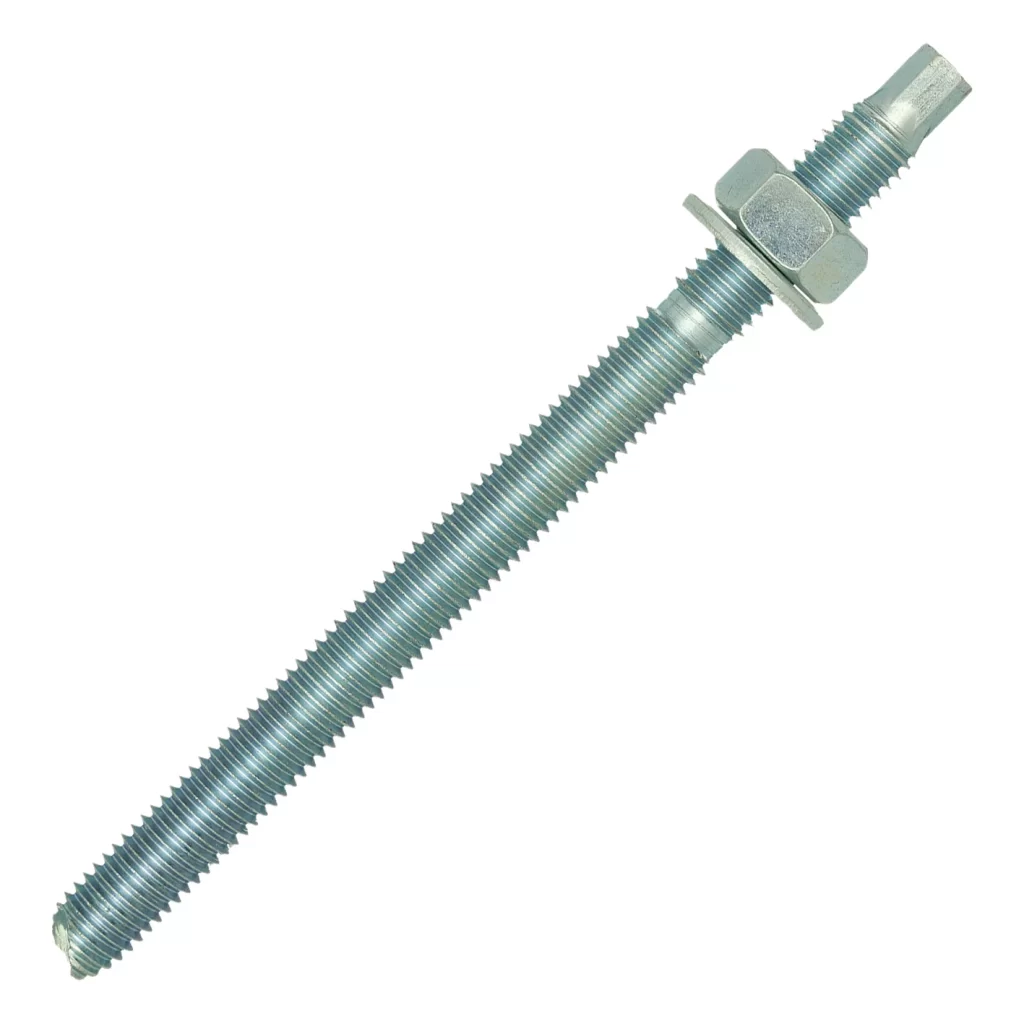
Chemical anchors consist of a resin that’s injected into the base material and, as it hardens, fixes the rod or metal element to the substrate by adhesion.
Best for: Hollow brick, hollow block, edge-distance-critical work, cracked concrete, heavy loads.
Key advantage: Unlike mechanical expansion systems, chemical anchors do not generate radial pressure on the base material, which reduces the risk of cracking and allows work closer to edges.
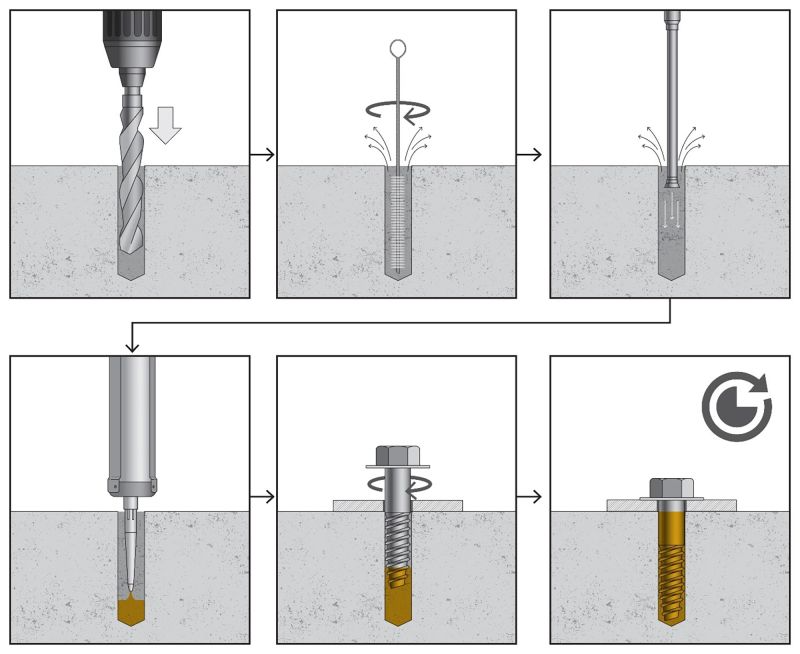
Installation tip: Hole cleaning is everything. The sequence of brushing and blowing is essential to remove dust and loose material. A dusty hole reduces pull-out strength by 50% or more. The traditional method follows the blow-brush-blow sequence—and it matters.
How to Choose the Right Anchor
Selection of your anchor depends on several factors:
Base material: What are you anchoring into? Solid concrete? Brick? Hollow block? Cracked concrete? Each substrate demands a different anchor family. The single biggest mistake is using an anchor designed for solid concrete in hollow brick—or vice versa.
Load requirements: What weight does the anchor need to support? Consider both tensile (pulling) and shear (sideways) forces. Heavy-duty or seismic applications may require code-compliant wedge anchors or chemical anchors.
Installation conditions: Are you working with new concrete or an existing hardened surface? Is this an overhead application? Drop-in anchors are ideal for overhead work.
Environmental factors: Will the anchor be exposed to moisture, vibration, or seismic activity? Exterior anchors typically need hot-dipped galvanized or stainless steel finishes.
Permanent vs. temporary: Is this a permanent installation or does it need to be removable? Wedge anchors are permanent. Drop-in anchors facilitate flush mounting and temporary installation for bolts or threaded rods.
Installation: Where Most Things Go Wrong
Proper installation of post-installed anchors is critical for overall effectiveness and safety. Installation should comply with the manufacturer’s specifications. This includes precise drilling, thorough cleaning of holes, and ensuring adherence to specified dimensions and depths.
For mechanical anchors: Drill the correct diameter hole to the correct depth. Clean the hole. Insert the anchor. Tighten to the specified torque. Under-torque leaves the anchor loose. Over-torque can crack the surrounding concrete or cause steel rupture.
For chemical anchors: Drill the correct hole (2-4mm larger than the stud diameter—the gap is filled with resin). Clean the hole obsessively—blow, brush, blow. Inject resin from the bottom of the hole upward. Insert the stud while rotating slightly. Position it perpendicular. Wait the full cure time before applying any load.
Critical rule for chemical anchors: The layer of dust prevents the anchor from adhering correctly to the walls of the hole, resulting in a weaker fixation. Skipping the cleaning step can reduce pull-out strength by 50% or more.
Why Anchors Fail
Anchors fail in a few predictable ways—and knowing these failure modes helps you prevent them.
Pull-out failure: The anchor body is pulled out without the full strength of the concrete being reached. This happens when the tensile load exceeds the frictional or fixing force between the anchor and the concrete. Common causes: insufficient embedment depth, wrong drill size, or (for chemical anchors) a dusty hole.
Concrete cone failure: A cone-shaped chunk of concrete breaks out around the anchor. This happens when the concrete strength is too low for the load, or when edge distance is insufficient.
Steel failure: The anchor stud snaps at the thread root when the load exceeds the stud’s capacity.
Installation error: This is the most common failure in practice. Wrong substrate, wrong drill size, hole too shallow, drop-in not properly set, no setting tool, over-torque, hole not cleaned—the list goes on.
The Market Reality
The anchor fasteners market is substantial and growing. The global concrete anchors and fasteners market was valued at US$2.7 billion in 2024 and is forecast to reach US$3.5 billion by 2031. The mechanical anchor market alone was valued at USD 556.37 million in 2025 and is projected to grow at a CAGR of 6.71%, reaching USD 876.84 million by 2032. Increased construction and infrastructure development worldwide, growing demand for heavy machinery and industrial equipment, and rising focus on structural safety and stability are driving this growth.
Choosing the Right Partner for Your Anchor Needs
When it comes to anchors, quality matters. The wrong anchor—or the right anchor installed incorrectly—can lead to costly failures, safety risks, and project delays. That’s why working with a trusted manufacturer matters.
MYWAY Metal stands at the forefront of anchor manufacturing, delivering premium-grade anchoring solutions that combine cutting-edge engineering with exceptional reliability. Since 2005, MYWAY has been a leading professional manufacturer of plain bearings and anchoring solutions in China, serving industry leaders across construction, heavy machinery, and industrial equipment sectors.
What sets MYWAY apart:
End-to-end manufacturing integration: From raw material to precision machining, MYWAY controls the entire process. With an annual casting capacity of 35,000 tons, they serve demanding applications with consistency and quality.
Cost-effective quality: Vertical integration and lean production enable competitive pricing without compromising on performance—whether in tensile strength, fatigue resistance, or other critical factors.
Engineering collaboration: The in-house engineering team is ready to support you with design optimization, material selection, and rapid prototyping for custom anchor solutions.
Responsive inventory: A 5,000㎡ automated warehouse ensures fast delivery, even for urgent orders.
Whether you need wedge anchors for structural steel connections, sleeve anchors for versatile masonry applications, drop-in anchors for overhead systems, chemical anchors for hollow substrates, or custom anchoring solutions, MYWAY Metal delivers the quality and reliability your projects demand.
Choose MYWAY Metal for anchors that don’t compromise—on strength, on reliability, or on performance.
About Anchor Packaging And Transportation
Packaging Materials
Choose materials with good moisture-proof, shock-proof, anti-corrosion and sealing properties, generally choose cartons, wooden boxes, plastic packaging and other materials.
Packaging Specifications
In compliance with relevant national standards and regulations, packaging specifications should be reasonably designed based on the size, weight, material, quantity, etc. of the product to avoid collisions and extrusions during transportation.
Packaging Form
There are two forms of single product packaging and batch packaging. Single product packaging is generally suitable for small batches of products, and batch packaging is suitable for large quantities of products.
Logo
Mark the product name, quantity, specifications, moisture-proof grade, shelf life and other information on the packaging.
Save
Avoid contact with toxic and flammable substances. The storage environment should be kept dry, ventilated, and clean. The storage location should be set up reasonably to avoid damage and contamination.
Transportation Method
It can be carried out through various modes of transportation such as road, railway, aviation, and sea transportation, among which road and sea transportation are the most common. We are close to Shanghai Port and Ningbo Port, most customers choose Shanghai Port. We pursue smooth transportation, avoid bumps and collisions, and do our best to ensure that products are delivered to customers in good condition and on time.
Temperature and Humidity Adjustment
Try to maintain a suitable temperature and humidity environment to avoid being affected by excessively high or low temperature and humidity, which may affect the quality and life of the product.
Safety Guarantee
Take necessary safety protection measures during transportation to avoid dangerous situations such as fires, explosions, accidents, etc., and ensure that they are not damaged or lost during transportation.
Insurance Requirements
In order to ensure transportation safety and improve transportation insurance coverage, you can purchase cargo transportation insurance when purchasing our high-value fastener products to avoid accidental loss or damage.
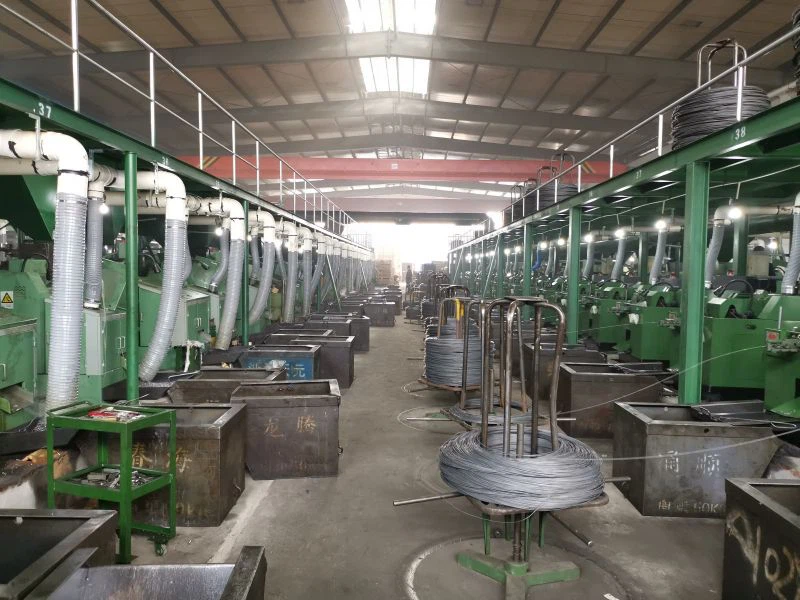
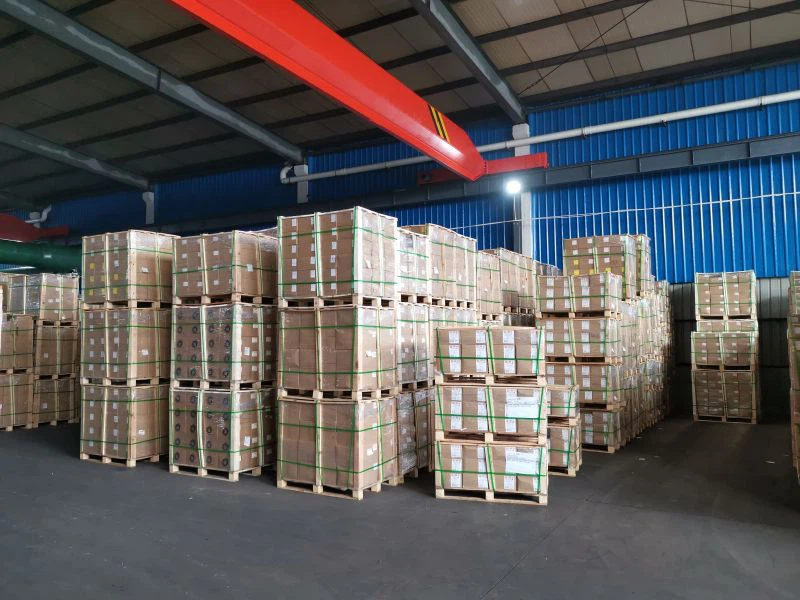
Our Anchor Factory
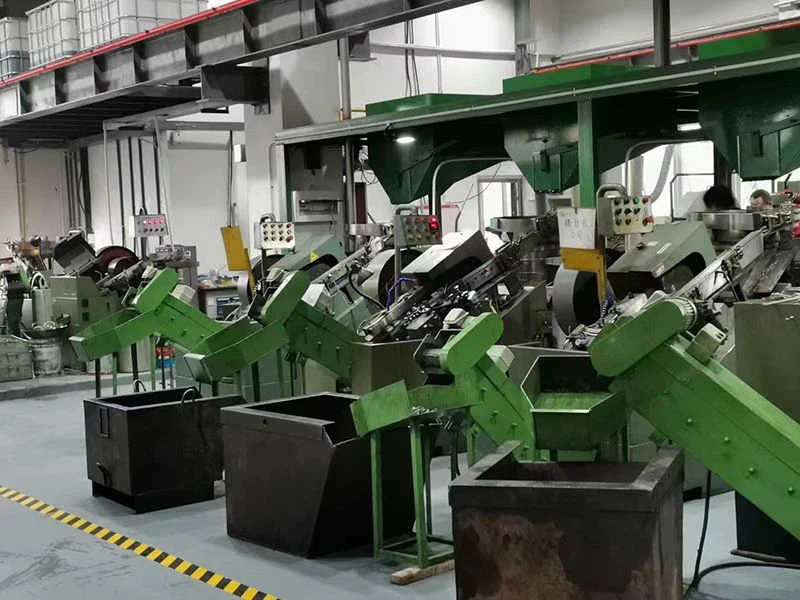
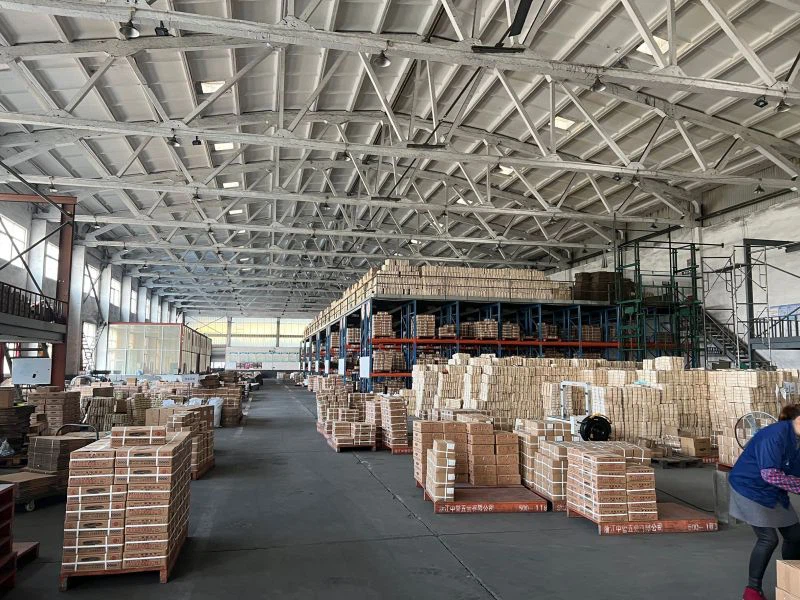
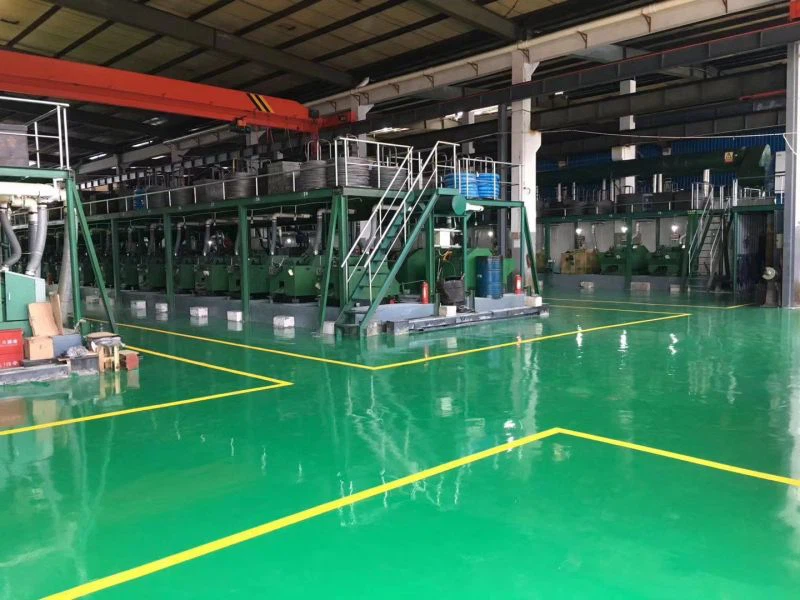
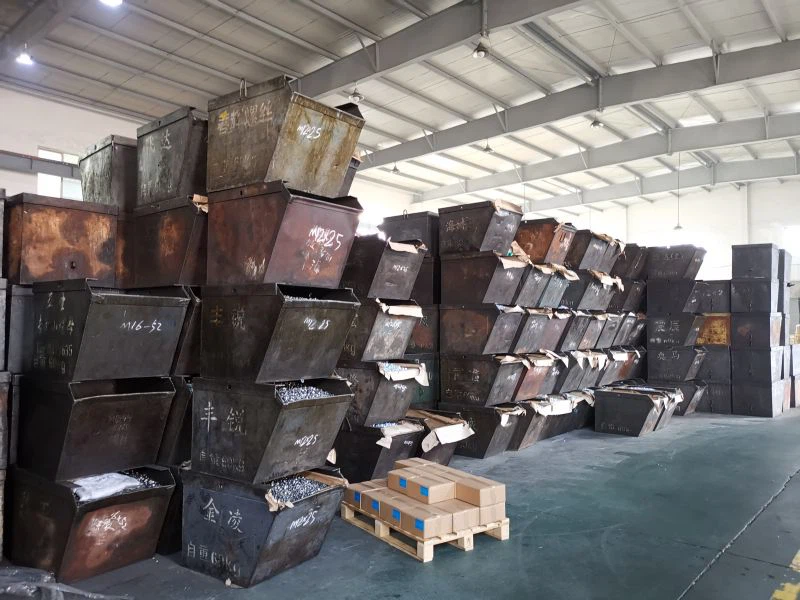
MYWAY Services
MYWAY strictly complies with the requirements of the ISO9001 quality certification system, strictly controls quality, implements it at every level, and assigns responsibilities to everyone to ensure the healthy operation of the comprehensive system of design, production, sales, and after-sales service. In order to strengthen communication with users, better provide users with high-quality products, and better serve users with the brand, we have made the following commitments:
1. Products are designed and manufactured in strict accordance with standards. We produce non-standard products according to the drawings provided by customers.
2. Pre-sales service
Serving customers: product introduction, answers to technical questions, and engineering-assisted design.
3. Sales service
1). The products are based on the needs of user orders, with quality and delivery time as the premise.
2). During the use of the product, our company regularly organizes technical and quality inspection service personnel to visit and solicit feedback from users on the quality, usage status, improvement opinions and other aspects of the product, so as to further improve product quality.
4. After-sales service
1). If users have any problems or information when using our products, please report them back to the company in a timely manner so that the company can properly handle and improve them so that our products can better meet your requirements.
2). If the product does not work properly or is damaged due to quality problems during the warranty period, our company will be responsible for free repair or replacement. If the product is damaged or does not work properly due to improper use by the user, our company can provide repair services. If users need it, our company can provide users with free pre-sales and after-sales technical consultation.
.After-sales service. Users are required to fill in the product service and quality feedback information form and make appraisal opinions in order to improve the quality of MYWAY products and services.
Frequently Asked Questions
Q: What's the difference between a mechanical anchor and a chemical anchor?
A: Mechanical anchors expand to grip the substrate through friction and physical interlock. Chemical anchors bond via resin, eliminating surface stress and offering stronger, more flexible fixings. Mechanical anchors provide immediate loading; chemical anchors require curing time but handle hollow substrates, edge work, and cracked concrete better.
Q: Can I use a wedge anchor in hollow brick?
A: No. Wedge anchors require solid concrete. Hollow brick will not provide enough surrounding material for the expansion sleeve to wedge against—the anchor will spin in the hole when you try to tighten it. For hollow brick, use a chemical anchor with an anchor sleeve.
Q: Why does my anchor keep pulling out?
A: The most common causes are: wrong substrate (using a solid-concrete anchor in hollow material), wrong drill size (hole too large means no expansion), insufficient embedment depth (hole too shallow), or (for chemical anchors) a dusty hole that prevents proper bonding. Clean the hole properly, use the correct drill bit, and match the anchor to the substrate.
Q: What's the difference between a wedge anchor and a sleeve anchor?
A: Wedge anchors expand a clip at the tip against solid concrete for high loads. Sleeve anchors expand a sleeve along the entire length and work in concrete, brick, or block. Sleeve anchors are more forgiving in irregular or weaker substrates because the holding force is distributed along the full sleeve length.
Q: Do I need a setting tool for drop-in anchors?
A: Yes. Drop-in anchors require the matching setting tool—without it, the internal plug doesn’t seat properly and the anchor fails. Each anchor size has a specific setting tool with a collar that hits the anchor body when the cone is fully seated.
Q: How do I clean the hole for a chemical anchor?
A: The industry standard is blow-brush-blow. Use compressed air or a hand pump to blow dust out, use the correct-size nylon brush to scrub the hole walls, then blow again. A dusty hole reduces chemical anchor pull-out strength by 50% or more. Don’t skip this step.
Q: How long does a chemical anchor take to cure?
A: Cure time depends on ambient temperature and resin type. At 20°C, full cure typically takes 4-6 hours. At 5°C, it can take 24 hours. At 30°C+, cure time can be as short as 2-3 hours. Always read the specific cartridge instructions and respect the listed times before applying load.
Q: What's the best anchor for overhead applications?
A: Drop-in anchors are ideal for overhead applications like hanging conduit, fixtures, or piping. They sit flush with the surface and accept threaded rods or bolts. They’re designed specifically for overhead use when properly rated.
Q: Can I reuse a hole if I remove an anchor?
A: Wedge and sleeve anchors—no, the hole is damaged after removal; drill a new hole offset. Drop-in anchors—yes, the anchor stays in the concrete and you can re-thread a fresh bolt into the same female thread. Masonry screws—yes, re-drive a fresh screw of the same size into the existing hole. Chemical anchors—no, the resin bond is destroyed on removal.
Q: What anchor do I use for exterior applications?
A: Exterior anchors need corrosion-resistant finishes. Hot-dipped galvanized or stainless steel are the standard choices. Zinc-plated anchors are for dry indoor use only. For marine or coastal environments, use 316 stainless steel.
Q: Is a bigger anchor always better?
A: Not necessarily. The right anchor is the one that matches your substrate, load requirements, and installation conditions. Oversizing can cause unnecessary stress on the substrate, increase costs, and may not even be possible if the substrate thickness is limited. Match the anchor to the job.
Q: Why is edge distance important?
A: Mechanical anchors generate expansion force that pushes outward on the surrounding concrete. Too close to a free edge, the concrete can crack and fail before the anchor does. As a rule of thumb, maintain minimum edge distance of at least 1× embedment depth from the concrete edge. Chemical anchors have lower minimum edge distances because they don’t generate expansion stress.
We’re professional bolt manufacturers and suppliers in China, specialized in providing high quality customized products with low price. We warmly welcome you to wholesale or buy discount bolt in stock here from our factory. Contact us for free sample.